
Nadella Warns AI Boom Needs Broad Economic Growth or ‘This Scenario Will Not End Well’
Microsoft CEO Satya Nadella, in a podcast interview with Fareed Zakaria, said the AI industry must prove broad macroeconomic productivity gains. Without that, he warned, the current investment cycle could end badly.
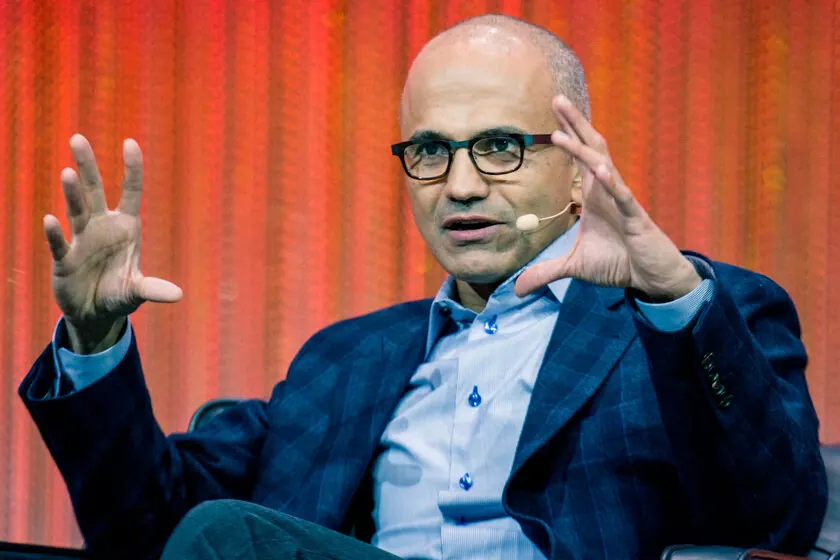
Microsoft CEO Satya Nadella has delivered his most direct assessment yet of the AI investment narrative, telling journalist Fareed Zakaria that the technology must soon translate into measurable macroeconomic growth or the current cycle will face a serious reckoning.
“Unless we see that broad economic growth, this scenario is not going to end well,” Nadella said during the latest episode of Zakaria’s podcast, published on July 29, 2026. The interview lands at a moment when Wall Street and technology analysts are deeply divided over whether the hundreds of billions of dollars flowing into AI infrastructure and model development constitute a sustainable transformation or a speculative bubble.
| Key fact | Detail | Source |
|---|---|---|
| Speaker | Satya Nadella, CEO of Microsoft | Fareed Zakaria podcast |
| Date | July 29, 2026 | Xataka IA |
| Microsoft stake in OpenAI | 30% ownership; OpenAI continues to lose money rapidly | Xataka IA |
| Goldman Sachs estimate (March 2026) | AI contributed “basically zero” to US GDP | Xataka IA |
| SoftBank’s Masayoshi Son | Called the bubble label “blasphemy against AI” | Xataka IA |
The question that forced an answer
Zakaria opened the conversation with an unusually direct question: “Are we in an AI bubble, and has it started to deflate?” He pointed to Microsoft’s 30% stake in OpenAI, a company that continues to burn cash at a staggering rate, and noted that “the math doesn’t seem to add up and there will be a moment of truth.”
Nadella did not dispute the premise. Instead, he reframed the question. He described AI as “a new general-purpose technology that will drive productivity” — but insisted that productivity must appear in macroeconomic figures such as GDP growth, not just in the revenue statements of a handful of large technology companies. Without that broad-based effect, he conceded, “we are going to have a problem.”
Productivity must reach Main Street, not just big tech
Nadella stressed that the positive impact of AI must extend beyond the companies that build the technology. “It’s about every business in the economy — whether it’s a small business, a large multinational, or a public-sector institution — whether they can see the real benefits of this technology,” he said.
That framing echoes a concern raised in March 2026 by Goldman Sachs’ chief economist Jan Hatzius, who said AI had added “basically zero” to US GDP so far. Some analysts counter that AI is already generating wealth but that official statistics may be too slow and too aggregated to capture it. The debate is unresolved, and the data remains inconclusive.
A cautious stance in a polarized debate
Nadella’s tone was markedly more measured than that of some industry peers. Google CEO Sundar Pichai, speaking in late 2025, acknowledged “elements of irrationality” in the AI market. At the time, Nadella offered a similar comparison: “When we say ‘this is like the Industrial Revolution,’ we should have the kind of growth that the Industrial Revolution produced.”
On the opposite end, SoftBank CEO Masayoshi Son has called labeling the current environment a bubble “blasphemy against AI.” SoftBank is OpenAI’s largest investor, giving Son an enormous financial stake in the narrative. Analyst Ben Thompson has also argued that the evidence does not support a bubble thesis. The divergence between cautious executives and bullish investors remains one of the defining tensions of the AI industry in 2026.
What remains unclear
Whether AI’s economic impact is simply lagging or genuinely absent is not settled. Nadella did not present a timeline for when he expects to see broad GDP growth from AI. The Goldman Sachs estimate is from early 2026, and later data may shift the picture. The source article does not provide updated GDP figures or independent verification of Nadella’s claims beyond the podcast transcript.
What this means for AI buyers and builders
For enterprise decision-makers evaluating AI tool investments and vendors, Nadella’s framing shifts the focus from technical capability to business outcomes. If even the CEO of Microsoft — the company with the most visible AI bet in OpenAI — expects productivity gains to show up in broad GDP data, then internal ROI calculations for AI projects need to become more rigorous. The industry may be in a period where adoption is real but the economic impact is still too small to register at the national level, leaving companies to rely on micro-level metrics rather than top-line validation.
Developers building AI products should watch for signs of a funding correction. If macroeconomic growth fails to materialize, the current cycle of heavy investment in infrastructure and model training could slow, affecting access to cloud compute, foundation model APIs, and startup financing. For now, the prudent approach is to tie AI spending to measurable business outcomes rather than speculative future value.
Source: Xataka — “A menos que veamos ese amplio crecimiento económico, esta película no va a terminar bien”: Satya Nadella, sobre la burbuja de la IA. URL: https://www.xataka.com/robotica-e-ia/a-que-veamos-ese-amplio-crecimiento-economico-esta-pelicula-no-va-a-terminar-bien-satya-nadella-burbuja-ia
Source
Xataka IA Publicacion original: 2026-07-29T07:01:36+00:00
Related articles
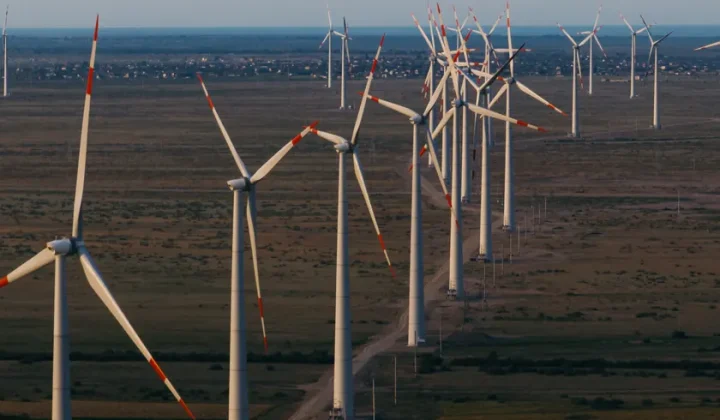
Russia’s Largest Wind Farm Opens With Nearly All Domestic Parts — A Sign of Tech Autarky That May Reshape AI Hardware Supply Chains
Russia’s 300 MW Novolakskaya wind farm in Dagestan is the country’s largest, built with almost entirely homegrown components. The push for localisation,…
Read article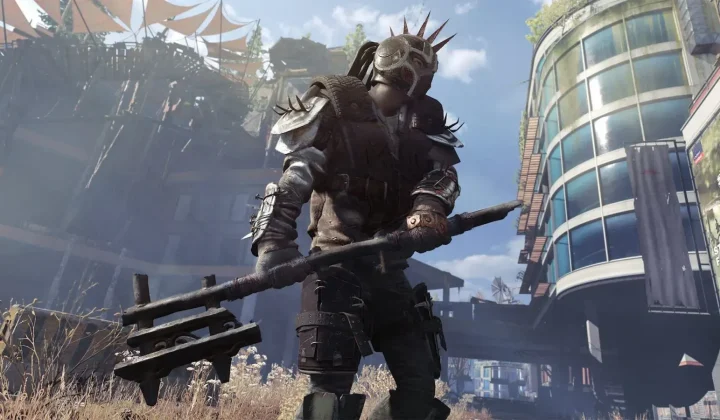
PlayStation Plus August 2026 Lineup: Dying Light 2, Big Walk, and Signalis Free for Subscribers
Sony announced three free PlayStation Plus games for August 2026: Dying Light 2: Stay Human, Big Walk, and Signalis. Available from August…
Read article
Wired AI Feed Flags Non-AI Content: A Braun Promo Code in the Machine
A July 2026 article about Braun grooming discounts appeared under Wired’s AI section, raising questions about editorial curation and automated content feeds.…
Read article
EU AI Act after 1 August: what to verify in AI tool disclosures
If you are reviewing coding assistants, chatbots, or automation platforms after 1 August, the safest approach is to verify how each tool…
Read articleWiki relacionada

What Is RAG? A Practical Guide to Retrieval-Augmented Generation in 2025
Retrieval-Augmented Generation (RAG) grounds LLM outputs in external data, reducing hallucinations and enabling enterprise use cases. This guide covers how RAG works,…
Read article
Retrieval-Augmented Generation (RAG) – How It Works, Why It Matters, and Where It Falls Short
A practical guide to Retrieval-Augmented Generation (RAG): how it reduces LLM hallucinations, the components needed, real-world developer workflows, and key limitations to…
Read article
Mistral AI Models and API: A Developer Overview
Mistral AI offers a family of open-weight and proprietary models for developers, from Mistral 7B to Mistral Large. This guide covers model…
Read article
What Is Retrieval-Augmented Generation (RAG)? A Developer’s Guide
Retrieval-augmented generation (RAG) combines LLMs with external knowledge retrieval to reduce hallucinations, keep facts current, and enable enterprise-grade AI workflows. This guide…
Read article