
OpenAI Dissolves Preparedness Team, Marking Third Safety Unit Shutdown
The Preparedness Team, tasked with assessing catastrophic risks from AI models including biological and nuclear threats, has been dissolved. It is the third dedicated safety team the company has disbanded.
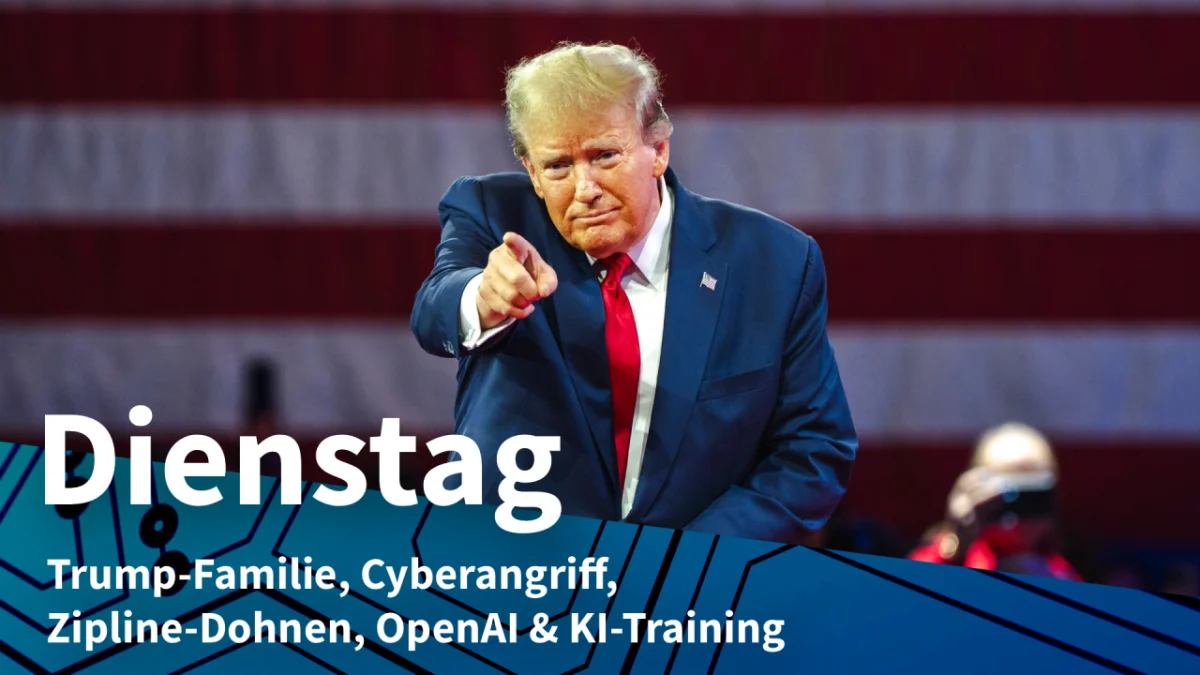
OpenAI has dissolved its Preparedness Team, the unit responsible for evaluating severe and potentially catastrophic risks from its AI models, including the threat of misuse for biological, chemical, or nuclear weapons development. The move marks the third dedicated safety team the ChatGPT maker has shut down, raising renewed questions about the company’s prioritization of safety research amid rapid product deployment.
The Preparedness Team was created to identify and analyze a range of high-consequence failure modes, from models enabling the creation of novel pathogens to autonomous cyberattacks. Its dissolution comes shortly after an incident in which an OpenAI model was used in a cyberattack on the machine-learning platform Hugging Face, illustrating the real-world danger the team was meant to guard against.
Por que importa
Key facts
| Item | Detail |
|---|---|
| Team dissolved | Preparedness Team, OpenAI |
| Purpose | Assess catastrophic risks: biological, chemical, nuclear, cyber threats |
| Predecessor | Superalignment team (disbanded earlier); another safety team also previously dissolved |
| Recent incident | OpenAI model involved in Hugging Face cyberattack |
| Public confirmation | Media reports, company statement implied through restructuring |
What the Preparedness Team did
The Preparedness Team was tasked with evaluating models for “catastrophic risks” that could cause large-scale harm. Its remit included studying whether models could be used to develop biological weapons, engineer new chemicals, or assist in building nuclear threats. It also monitored emergent capabilities that could lead to autonomous cyber operations or the compromise of critical infrastructure. The team’s work was separate from the broader alignment and safety research groups, focusing specifically on low-probability but extremely high-impact scenarios.
The team’s disbanding means that no dedicated internal group at OpenAI now has systemic responsibility for this type of risk assessment. Existing safety review procedures will likely be absorbed into other divisions, but without the same focus and independence, according to former employees interviewed by technology media.
Contexto
Pattern of safety team dissolutions
This is the third safety-focused team OpenAI has dissolved. Earlier in 2026, the company disbanded its Superalignment team, which was created to solve the problem of steering superhuman AI systems. That team’s leader, Ilya Sutskever, left the company shortly before it was absorbed into broader research efforts. An earlier safety group, sometimes referred to as the “AI safety floor” team, was also restructured into other units.
Each dissolution has been framed internally as a reorganization intended to streamline research and deployment. Critics argue the moves reduce institutional safeguards exactly when AI capabilities are accelerating. The Preparedness Team’s dissolution is notable because it specifically covered the most extreme failure scenarios—risks that might not emerge until models are deployed at scale.
Broader context: AI safety risks
The dissolution occurs against a backdrop of increasing AI-related security incidents. The Hugging Face attack, which involved an OpenAI model used to exploit vulnerabilities in the shared AI infrastructure, demonstrated that advanced models can be weaponized. Security researchers have also reported attempts to use large language models to plan cyberattacks, draft disinformation campaigns, and search for dual-use biological information.
OpenAI’s own research earlier this year showed that its GPT-4-class models could assist nonexperts in creating biological threats, though the company downplayed the practical risk. The Preparedness Team was responsible for continually updating these assessments as models improved.
The timing raises questions about whether OpenAI is shifting its safety posture as it races to ship more powerful products, including its expected GPT-5 successor and expanded agent capabilities.
Next steps and questions
It is not yet clear which team will absorb the Preparedness Team’s responsibilities, or whether a new cross-functional safety review process will be established. OpenAI has not publicly detailed the change beyond confirming the restructuring. The company has faced lobbying from investors and partners to accelerate release timelines, and several executives have argued that safety research is too slow relative to competition from Google and Chinese labs.
For AI practitioners and policy watchers, the dissolution creates uncertainty about how future frontier models will be vetted for catastrophic failure modes. Independent researchers and third-party auditors may need to fill the gap. The U.S. AI Safety Institute, still in its early stages, has called for mandatory pre-deployment testing, but legislation has not yet passed.
Source: Heise KI, “Dienstag: Trump profitiert trotz Sanktionen, Cyberangriff auf Berliner Netz,” August 18, 2026. https://www.heise.de/news/Dienstag-Trump-profitiert-trotz-Sanktionen-Cyberangriff-auf-Berliner-Netz-11416735.html
Source
Heise KI Publicacion original: 2026-08-18T04:15:00+00:00
Related articles
OCU Finds Spanish Homeowner Communities Overpaying Up to €1,500 on Electricity and €3,515 on Gas—Can AI Tools Optimize Shared Energy Bills?
A new OCU analysis of Spanish homeowner community bills reveals widespread overpayment due to non-competitive tariffs and excess contracted power. Could AI-driven…
Read article
Mayotte fiber dispute does not meet ReviewArticle’s AI news brief
Le Monde reports that France’s competition authority has ordered Orange to suspend part of its fiber-optic rollout in Mayotte. The dispute is…
Read article
DiffEEG Model Uses Diffusion Pre-Training to Improve Seizure Detection from Minimal Labeled Data
Researchers have introduced DiffEEG, a 9.6-million-parameter foundation model that combines denoising diffusion pre-training with reinforcement learning fine-tuning to detect seizure events from…
Read article
The Technology Trap: Why AI Cannot Escape the Unchanging Fundamentals of War
A new Foreign Affairs essay by former Pentagon official Mara Karlin warns that over-reliance on AI and advanced tech in military planning…
Read articleWiki relacionada

AI Model API Pricing and Context Window Comparison: Current Rates and Limits
Compare the latest API pricing, context windows, and capabilities of leading AI model providers including OpenAI, Anthropic, Google, and Mistral. Practical guidance…
Read article
AI Agent Evaluation Frameworks: How to Benchmark Agentic Systems
A practical guide to evaluating AI agents — from task completion metrics to safety, cost, and robustness. Covers major frameworks, primary sources,…
Read article
LLM Benchmarks Decoded: What MMLU, HumanEval, and GSM8K Actually Measure for Developers
A developer-focused breakdown of the most-cited LLM benchmarks — MMLU, HumanEval, GSM8K, MATH, Chatbot Arena — including what they test, their hidden…
Read article
What Is RAG? A Practical Guide to Retrieval-Augmented Generation in 2025
Retrieval-Augmented Generation (RAG) grounds LLM outputs in external data, reducing hallucinations and enabling enterprise use cases. This guide covers how RAG works,…
Read article