
OCU Finds Spanish Homeowner Communities Overpaying Up to €1,500 on Electricity and €3,515 on Gas—Can AI Tools Optimize Shared Energy Bills?
A new OCU analysis of Spanish homeowner community bills reveals widespread overpayment due to non-competitive tariffs and excess contracted power. Could AI-driven energy management tools help communities audit and reduce these costs?
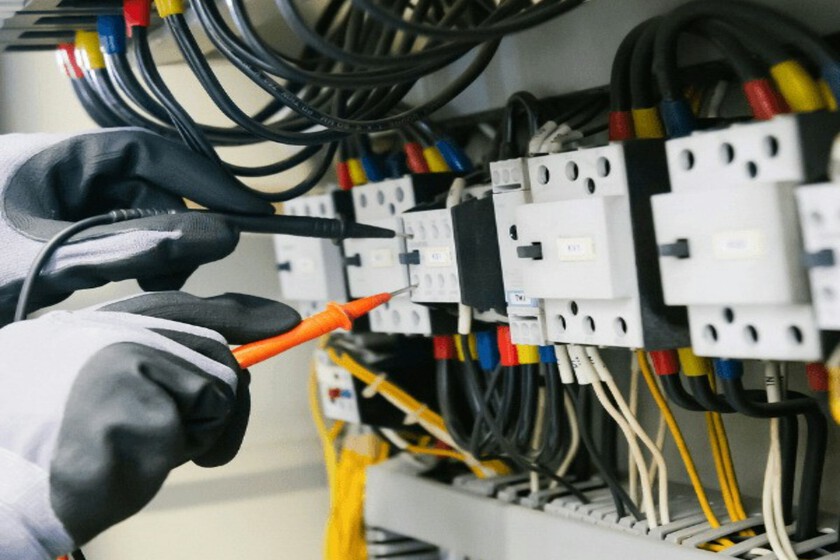
A new analysis from the Spanish consumer organization OCU (Organización de Consumidores y Usuarios) has quantified a significant financial drain for homeowners in community property regimes. Based on a review of 85 electricity bills and 15 natural gas bills, all from the liberalized market, the OCU found that many communities are locked into non-competitive tariffs and excessive contracted power, leading to annual overpayments that can reach €1,500 for electricity and €3,515 for gas.
For a site focused on AI tools and developer workflows, this report highlights a practical, data-rich problem where AI-powered analytics, automation, and comparison platforms could offer measurable value. The challenge is not just about finding a cheaper rate—it is about auditing complex, infrequently reviewed shared utility contracts and matching them to actual consumption patterns.
Key facts
| Metric | Value | Source |
|---|---|---|
| Electricity overpayment (annual) | Up to €1,500 for a model community (6.94 kW contracted, 5,500 kWh consumption) | OCU analysis |
| Gas overpayment (annual) | Up to €3,515 on average; up to €16,000 for large communities | OCU analysis |
| Electricity bills with excess contracted power | 84% of analyzed bills | OCU analysis |
| Recommended gas tariff | Tarifa de Último Recurso (TUR) | OCU recommendation |
The data problem behind the overpayment
The OCU’s analysis, reported by Xataka on October 23, 2026, focused on bills from the liberalized market, where prices are not capped by the government. The core finding is structural: a majority of homeowner communities do not regularly audit their contracts. For electricity, 84% of the bills had more power contracted than the community actually needed. The OCU calculated that this alone can cause an overcost of up to €314 per year, on top of the savings lost from not selecting a competitive energy tariff.
For natural gas, the situation is more acute. The OCU states that many communities are not on the government-regulated Tarifa de Último Recurso (TUR), which is the most economical option for collective gas heating. The average annual overpayment was €3,515, and for large communities with very high consumption, the potential savings could reach €16,000 per year.
Where AI tools and automation fit in
This is not a technology story about a new AI model, but it is a clear case for AI-assisted energy management and bill auditing. Several categories of tools are relevant:
- AI-powered tariff comparison platforms: These tools can automatically scan a community’s consumption history and compare it against hundreds of available tariffs in the liberalized and regulated markets. Unlike a manual search, AI models can factor in usage patterns, peak demand, and seasonal variations to recommend the optimal contract.
- Smart building energy management systems (BEMS): AI-driven BEMS can analyze real-time data from smart meters and building sensors to identify when contracted power is too high. They can also automate load shedding, shift non-critical consumption to off-peak hours, and provide a dashboard for property managers.
- Automated bill auditing software: Several startups and established platforms use machine learning to parse utility bills, flag anomalies (such as a sudden spike in contracted power or a tariff change), and generate reports. For a community of 20-50 units, this could replace a manual audit that happens only once every few years.
- Chatbots and AI assistants for property managers: An AI assistant could be trained on the OCU’s methodology and Spanish energy regulations to guide community presidents or administrators through the steps of switching to a TUR gas tariff or comparing PVPC (regulated) vs. liberalized electricity prices.
Limits and practical next steps
The OCU’s sample is relatively small—100 bills total—and is not necessarily representative of all Spanish communities. The report does not specify the geographic distribution or the size of the buildings analyzed. Furthermore, switching tariffs, especially for gas, may involve contractual penalties or administrative delays that are not captured in the savings calculation.
For a property manager or community president, the next step is clear: request a full audit of the current electricity and gas contracts. For electricity, compare the current tariff against both the regulated PVPC rate and competitive market offers. For gas, verify whether the building is on the TUR tariff; if not, initiate the switch. AI tools can accelerate this process, but human oversight is still needed to verify contract terms and navigate any cancellation fees.
Source: Xataka – Las comunidades de propietarios están pagando hasta 1.500 euros de más en la factura eléctrica y más de 3.500 en el gas, según la OCU (https://www.xataka.com/energia/comunidades-propietarios-estan-pagando-1-500-euros-factura-electrica-3-500-gas-ocu)
Source
Xataka IA Publicacion original: 2026-10-23T05:00:17+00:00
Related articles
Mayotte fiber dispute does not meet ReviewArticle’s AI news brief
Le Monde reports that France’s competition authority has ordered Orange to suspend part of its fiber-optic rollout in Mayotte. The dispute is…
Read article
DiffEEG Model Uses Diffusion Pre-Training to Improve Seizure Detection from Minimal Labeled Data
Researchers have introduced DiffEEG, a 9.6-million-parameter foundation model that combines denoising diffusion pre-training with reinforcement learning fine-tuning to detect seizure events from…
Read article
The Technology Trap: Why AI Cannot Escape the Unchanging Fundamentals of War
A new Foreign Affairs essay by former Pentagon official Mara Karlin warns that over-reliance on AI and advanced tech in military planning…
Read article
Supabase Releases .NET SDK for C# Developers Across ASP.NET, Unity, and Mobile
Supabase has launched a .NET SDK for C# developers, extending its backend-as-a-service platform to ASP.NET Core, console apps, desktop, Unity, and mobile…
Read articleWiki relacionada

AI Model API Pricing and Context Window Comparison: Current Rates and Limits
Compare the latest API pricing, context windows, and capabilities of leading AI model providers including OpenAI, Anthropic, Google, and Mistral. Practical guidance…
Read article
AI Agent Evaluation Frameworks: How to Benchmark Agentic Systems
A practical guide to evaluating AI agents — from task completion metrics to safety, cost, and robustness. Covers major frameworks, primary sources,…
Read article
LLM Benchmarks Decoded: What MMLU, HumanEval, and GSM8K Actually Measure for Developers
A developer-focused breakdown of the most-cited LLM benchmarks — MMLU, HumanEval, GSM8K, MATH, Chatbot Arena — including what they test, their hidden…
Read article
What Is RAG? A Practical Guide to Retrieval-Augmented Generation in 2025
Retrieval-Augmented Generation (RAG) grounds LLM outputs in external data, reducing hallucinations and enabling enterprise use cases. This guide covers how RAG works,…
Read article