
China’s Vertical Elevator Cuts a 3-Hour School Trek to 30 Minutes in Yunnan’s Nizhuhe Canyon
A 288-meter elevator system in Yunnan, China, has reduced a dangerous mountain commute for students from over three hours to about 30 minutes, combining two elevators and a cable car.
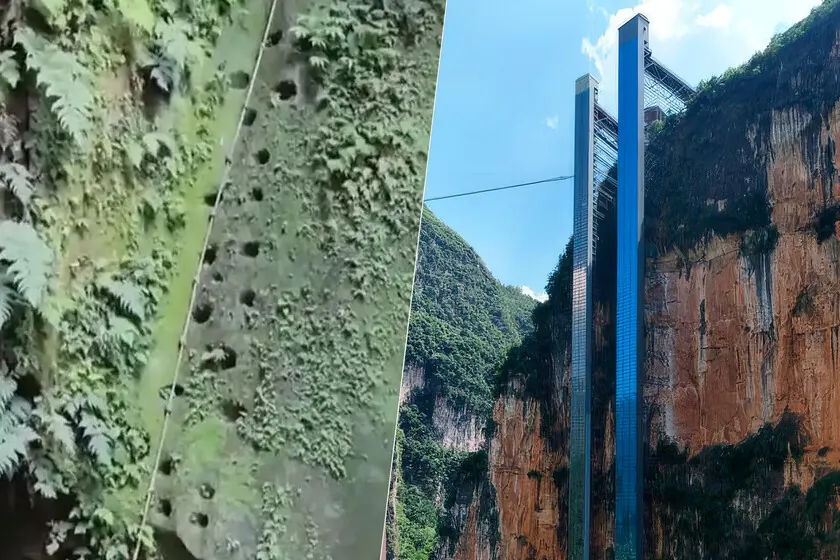
In southwestern China’s Yunnan province, a 288-meter vertical elevator has transformed a perilous three-hour mountain trek to school into a 30-minute ride. The Fúyáo elevator, which began operation this month, is the second such structure in the Nizhuhe Canyon, working alongside the Qingyun elevator opened in 2022 and a connecting cable car section to create a complete vertical transport system for students and residents.
The Nizhuhe Canyon sits on the border between Yunnan and Guizhou. The village of Nizhuhe lies at the canyon floor, while the school is on the elevated plateau more than 500 meters above. Before the elevators, students used narrow, steep, and slippery mountain paths that took over three hours each way. The new system cuts that to roughly 30 minutes.
Key facts
| Detail | Information |
|---|---|
| Location | Nizhuhe Canyon, Yunnan-Guizhou border, China |
| Elevator height | 288 meters (Fúyáo); combined system with Qingyun (2022) |
| Vertical drop covered | Over 500 meters from village to school |
| Travel time reduction | From over 3 hours to about 30 minutes |
How the vertical school bus works
The Fúyáo elevator ascends at up to 5 meters per second. It is not a standalone structure but part of an integrated system: the Fúyáo and Qingyun elevators, plus a cable car section, together complete the route from the canyon floor to the upper plateau where the school is located. The system is open free of charge to residents of Nizhuhe and the neighboring village of Guanzhai. Local authorities have also designated specific access for students during daily commutes.
The infrastructure is officially part of a tourism project, but its practical function for the community is central. The first elevator, Qingyun, began to see capacity issues during peak tourist periods, prompting the construction of the larger Fúyáo to handle increased visitor numbers while maintaining reliable access for locals.
Community and economic impact beyond the school run
The elevator system has changed more than the school commute. According to local sources cited by the official Xinhua news agency, the growing popularity of the Nizhuhe Canyon as a tourist destination has enabled some residents to develop new economic activities linked to tourism and local products. The area, long constrained by its isolation, is seeing increased visitor traffic.
The Fúyáo elevator does not compete with China’s largest infrastructure projects — such as the Three Gorges Dam or the Xiong’an New Area — in scale. Its significance is measured differently: solving a daily difficulty for a community that geography had long limited. For students who once climbed dangerous paths to attend class, the elevator represents a direct improvement in safety, time, and quality of life.
Why this matters for ReviewArticle readers
While this story is about infrastructure rather than AI tools, it illustrates how engineering solutions — including automated vertical transport systems — can have direct, measurable impacts on daily life. The design and operation of such systems involve control software, sensor networks, and safety automation that overlap with topics in cloud AI, automation, and agent-based systems. For readers tracking how technology solves real-world problems in challenging environments, the Nizhuhe elevator system offers a concrete case study in applied engineering and community-focused design.
Sources and limitations
The information in this article is based on reporting from Xataka IA and official Chinese state media sources cited in that report, particularly Xinhua. No independent verification of travel times, elevator specifications, or economic impact figures has been conducted. The article relies on secondary reporting from a Spanish-language technology outlet. Readers should treat specific numbers — such as the 5 m/s ascent speed and the 30-minute travel time — as reported by local authorities and not independently confirmed.
Source: Xataka IA, “China ha construido un ‘autobús escolar’ vertical: un ascensor de 288 metros para niños que antes escalaban hasta clase,” https://www.xataka.com/magnet/china-ha-construido-autobus-escolar-vertical-ascensor-288-metros-para-ninos-que-antes-escalaban-clase
Source
Xataka IA Publicacion original: 2026-08-21T20:01:33+00:00
Related articles
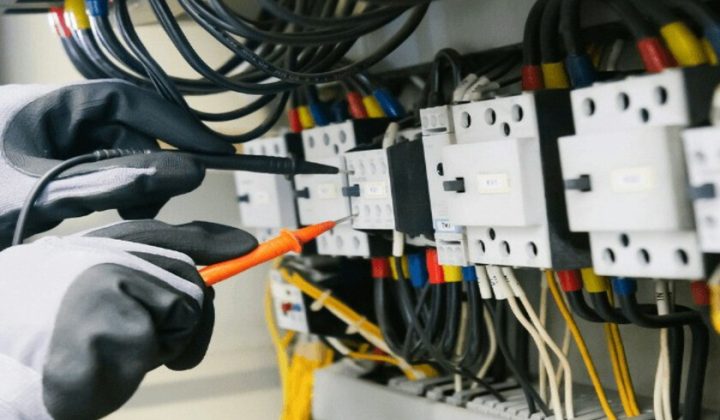
OCU Finds Spanish Homeowner Communities Overpaying Up to €1,500 on Electricity and €3,515 on Gas—Can AI Tools Optimize Shared Energy Bills?
A new OCU analysis of Spanish homeowner community bills reveals widespread overpayment due to non-competitive tariffs and excess contracted power. Could AI-driven…
Read article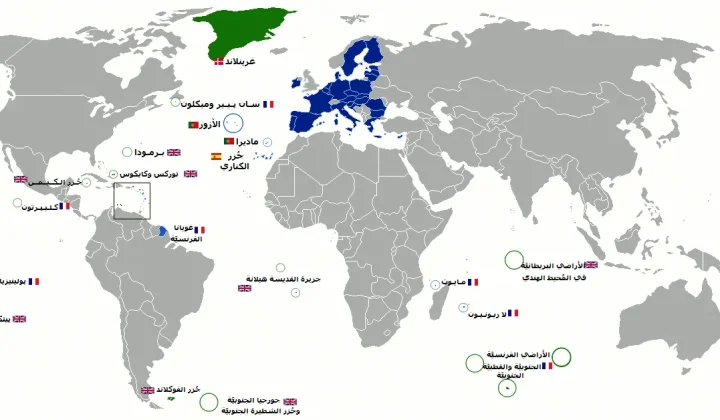
Mayotte fiber dispute does not meet ReviewArticle’s AI news brief
Le Monde reports that France’s competition authority has ordered Orange to suspend part of its fiber-optic rollout in Mayotte. The dispute is…
Read article
DiffEEG Model Uses Diffusion Pre-Training to Improve Seizure Detection from Minimal Labeled Data
Researchers have introduced DiffEEG, a 9.6-million-parameter foundation model that combines denoising diffusion pre-training with reinforcement learning fine-tuning to detect seizure events from…
Read article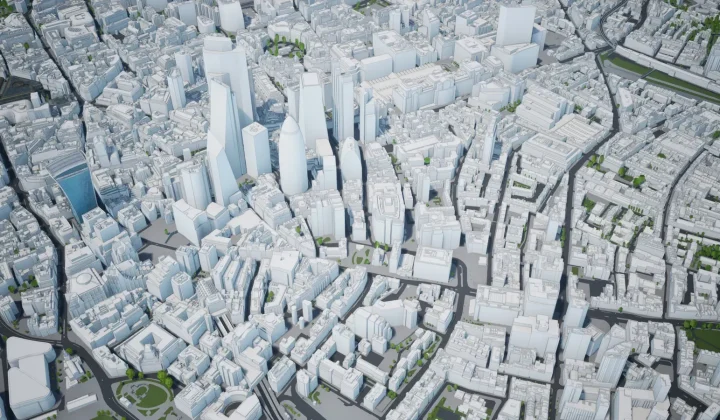
The Technology Trap: Why AI Cannot Escape the Unchanging Fundamentals of War
A new Foreign Affairs essay by former Pentagon official Mara Karlin warns that over-reliance on AI and advanced tech in military planning…
Read articleWiki relacionada

AI Model API Pricing and Context Window Comparison: Current Rates and Limits
Compare the latest API pricing, context windows, and capabilities of leading AI model providers including OpenAI, Anthropic, Google, and Mistral. Practical guidance…
Read article
AI Agent Evaluation Frameworks: How to Benchmark Agentic Systems
A practical guide to evaluating AI agents — from task completion metrics to safety, cost, and robustness. Covers major frameworks, primary sources,…
Read article
LLM Benchmarks Decoded: What MMLU, HumanEval, and GSM8K Actually Measure for Developers
A developer-focused breakdown of the most-cited LLM benchmarks — MMLU, HumanEval, GSM8K, MATH, Chatbot Arena — including what they test, their hidden…
Read article
What Is RAG? A Practical Guide to Retrieval-Augmented Generation in 2025
Retrieval-Augmented Generation (RAG) grounds LLM outputs in external data, reducing hallucinations and enabling enterprise use cases. This guide covers how RAG works,…
Read article