
AI Agent Memory: Architectures, Types, and Management
Explore the fundamental concepts of AI agent memory, including its architectures, types, and management strategies essential for persistent and intelligent agent behavior.
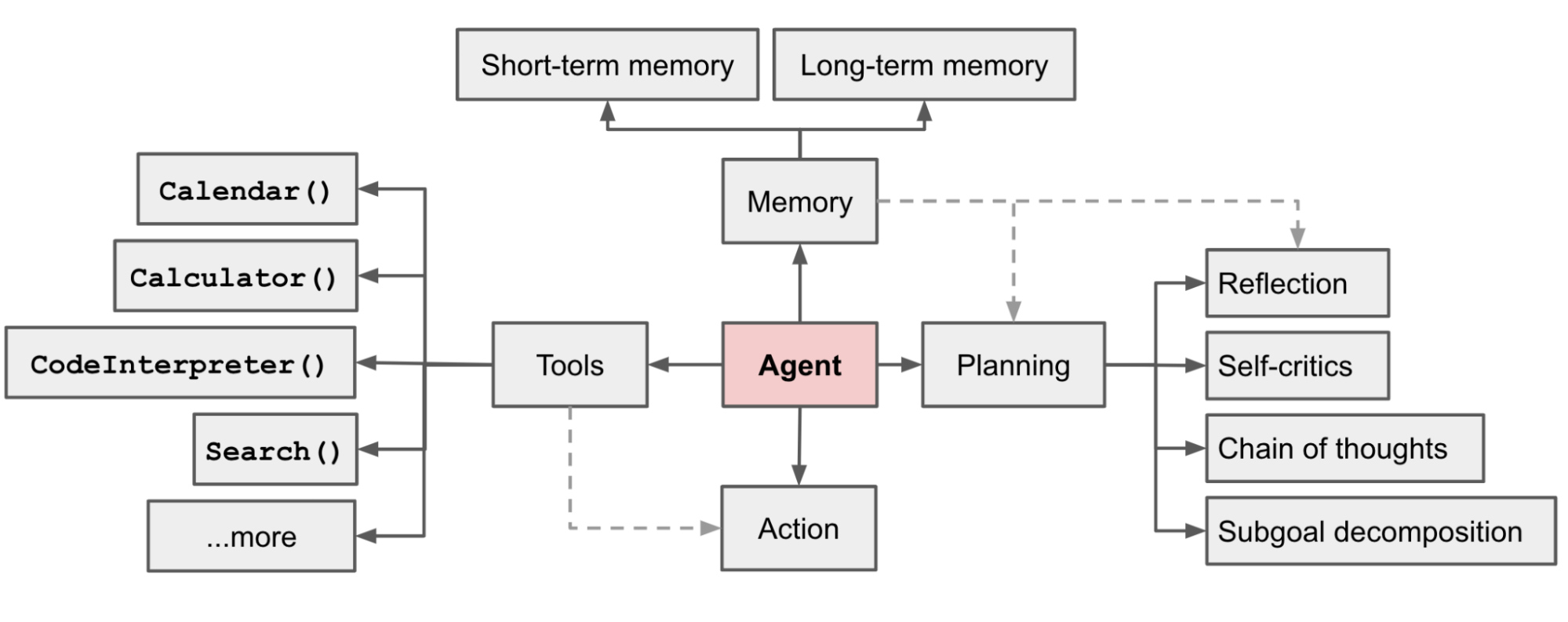
AI agent memory refers to the mechanisms and structures that allow artificial intelligence agents to retain, recall, and utilize past information and experiences to inform current and future actions. Unlike traditional software, AI agents often operate in dynamic environments where context, past interactions, and learned patterns are crucial for effective and intelligent behavior. This memory is fundamental for agents to move beyond single-turn interactions and exhibit capabilities like planning, learning, and adaptation.
Last checked date: 2026-05-20
What it is
AI agent memory is a critical component enabling agents to maintain state, learn from interactions, and improve performance over time. It can encompass various forms, from simple data storage to complex knowledge representation and retrieval systems. The design of an agent’s memory directly impacts its ability to understand context, make informed decisions, and engage in multi-step tasks.
Why it matters
The ability to remember allows AI agents to exhibit more human-like intelligence. Without memory, an agent would effectively restart its perception and decision-making process with every new input, leading to repetitive actions, a lack of learning, and an inability to handle complex, sequential tasks. Memory is essential for:
- Contextual understanding: Maintaining a history of interactions to better interpret current inputs.
- Learning and adaptation: Storing learned patterns, preferences, and outcomes to refine future behavior.
- Planning and problem-solving: Recalling relevant information to formulate strategies and execute multi-step plans.
- Personalization: Remembering user preferences or past interactions to tailor responses.
- Efficiency: Avoiding redundant computations or actions by recalling previous successful strategies.
Who it is for
This guide is for developers, engineers, researchers, and AI power users who are building, designing, or working with AI agents. It provides a foundational understanding necessary for implementing memory systems in agentic applications, from task automation to conversational AI.
How it is used in real workflows
AI agent memory is integrated into various agentic workflows:
- Conversational AI (Chatbots, Virtual Assistants): Agents remember user preferences, previous turns in a dialogue, and past questions to maintain coherent conversations and provide personalized assistance.
- Autonomous Driving: Vehicles store maps, learned driving patterns, and recent sensor data to navigate and react to dynamic road conditions.
- Robotics: Robots use memory to store environmental maps, task sequences, and learned manipulation skills.
- Coding Assistants: Agents remember previous code snippets, user requirements, and error messages to provide relevant suggestions and fix issues.
- Research Agents: Agents store findings, research methodologies, and document summaries to build a cumulative knowledge base.
- Data Analysis Agents: Agents remember query history, data schemas, and analytical insights to perform complex data exploration.
Capabilities and limits
AI agent memory systems vary widely in their capabilities and limitations.
Capabilities often include:
- Long-term knowledge storage: Storing facts, concepts, and learned skills.
- Short-term contextual recall: Maintaining conversational or task state.
- Selective retrieval: Identifying and retrieving only relevant information.
- Dynamic updating: Incorporating new information and modifying existing knowledge.
Limits can involve:
- Scalability: Managing and retrieving information from vast memory stores efficiently.
- Catastrophic forgetting: The tendency for neural networks to forget previously learned information when acquiring new knowledge.
- Cost: Storing and processing large amounts of data, especially for complex memory architectures.
- Relevance: Accurately determining which pieces of memory are relevant to a current task.
- Privacy and security: Ensuring sensitive information stored in memory is protected.
Access, pricing or availability caveats when relevant
The implementation and cost of AI agent memory solutions depend heavily on the chosen architecture:
- In-memory databases/caches: Fast but volatile, often used for short-term context. Cost is typically tied to RAM usage.
- Vector databases: Increasingly popular for long-term semantic memory and RAG. Pricing scales with data volume and query rates (e.g., Pinecone, Weaviate, Qdrant).
- Traditional databases (SQL/NoSQL): Used for structured long-term storage of facts or user profiles. Pricing varies by provider and usage.
- Cloud storage (S3, GCS): Cost-effective for raw data or document storage that feeds into memory systems.
- Local file systems: Simple for smaller-scale, persistent storage, but less scalable for distributed agents.
Privacy, data, copyright, security or enterprise caveats when relevant
Memory systems are central to data governance for AI agents. Key considerations include:
- Data privacy: Ensuring personally identifiable information (PII) is handled according to regulations (e.g., GDPR, CCPA). Anonymization, encryption, and strict access controls are crucial.
- Data security: Protecting memory stores from unauthorized access, modification, or deletion. This involves encryption at rest and in transit, robust authentication, and access management.
- Data retention policies: Defining how long information is stored and when it should be purged, especially for sensitive data.
- Copyright: When agents learn from or store copyrighted material, implications for derivative works or redistribution must be considered.
- Enterprise controls: For business applications, agents need robust audit trails, role-based access to memory, and compliance with corporate data policies.
- Bias: Memory can perpetuate or amplify biases present in the data it learns from. Regular auditing and data curation are necessary.
Alternatives or close comparisons
Memory is often compared to or integrated with other agent components:
- Retrieval Augmented Generation (RAG): RAG systems are a specific form of long-term memory where external knowledge bases are queried to augment an LLM’s response. While RAG is a memory strategy, memory encompasses a broader set of mechanisms.
- Knowledge Graphs: Structured representations of information that can serve as a highly organized form of long-term semantic memory for agents.
- External Tools/APIs: Agents can use tools to access external data sources, which can be seen as a form of “external memory” that is not directly stored within the agent’s internal state.
Practical checklist
When designing or implementing AI agent memory:
Identify memory types needed: Determine if short-term, long-term, episodic, or semantic memory is required for the agent’s function.
2. Define memory scope: What information needs to be remembered, and for how long?
3. Choose appropriate storage: Select databases, vector stores, or other mechanisms based on requirements for speed, persistence, and scalability.
4. Implement retrieval strategy: How will the agent efficiently find relevant information from its memory? (e.g., vector similarity search, keyword search, graph traversal).
5. Address privacy and security: Design with data protection, access control, and retention policies in mind from the outset.
6. Plan for memory updates: How will new information be incorporated, and how will outdated or incorrect information be managed?
7. Consider memory capacity and cost: Estimate storage and retrieval costs, and design for scalability.
8. Evaluate impact on agent performance: Test how memory influences latency, accuracy, and overall agent intelligence.
Related ReviewArticle pages or internal link suggestions
- RAG Systems: Enhancing LLMs with External Knowledge
- Vector Databases for AI Applications
- Understanding LLM Context Windows
- AI Agent Architectures
- Prompt Engineering for Persistent Agents
Sources and caveats
The concepts described are foundational to AI agent design, drawing from established principles in artificial intelligence, cognitive science, and software architecture. Specific implementations and technologies may vary.
- LangChain Documentation on Memory (Example of a popular framework’s approach to memory)
- LlamaIndex Documentation on Memory (Another prominent framework’s perspective)
- OpenAI API Documentation (Implicit memory handling through conversation history in API calls)
Update log
- 2024-07-30: Initial draft outlining core concepts of AI Agent Memory.
Sources
Historial de cambios
Ultima revision y actualizacion: 10 June 2026.
Latest related articles

How an Algorithm Engineered an Instant Influencer With 400,000 Followers in Three Days
At a live-streamed boxing event in Spain, a young woman with zero social-media posts gained hundreds of thousands of followers in hours.…
Read article
Claude Code CLI Agent Review: Pricing, Features, and When to Use It
A practical research review of Anthropic’s Claude Code CLI agent for AI-assisted development, covering token-based pricing, key features, comparisons with Copilot and…
Read article
China Begins Mass Production of Domestic Lithography Machines, Threatening AI Chip Supply Chain
A Chinese government-backed company has started manufacturing immersion DUV lithography machines, potentially reducing dependence on ASML and reshaping the AI hardware supply…
Read article
AWS GuardDuty Investigation Agent Public Preview Automates Threat Triage for Security Teams
AWS releases a public preview of the GuardDuty investigation agent, an AI-powered tool that correlates findings, 90-day activity logs, and resource topologies…
Read article