
Cohere Command Models Explained
An in-depth reference guide to Cohere's Command model family, designed for enterprise natural language processing tasks, including RAG and conversational AI.

Last checked: 2026-05-20
Intro definition
The Cohere Command model family represents a suite of large language models (LLMs) developed by Cohere, specifically engineered for enterprise applications. These models are optimized for tasks requiring advanced natural language understanding and generation, with a particular focus on retrieval-augmented generation (RAG) workflows, summarization, and conversational AI. The Command series, including notable iterations like Command R and Command R+, targets developers and organizations looking to integrate powerful, scalable, and secure AI capabilities into their products and services.
What it is
The Cohere Command models are proprietary LLMs designed to handle complex business-centric natural language processing (NLP) challenges. They are distinct from Cohere’s Embed models, which focus on generating vector embeddings for search and retrieval. The Command models excel at interpreting user queries, generating coherent and contextually relevant responses, and performing multi-step reasoning. Key features often include large context windows, support for multiple languages, and fine-tuning capabilities for specific enterprise use cases.
Why it matters
Cohere Command models matter because they address critical enterprise needs for reliable, cost-effective, and production-ready AI. Traditional LLMs can struggle with factual accuracy, hallucination, and integration into existing business systems. Command models are built with features like RAG optimization, allowing them to leverage proprietary data for more accurate and grounded responses, reducing the risk of misinformation. Their focus on scalability and security makes them suitable for sensitive corporate environments, enabling practical applications in customer service, internal knowledge management, and content generation.
Who it is for
Cohere Command models are primarily for:
- Enterprise developers: Building AI-powered applications that require robust language understanding and generation.
- Data scientists and AI engineers: Implementing RAG systems, complex chatbots, and intelligent assistants.
- Product managers: Integrating advanced NLP capabilities into their offerings.
- Businesses of all sizes: Seeking to automate customer support, enhance internal search, or generate high-quality content at scale.
- Organizations: With a strong emphasis on data privacy, security, and the need for explainable AI outcomes.
How it is used in real workflows
In real-world workflows, Cohere Command models are applied in several ways:
- Customer support automation: Powering intelligent chatbots that can answer complex queries by retrieving information from internal knowledge bases.
- Enterprise search and knowledge management: Enhancing internal search engines to provide more precise answers by synthesizing information from various documents.
- Content generation and summarization: Automatically drafting reports, summarizing long documents, or generating marketing copy based on specific prompts and data.
- Conversational AI: Building sophisticated virtual assistants capable of multi-turn conversations and understanding nuanced user intent.
- RAG pipelines: Acting as the generation component in RAG systems, retrieving relevant information from a vector database and then formulating a comprehensive answer.
Capabilities and limits
The Cohere Command models offer significant capabilities:
- RAG optimization: Designed to work efficiently with external data sources, minimizing hallucinations.
- Multi-lingual support: Capable of processing and generating text in numerous languages, essential for global businesses.
- Large context windows: Allowing models to process and retain more information within a single interaction, improving coherence and relevance.
- Tool use/function calling: Enabling the model to interact with external APIs and tools to perform actions or fetch real-time data.
- Summarization: Effective at condensing long texts into concise summaries.
However, like all LLMs, they have limits:
- Computational cost: Running large models can be resource-intensive, impacting latency and cost.
- Potential for bias: Models trained on vast datasets can inherit biases present in that data.
- Reliance on data quality: RAG performance heavily depends on the quality and relevance of the retrieved documents.
- Complexity of deployment: Integrating and fine-tuning these models requires technical expertise.
Access, pricing or availability caveats
Cohere Command models are typically accessed via Cohere’s API. Availability and specific features can vary by model version and geographic region. Pricing is generally usage-based, often calculated per input token and output token, with different tiers for various models and potentially enterprise-specific agreements. Cohere’s pricing page provides detailed information, and cost can scale significantly with high-volume usage.
Privacy, data, copyright, security or enterprise caveats
Cohere emphasizes enterprise-grade security and data privacy for its Command models. Key considerations include:
- Data handling: Cohere outlines its data retention and usage policies, often ensuring customer data is not used to train models unless explicitly opted in.
- Security compliance: Adherence to industry standards and certifications relevant to enterprise data.
- Intellectual property: Policies regarding the ownership of outputs generated by the models.
- Content moderation: Tools and guidelines for filtering harmful or inappropriate content.
- Enterprise controls: Features for fine-grained access management, logging, and monitoring of API usage.
Alternatives or close comparisons
Several other LLM providers offer models that compete with Cohere Command for enterprise use cases:
- OpenAI GPT-4 / GPT-3.5: Broad general intelligence, vast knowledge | General chat, content creation, coding assistance
- Anthropic Claude 3: Strong safety, large context window, nuanced | Conversational AI, long-form content, safety-critical
- Google Gemini (Pro/Ultra): Multimodality, diverse data understanding | Multimodal applications, complex reasoning
- Mistral Large / Medium: Efficiency, strong performance benchmarks | High-volume NLP, RAG, developer tools
Practical checklist
When considering Cohere Command models for your project:
Define your specific NLP task: Is it RAG, summarization, conversation, or something else?
2. Evaluate data privacy requirements: Ensure Cohere’s data handling aligns with your organization’s policies.
3. Assess multi-lingual needs: Verify support for all required languages.
4. Estimate context window requirements: Determine how much information the model needs to process per interaction.
5. Review pricing structure: Understand token-based costs and potential enterprise discounts.
6. Plan for integration: Consider API access, SDKs, and developer resources.
7. Benchmark performance: Test the model with your specific datasets and use cases.
8. Consider fine-tuning options: Explore if custom training on your data is necessary.
9. Evaluate safety and moderation features: Ensure alignment with your content policies.
Related ReviewArticle pages or internal link suggestions
- Guide to Retrieval-Augmented Generation (RAG)
- Understanding Large Language Model Context Windows
- Enterprise AI Security Best Practices
- Review of OpenAI GPT Models
- Anthropic Claude 3 Overview
Sources and caveats
The information presented is based on official Cohere documentation, blog posts, and public model cards as of the last checked date. Specific model capabilities, pricing, and availability are subject to change by Cohere. Performance benchmarks should always be verified against official sources and practical testing for specific use cases. Claims regarding enterprise readiness, security, and privacy are based on Cohere’s stated policies and offerings, which users should independently verify against their own requirements.
Update log
- 2026-05-20: Initial draft creation.
Sources
Historial de cambios
Ultima revision y actualizacion: 10 June 2026.
Latest related articles
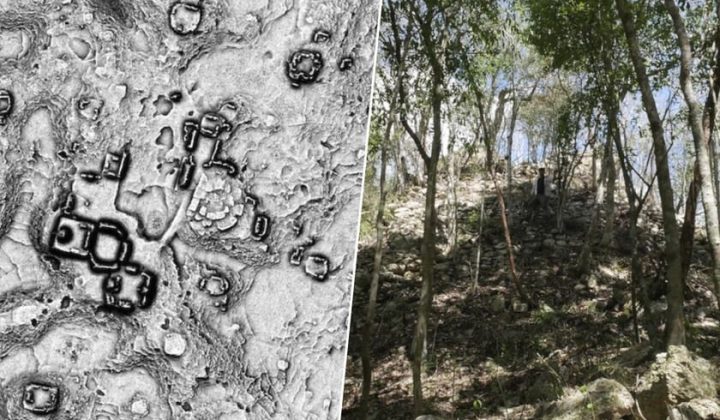
Archaeologists Uncover Hidden Maya City ‘Minanbé’ Using LiDAR Technology
A team of archaeologists has discovered a previously unknown Maya city, named Minanbé, deep within Mexico's Calakmul Biosphere Reserve, utilizing advanced LiDAR…
Read article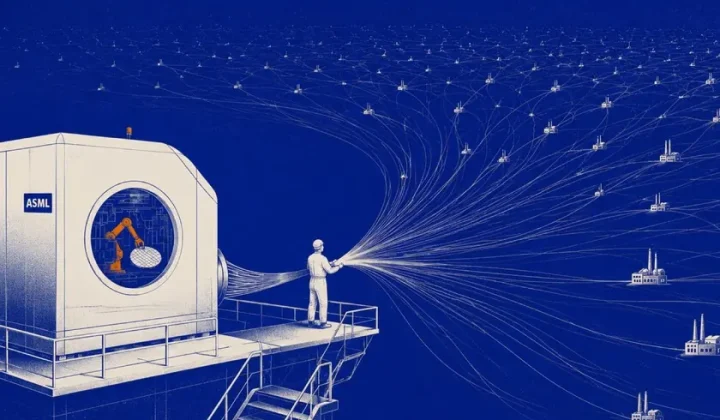
ASML’s Near-Death Journey to Global Semiconductor Monopoly
The story of ASML's rise from a struggling joint venture to the indispensable linchpin of global advanced chip manufacturing, detailing its strategic…
Read article
AI Tools Help Preserve Produce: New Methods for Extending Vegetable Shelf Life
While not directly AI-driven, advanced preservation techniques for vegetables like zucchini highlight the intersection of technology and food science, offering insights into…
Read article
Deteriorating Radioactive Barrels in Atlantic Pose Dilemma for Researchers
Decades-old radioactive waste buried deep in the Atlantic is showing critical signs of decay, raising concerns about potential environmental impacts and the…
Read article