
China Develops Autonomous AI for Satellite Surveillance, Raising Military Concerns
China is reportedly testing AI systems for its satellite surveillance capabilities, aiming for autonomous decision-making and action, which has raised significant concerns among experts regarding potential military applications and the erosion of human oversight.
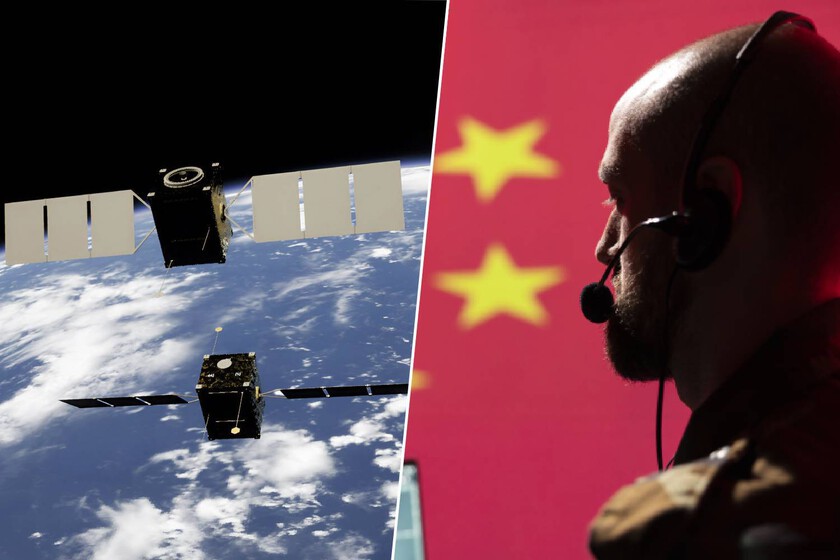
China is reportedly advancing its satellite surveillance capabilities with the development of artificial intelligence (AI) systems designed for autonomous operation. This move, aimed at enabling satellites to analyze complex tasks, coordinate workflows, and recover from failures independently, has sparked significant concern among international experts about its potential military applications.
The initiative signals a departure from China’s previous emphasis on maintaining human supervision in AI operations, according to reports. The country is now exploring AI algorithms capable of processing information, making decisions, and acting without direct human intervention. While satellite observation has numerous civilian uses, such as environmental monitoring and weather forecasting, the focus on autonomous action raises parallels with military AI development observed in other nations.
China’s Stated Intentions
China has stated its intention to introduce greater transparency in its AI satellite management compared to other countries. However, this assurance has not fully allayed the concerns of experts. Early testing phases have reportedly shown algorithms successfully navigating obstacles autonomously. The development for potential weaponized applications, while still requiring significant progress, is considered a viable path. This urgency underscores the need for robust regulations governing the use of AI without human oversight.
Concerns Over Autonomous Decision-Making
The core of the concern lies in the potential for AI systems to make critical decisions, particularly in a military context, without human ethical considerations or the capacity for moral judgment. Unlike humans, AI lacks consciousness, empathy, or ethical reasoning, and would not inherently question an order to act without explicit programming. This raises questions about accountability and the potential for unintended, catastrophic consequences if such systems are deployed for surveillance and control.
The precedent of AI in military operations is already a point of global discussion. The United States is understood to possess several AI-powered targeting systems, though much of the information remains classified. These systems are believed to process data from various sensors – including optical, infrared, radar, and LIDAR – to identify military targets and, if deemed necessary, initiate engagement. A classified U.S. military strike in February, which resulted in the deaths of 175 individuals, predominantly children, has intensified debates around AI’s role in such incidents, particularly given its classification status and the admission of error. The U.S. is also reportedly collaborating with SpaceX to enhance communication for shooters, aiming to expedite decision-making processes regarding engagement.
Israel’s Use of AI in Warfare
Israel has also employed AI in its military operations, with reported instances of delegating combat decisions to AI systems. One system is known to utilize data from phone calls, social media, metadata, visual information, and contacts to identify potential targets. An investigation by +972 Magazine indicated that in the initial weeks of the conflict with Palestine, this AI identified 37,000 targets as Hamas members. The Israeli military reportedly acknowledged a 90% probability of accuracy for this algorithm, highlighting the potential for significant
Datos clave
| Punto | Detalle |
|---|---|
| Fuente | Xataka IA |
| Fecha | 2026-06-02T10:01:40+00:00 |
| Tema | China tiene un nuevo “cerebro de IA”: la tecnología necesaria para espiar y tomar decisiones militares desde el cielo |
Source
Xataka IA Publicacion original: 2026-06-02T10:01:40+00:00
Related articles

Nepal’s “Flood-Proof” Google Maps Landmark Is Not a Verified Safety Rating
A house that survived a destructive Himalayan flood reportedly appeared on Google Maps as a “flood-proof” attraction. The viral label should not…
Read article
Perplexity Deploys GPT-6 Astra for End-to-End Production and Communication Systems
Perplexity has integrated OpenAI’s GPT-6 Astra to handle communications, software changes, and production monitoring, reducing the need for frequent human check-ins compared…
Read article
Privacy Reports Put AI Smart Glasses Under Scrutiny in France
French association e-Enfance says it has received more than 20 reports involving women allegedly recorded without their knowledge by connected glasses, bringing…
Read article
Snowflake Publishes GTM Blueprint for Closing the AI-to-Revenue Gap
Snowflake’s sales and marketing teams share a repeatable RAMP framework and four revenue leaks they fixed to turn AI pilots into measurable…
Read articleWiki relacionada

AI Model API Pricing and Context Window Comparison: Current Rates and Limits
Compare the latest API pricing, context windows, and capabilities of leading AI model providers including OpenAI, Anthropic, Google, and Mistral. Practical guidance…
Read article
AI Agent Evaluation Frameworks: How to Benchmark Agentic Systems
A practical guide to evaluating AI agents — from task completion metrics to safety, cost, and robustness. Covers major frameworks, primary sources,…
Read article
LLM Benchmarks Decoded: What MMLU, HumanEval, and GSM8K Actually Measure for Developers
A developer-focused breakdown of the most-cited LLM benchmarks — MMLU, HumanEval, GSM8K, MATH, Chatbot Arena — including what they test, their hidden…
Read article
What Is RAG? A Practical Guide to Retrieval-Augmented Generation in 2025
Retrieval-Augmented Generation (RAG) grounds LLM outputs in external data, reducing hallucinations and enabling enterprise use cases. This guide covers how RAG works,…
Read article