
Larry Ellison’s $500 Million Bet on Hydroponic Farming on Lanai Island Faces Setbacks
Billionaire Larry Ellison's ambitious project to revolutionize food production through advanced hydroponics on his private Hawaiian island has encountered significant technological and operational challenges, resulting in substantial financial losses and a shift in strategy.
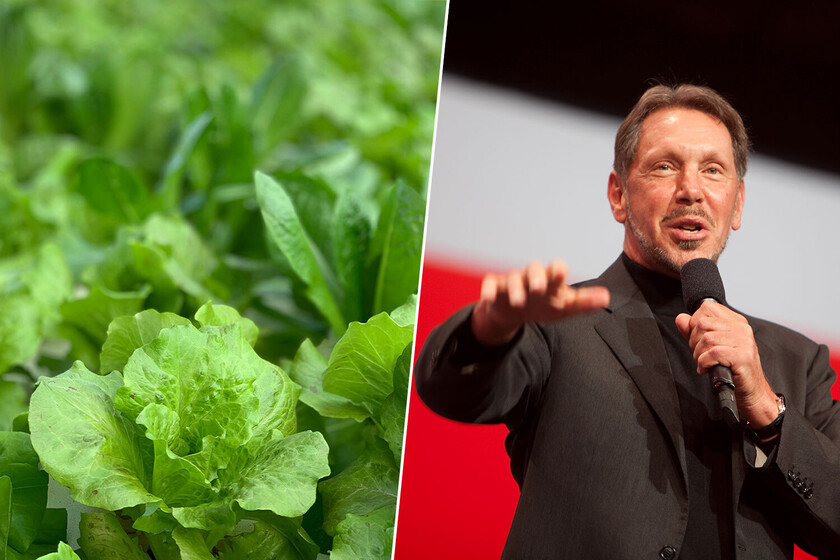
Larry Ellison, co-founder of Oracle and a prominent figure in the tech world, invested hundreds of millions of dollars into a technologically advanced agricultural project on his private Hawaiian island, Lanai. The initiative, spearheaded by his company Sensei Ag, aimed to transform food production using modern hydroponics and artificial intelligence. However, the ambitious plan has encountered considerable obstacles, leading to significant financial losses and a revised operational focus.
The project, which began with Ellison’s acquisition of 98% of Lanai in 2012 for nearly $300 million, was intended to be a hub for sustainability and agricultural innovation. Sensei Ag was established with the goal of developing a novel vegetable cultivation model promising to significantly boost future food production. The company aimed to create a sustainable, replicable model for growing fresh produce using advanced technology and minimizing environmental impact.
Agricultural Ambitions and Initial Investment
Ellison committed an initial investment of $500 million to establish six high-tech greenhouses on Lanai. These facilities were designed to incorporate advanced sensors, artificial intelligence, and climate control systems to optimize growing conditions. The vision was to produce high-quality fruits and vegetables while using less land and fewer natural resources. A key element of the plan was to power these operations with renewable energy, creating a truly sustainable model for global deployment. David Agus, a friend of Ellison and co-founder of Sensei Ag, noted that traditional greenhouse structures, optimized centuries ago, had seen little significant improvement.
Challenges Emerge on Lanai
The island of Lanai presented unique environmental challenges that were not fully accounted for in the project’s design. Historically a major pineapple producer, the island’s soil had been degraded by intensive farming and chemical agents. Furthermore, the local climate, characterized by high humidity and strong winds, proved problematic for the advanced infrastructure. Israeli engineers who built the greenhouses reportedly did not adequately consider these factors, leading to the destruction of $12 million worth of greenhouse coverings due to high winds, with repair costs escalating to $50 million.
Technological Hurdles
The integration of technology also faced unexpected difficulties. Elon Musk, a personal friend of Ellison, supplied solar panels intended to power the greenhouses. However, persistent strong winds frequently covered the panels with debris, rendering them ineffective and often necessitating the use of diesel generators for power. A critical, yet seemingly minor, issue was the unreliability of Wi-Fi coverage. In a high-tech greenhouse environment where hundreds of sensors constantly monitor and adjust light, temperature, humidity, and ventilation, a stable internet connection is crucial for successful crop management.
Financial Realities and Strategic Shift
Despite the sophisticated technology, Sensei Ag grappled with the same profitability issues faced by conventional farmers worldwide. En Young, former general manager of the Lanai facilities, stated that the grand vision was gradually diluted by the practical realities of implementation. The high operational and maintenance costs of the advanced facilities far outstripped the revenue generated from food sales. While Sensei Ag became a leading producer of lettuce and cherry tomatoes in Hawaii, its founding objective of “feeding the world” proved elusive.
In response to these challenges, Sensei Ag is shifting its focus. The company plans to leverage its greenhouses as a testing ground for agricultural management software. The goal is to develop and sell a package of software and hardware that other farms can franchise. Additionally, Sensei Ag has expanded its operations to Southern California, implementing robotic cultivation systems for automated crop care. It has also acquired 11 hectares near Austin, Texas, formerly the headquarters of robotic agriculture firm Iron Ox, investing $40 million to broaden its market reach beyond Hawaii.
The partial scaling back of the Sensei Ag project on Lanai has raised questions about Ellison’s long-term plans for the island. Some residents have voiced concerns that the island’s agricultural resources are being used for technological experiments rather than to bolster local food supply, as Lanai imports 80% to 90% of its consumed products.
Datos clave
| Aspecto | Detalle |
|—|—|
| Inversión inicial | $500 millones |
| Ubicación | Isla de Lanai, Hawái |
| Empresa responsable | Sensei Ag |
| Tecnología utilizada | Hidroponía, IA, sensores avanzados, energía renovable |
| Desafíos principales | Clima (viento, humedad), fallos tecnológicos (Wi-Fi, paneles solares), altos costos operativos |
| Nueva estrategia | Desarrollo de software de gestión agrícola, expansión a California y Texas |
This development is significant for ReviewArticle readers as it highlights the complex intersection of artificial intelligence, advanced technology, and real-world challenges in the agricultural sector. It underscores that even with substantial financial backing and cutting-edge tech, achieving scalable and profitable solutions in areas like sustainable farming remains a significant hurdle, offering valuable insights into the practical limitations and evolving strategies within the AI and agritech industries.
Fuente: Xataka, https://www.xataka.com/ecologia-y-naturaleza/larry-ellison-quiso-alimentar-al-mundo-cultivando-lechugas-su-isla-privada-rego-500-millones-dolares-1
Datos clave
| Punto | Detalle |
|---|---|
| Fuente | Xataka IA |
| Fecha | 2026-06-04T06:01:55+00:00 |
| Tema | Larry Ellison quiso alimentar al mundo cultivando lechugas en su isla privada: las regó con 500 millones de dólares |
Source
Xataka IA Publicacion original: 2026-06-04T06:01:55+00:00
Related articles
Nepal’s “Flood-Proof” Google Maps Landmark Is Not a Verified Safety Rating
A house that survived a destructive Himalayan flood reportedly appeared on Google Maps as a “flood-proof” attraction. The viral label should not…
Read article
Perplexity Deploys GPT-6 Astra for End-to-End Production and Communication Systems
Perplexity has integrated OpenAI’s GPT-6 Astra to handle communications, software changes, and production monitoring, reducing the need for frequent human check-ins compared…
Read article
Privacy Reports Put AI Smart Glasses Under Scrutiny in France
French association e-Enfance says it has received more than 20 reports involving women allegedly recorded without their knowledge by connected glasses, bringing…
Read article
Snowflake Publishes GTM Blueprint for Closing the AI-to-Revenue Gap
Snowflake’s sales and marketing teams share a repeatable RAMP framework and four revenue leaks they fixed to turn AI pilots into measurable…
Read articleWiki relacionada

AI Model API Pricing and Context Window Comparison: Current Rates and Limits
Compare the latest API pricing, context windows, and capabilities of leading AI model providers including OpenAI, Anthropic, Google, and Mistral. Practical guidance…
Read article
AI Agent Evaluation Frameworks: How to Benchmark Agentic Systems
A practical guide to evaluating AI agents — from task completion metrics to safety, cost, and robustness. Covers major frameworks, primary sources,…
Read article
LLM Benchmarks Decoded: What MMLU, HumanEval, and GSM8K Actually Measure for Developers
A developer-focused breakdown of the most-cited LLM benchmarks — MMLU, HumanEval, GSM8K, MATH, Chatbot Arena — including what they test, their hidden…
Read article
What Is RAG? A Practical Guide to Retrieval-Augmented Generation in 2025
Retrieval-Augmented Generation (RAG) grounds LLM outputs in external data, reducing hallucinations and enabling enterprise use cases. This guide covers how RAG works,…
Read article