
NVIDIA Nemotron Models for Enterprise AI and Development
An overview of NVIDIA's Nemotron model family, designed for developers building custom large language models and enterprise AI applications.

NVIDIA Nemotron Models: An Overview
The NVIDIA Nemotron model family represents a suite of open, large language models (LLMs) designed by NVIDIA to empower developers in building custom AI applications, particularly in enterprise environments. These models are engineered to facilitate the creation of specialized LLMs through fine-tuning, retrieval-augmented generation (RAG), and tool-use capabilities. Unlike general-purpose conversational AI, Nemotron models focus on providing a strong foundation for domain-specific AI solutions and developer workflows.
Last checked: 2026-05-20
What it is
The NVIDIA Nemotron family consists of open-access foundation models that serve as a starting point for various generative AI tasks. A key offering in this family is Nemotron-4 340B, a 340-billion parameter model available in different variants, including a base model, an instruction-tuned model, and a RAG-tuned model. These models are designed to be adaptable, allowing developers to customize them for specific use cases, data, and performance requirements. The “open” nature refers to their availability for download and deployment on private infrastructure, providing greater control and customization options compared to API-only models.
Why it matters
NVIDIA Nemotron models matter because they address critical needs for enterprise AI adoption:
* Customization: Enterprises often require LLMs tailored to their unique data, terminology, and workflows. Nemotron models provide a robust base for fine-tuning.
* Data Privacy and Security: Deploying models on-premises or within a private cloud environment can help meet stringent data privacy and security requirements.
* Cost Efficiency: For high-volume or specialized applications, deploying and running open models can be more cost-effective than relying solely on API calls to third-party services.
* Innovation: By providing open models, NVIDIA encourages experimentation and the development of novel AI applications that might not be feasible with proprietary, closed-source alternatives.
* RAG and Tool Use: The models are specifically architected to integrate effectively with RAG systems for factual grounding and to facilitate tool use for complex task automation.
Who it is for
NVIDIA Nemotron models are primarily intended for:
* AI Developers and Researchers: Those building and experimenting with custom LLMs.
* Enterprise AI Teams: Companies looking to integrate generative AI capabilities into their products or internal operations with a focus on data control and domain specificity.
* Cloud AI Architects: Professionals designing and deploying AI infrastructure.
* Data Scientists: Individuals working on fine-tuning and evaluating LLMs for specific tasks.
How it is used in real workflows
Nemotron models are integrated into AI development workflows in several ways:
* Fine-tuning: Developers can take a Nemotron base model and fine-tune it on proprietary datasets to create highly specialized LLMs for tasks like customer service, legal document analysis, or scientific research.
* Retrieval-Augmented Generation (RAG): The RAG-tuned variants are optimized for combining the LLM’s generative capabilities with external knowledge bases. This is crucial for applications requiring up-to-date and factual information, such as internal knowledge assistants or detailed report generation.
* Tool Use and Agents: Nemotron models can be equipped with the ability to use external tools (e.g., APIs, databases, calculators) to perform more complex reasoning and multi-step tasks, forming the basis of AI agents.
* Benchmarking and Evaluation: Researchers use these open models as a baseline for evaluating new techniques, architectures, or datasets.
* Deployment: After customization, Nemotron models can be deployed on NVIDIA GPUs in data centers or private cloud environments using frameworks like NVIDIA NeMo.
Capabilities and limits
The Nemotron model family offers significant capabilities but also has inherent limitations common to large language models.
- Foundation Model: Provides a strong base for various generative AI tasks and fine-tuning. | Requires significant computational resources for training and inference.
- Instruction Following: Instruction-tuned variants are designed to follow complex instructions and generate appropriate responses. | Performance can vary based on instruction complexity and domain.
- Retrieval-Augmented Generation (RAG): Specialized variants are optimized for integrating with external knowledge bases. | Effectiveness depends on the quality and relevance of the retrieved documents.
- Tool Use: Can be trained to interact with external APIs and tools to extend functionality. | Requires careful prompt engineering and tool definition.
- Multilingual Support: While primarily English-centric, can exhibit some multilingual capabilities. | Not designed as a primary multilingual model; performance varies by language.
- Context Window: Offers a large context window for processing extensive input texts. | Longer contexts can increase inference latency and memory requirements.
- Bias Mitigation: NVIDIA implements efforts to reduce harmful biases. | Inherited biases from training data may still exist and require further mitigation.
- Factuality: Can generate plausible but incorrect information (hallucinations). | RAG integration is crucial for improving factual accuracy.
Access, pricing or availability caveats when relevant
NVIDIA Nemotron models are generally available through NVIDIA’s developer platforms and repositories. The models are open-access, meaning they can be downloaded and run on compatible hardware. While the models themselves are open, developers will incur costs related to:
* Hardware: NVIDIA GPUs (e.g., NVIDIA H100, A100) are recommended for optimal performance.
* Infrastructure: Cloud compute costs if running on cloud providers, or data center costs for on-premises deployment.
* Software Licenses: While the models are open, certain NVIDIA software tools and frameworks (like NVIDIA AI Enterprise) may have associated licensing costs for enterprise use.
* Development Resources: Time and expertise required for fine-tuning, deployment, and maintenance.
Privacy, data, copyright, security or enterprise caveats when relevant
- Privacy: When fine-tuning Nemotron models with proprietary or sensitive data, organizations must implement robust data governance and privacy measures. The responsibility for data handling lies with the deploying entity.
- Security: Deploying open models requires careful attention to security best practices, including securing the inference environment, managing access, and monitoring for potential vulnerabilities.
- Copyright: While the models are open, the data used for fine-tuning or RAG must adhere to copyright and licensing agreements. Output generated by the models may also have copyright implications depending on its use.
- Enterprise Controls: For enterprise deployments, integration with existing IT infrastructure, monitoring tools, and access control systems is critical. NVIDIA NeMo offers tools for managing and deploying these models in enterprise environments.
Alternatives or close comparisons
The landscape of open and enterprise-focused LLMs is rapidly evolving. Alternatives to NVIDIA Nemotron models include:
* Meta Llama 3: Another prominent family of open-access LLMs from Meta, available in various sizes and optimized for different tasks.
* Mistral AI Models (e.g., Mixtral, Mistral Large): Known for their efficiency and strong performance on various benchmarks, with both open and commercially available options.
* Google Gemma: Open models from Google, designed for responsible AI development.
* Falcon LLMs: Developed by the Technology Innovation Institute (TII), offering large-scale open models.
* Custom Models: Many organizations also develop proprietary models or fine-tune other open-source models using different frameworks.
Practical checklist
For developers considering NVIDIA Nemotron models:
- Define Use Case: Clearly articulate the specific problem you aim to solve with the LLM (e.g., customer support, code generation, content creation).
- Data Availability: Assess the quantity and quality of your domain-specific data available for fine-tuning or RAG.
- Hardware Resources: Verify you have access to sufficient NVIDIA GPU compute for training and inference.
- Team Expertise: Ensure your team has the necessary skills in LLM development, MLOps, and deployment.
- Privacy & Security Requirements: Map out all regulatory and internal privacy/security mandates.
- Integration Strategy: Plan how the Nemotron-powered LLM will integrate with existing systems and applications.
- Evaluation Metrics: Establish clear metrics for evaluating model performance and success.
Related ReviewArticle pages or internal link suggestions
- Guide to Retrieval-Augmented Generation (RAG)
- Understanding Large Language Model Fine-tuning
- Comparing Open Source LLMs for Enterprise
- NVIDIA NeMo Framework Overview
- AI Agent Development Workflows
Sources and caveats
The information presented here is based on official NVIDIA documentation, technical reports, and model cards for the Nemotron model family, particularly Nemotron-4 340B. Details regarding specific model performance, availability, and features are subject to change as NVIDIA continues its development. Always refer to the latest official NVIDIA resources for the most up-to-date information. Claims regarding capabilities are based on NVIDIA’s stated intentions and technical specifications. Actual performance in specific deployments may vary.
Update log
- 2026-05-20: Initial draft based on available NVIDIA Nemotron-4 340B documentation.
Sources
Historial de cambios
Ultima revision y actualizacion: 10 June 2026.
Latest related articles
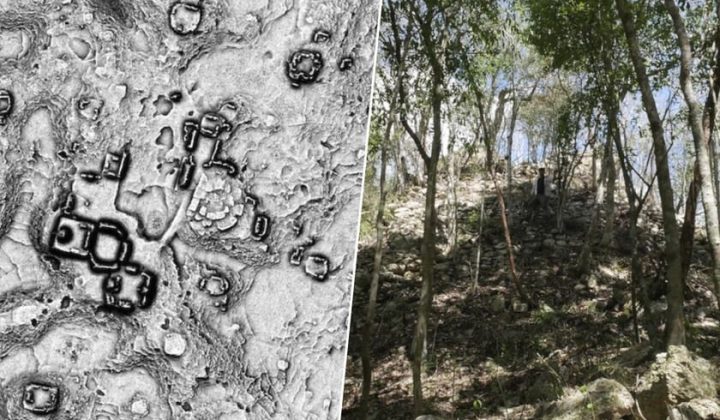
Archaeologists Uncover Hidden Maya City ‘Minanbé’ Using LiDAR Technology
A team of archaeologists has discovered a previously unknown Maya city, named Minanbé, deep within Mexico's Calakmul Biosphere Reserve, utilizing advanced LiDAR…
Read article
ASML’s Near-Death Journey to Global Semiconductor Monopoly
The story of ASML's rise from a struggling joint venture to the indispensable linchpin of global advanced chip manufacturing, detailing its strategic…
Read article
AI Tools Help Preserve Produce: New Methods for Extending Vegetable Shelf Life
While not directly AI-driven, advanced preservation techniques for vegetables like zucchini highlight the intersection of technology and food science, offering insights into…
Read article
Deteriorating Radioactive Barrels in Atlantic Pose Dilemma for Researchers
Decades-old radioactive waste buried deep in the Atlantic is showing critical signs of decay, raising concerns about potential environmental impacts and the…
Read article