
Google Subsidiary Seeks Approval to Release 64 Million Mosquitoes to Combat Disease
Verily, an Alphabet subsidiary, has applied to the EPA for permission to release millions of male mosquitoes carrying Wolbachia bacteria in California and Florida, aiming to reduce populations of disease-carrying insects.
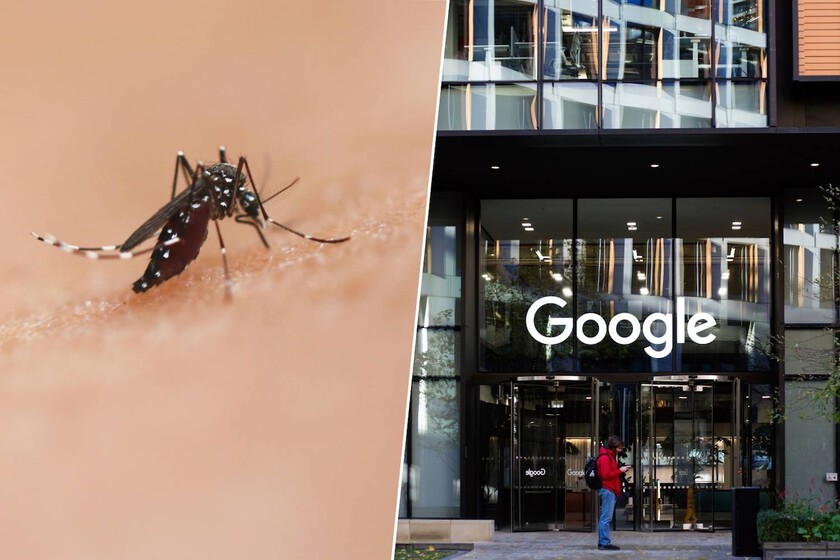
Verily, an Alphabet subsidiary, is seeking approval from the U.S. Environmental Protection Agency (EPA) to release up to 64 million male mosquitoes over two years in California and Florida. The initiative, part of Verily’s Debug Project, aims to control populations of disease-carrying mosquitoes using a biological method involving the bacterium Wolbachia.
The proposal details the release of male *Culex quinquefasciatus* mosquitoes, which do not bite humans. These males are infected with the *Wolbachia pipientis* bacteria. When they mate with wild female mosquitoes that do not carry the same strain of Wolbachia, their offspring do not hatch. This mechanism is intended to reduce the local mosquito population over time.
Verily has requested authorization to release 32 million mosquitoes each year for two years, split between Florida and California, with 16 million designated for each state annually. The public comment period for this request was set to close on June 5th, after which the EPA will review the proposal and make a decision, potentially including conditions for the trial. The ultimate goal is to gather field data that could lead to the commercialization of this pest control solution.
Why This Matters
The *Culex quinquefasciatus* mosquito is a significant vector for several diseases, including avian malaria, West Nile virus, Rift Valley fever, and St. Louis encephalitis. The West Nile virus is a primary mosquito-borne illness in the continental United States, causing an average of 2,000 cases and approximately 120 deaths annually, according to the U.S. Centers for Disease Control and Prevention. Globally, mosquito-borne diseases like dengue fever affect an estimated 400 million people each year, with around 40,000 associated deaths. Developing effective, non-chemical insecticidal methods is crucial for public health and could have a significant global impact.
Scientific Basis and Previous Trials
The strategy is grounded in scientific evidence. A clinical trial in Singapore involving over 700,000 residents demonstrated that releasing Wolbachia-infected mosquitoes reduced the risk of dengue by more than 70%. Verily’s Debug Project is already releasing over 10 million male mosquitoes weekly in Singapore. In Fresno, California, between 2017 and 2018, releases of 7.5 to 14.4 million infected male mosquitoes per week resulted in a reduction of vector mosquito populations by up to 93-95%.
The Role of AI and Automation
The project leverages artificial intelligence and automation in its large-scale mosquito rearing and release process. AI and robots are used to efficiently sort mosquitoes by sex, manage their breeding, and ensure systematic distribution. This technological integration is key to scaling the operation for significant population impact.
Challenges and Limitations
Despite promising results, the method is not without its challenges. Research indicates that the Wolbachia bacteria do not guarantee 100% effectiveness in preventing hatching. A 2024 study found that between 6% and 75% of eggs could still produce live embryos under certain conditions, indicating a lack of complete sterility. Furthermore, a 2022 study by Verily’s own Debug team revealed that the automated systems for mosquito release were still in early prototype stages.
Datos clave
| Aspect | Detail |
|—|—|
| Applicant | Verily (Alphabet subsidiary) |
| Proposed Action | Release of up to 64 million male mosquitoes |
| Mosquito Species | Culex quinquefasciatus |
| Key Technology | Wolbachia bacteria |
| Target Locations | California and Florida |
| Primary Goal | Reduce populations of disease-carrying mosquitoes |
This development is significant for public health initiatives and the application of AI in biological control. By potentially offering an alternative to chemical insecticides, Verily’s project highlights how sophisticated technological approaches, including AI and automation, can be applied to address pressing global health challenges like mosquito-borne diseases.
Fuente: Google tiene claro cuál es el mejor antídoto contra los mosquitos: soltar 64 millones de mosquitos – Xataka: https://www.xataka.com/ecologia-y-naturaleza/google-tiene-claro-cual-mejor-antidoto-mosquitos-muchos-mosquitos-quiere-soltar-64-millones
Datos clave
| Punto | Detalle |
|---|---|
| Fuente | Xataka IA |
| Fecha | 2026-06-06T10:31:09+00:00 |
| Tema | Google tiene claro cuál es el mejor antídoto contra los mosquitos: soltar 64 millones de mosquitos |
Source
Xataka IA Publicacion original: 2026-06-06T10:31:09+00:00
Related articles

IBM CEO Puts a Number on the Open-Weight AI Value Proposition: 90% of the Performance at 10% of the Token Cost
IBM CEO Arvind Krishna told analysts that open-weight models now deliver about 90% of frontier-model effectiveness while costing between 10% and 25%…
Read article
OCU Finds Spanish Homeowner Communities Overpaying Up to €1,500 on Electricity and €3,515 on Gas—Can AI Tools Optimize Shared Energy Bills?
A new OCU analysis of Spanish homeowner community bills reveals widespread overpayment due to non-competitive tariffs and excess contracted power. Could AI-driven…
Read article
Mayotte fiber dispute does not meet ReviewArticle’s AI news brief
Le Monde reports that France’s competition authority has ordered Orange to suspend part of its fiber-optic rollout in Mayotte. The dispute is…
Read article
DiffEEG Model Uses Diffusion Pre-Training to Improve Seizure Detection from Minimal Labeled Data
Researchers have introduced DiffEEG, a 9.6-million-parameter foundation model that combines denoising diffusion pre-training with reinforcement learning fine-tuning to detect seizure events from…
Read articleWiki relacionada

AI Model API Pricing and Context Window Comparison: Current Rates and Limits
Compare the latest API pricing, context windows, and capabilities of leading AI model providers including OpenAI, Anthropic, Google, and Mistral. Practical guidance…
Read article
AI Agent Evaluation Frameworks: How to Benchmark Agentic Systems
A practical guide to evaluating AI agents — from task completion metrics to safety, cost, and robustness. Covers major frameworks, primary sources,…
Read article
LLM Benchmarks Decoded: What MMLU, HumanEval, and GSM8K Actually Measure for Developers
A developer-focused breakdown of the most-cited LLM benchmarks — MMLU, HumanEval, GSM8K, MATH, Chatbot Arena — including what they test, their hidden…
Read article
What Is RAG? A Practical Guide to Retrieval-Augmented Generation in 2025
Retrieval-Augmented Generation (RAG) grounds LLM outputs in external data, reducing hallucinations and enabling enterprise use cases. This guide covers how RAG works,…
Read article