
South Korean KSTAR Reactor Achieves Fusion Plasma Milestone
The Korea Superconducting Tokamak Advanced Research (KSTAR) reactor has successfully maintained a stable plasma at fusion temperatures for 102 seconds, a significant step towards commercial fusion energy.
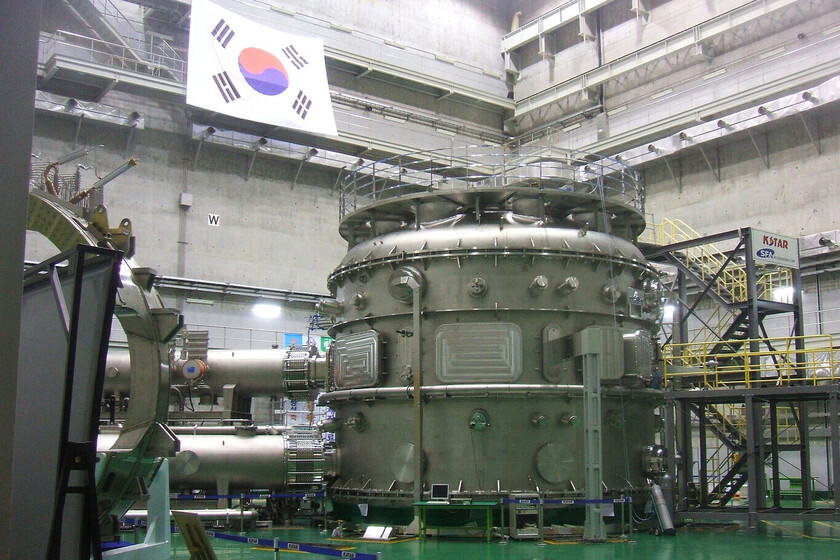
South Korea’s KSTAR reactor has achieved a significant breakthrough in nuclear fusion research, maintaining stable plasma at fusion temperatures for an unprecedented 102 seconds. Operated by the Korea Institute of Fusion Energy (KFE), the KSTAR aims to demonstrate the viability of commercial-scale fusion energy. This latest achievement marks a crucial step forward in overcoming the challenges of controlling and sustaining the extreme conditions required for fusion.
Key Developments
The KSTAR team successfully sustained plasma in a high-confinement mode (H-mode) for 102 seconds. During this period, the plasma temperature was maintained at 100 million degrees Celsius for 48 seconds. These figures represent a new record and are essential for achieving net energy gain in fusion reactors.
Maintaining plasma at such extreme temperatures is fundamental to fusion energy. At these temperatures, ionized deuterium and tritium nuclei possess enough kinetic energy to overcome their natural electrical repulsion and fuse, releasing vast amounts of energy. However, managing plasma at these conditions is exceptionally complex. Magnetic confinement reactors like KSTAR utilize sophisticated high-power magnet systems to contain the superheated ionized fuel.
A significant factor in KSTAR’s recent success is the implementation of a new tungsten divertor. This component, made of stainless steel with tungsten shields, is designed to withstand the high-energy neutron bombardment from the plasma. The tungsten shields absorb the plasma’s kinetic energy, converting it into heat, which is then dissipated by water circulating within the divertor. Tungsten was chosen for its exceptionally high melting point of 3,422 degrees Celsius, making it ideal for the plasma-facing surfaces. The divertor also plays a critical role in purifying the plasma by removing ash and impurities generated during the fusion reaction and plasma-wall interactions.
The KFE noted that the previous carbon divertor had reached its operational limits as experiments intensified and temperatures increased. The next ambitious goal for KSTAR is to operate the reactor for 300 seconds at temperatures exceeding 100 million degrees Celsius.
Why This Matters
This advancement by the KSTAR reactor is a critical development in the global pursuit of clean and virtually limitless fusion energy. By successfully extending the duration of stable, high-temperature plasma confinement, researchers are moving closer to overcoming major engineering hurdles. The ability to sustain these conditions for longer periods is essential for transitioning fusion power from experimental research to a practical energy source. While generating more energy than consumed remains a significant challenge, milestones like this fuel optimism and demonstrate tangible progress in fusion science and technology.
Datos clave
| Aspecto | Detalle |
|—|—|
| Reactor | KSTAR (Korea Superconducting Tokamak Advanced Research) |
| Institución Operadora | Korea Institute of Fusion Energy (KFE) |
| Logro | Mantenimiento de plasma estable a 100 millones °C durante 102 segundos |
| Componente Clave | Nuevo divertor de tungsteno |
| Próximo Objetivo | Operar durante 300 segundos a temperaturas superiores a 100 millones °C |
Fuente: Fusión nuclear: el reactor surcoreano KSTAR ha reescrito los límites de lo posible (Xataka) – https://www.xataka.com/energia/fusion-nuclear-reactor-surcoreano-kstar-ha-reescrito-limites-posible
Datos clave
| Punto | Detalle |
|---|---|
| Fuente | Xataka IA |
| Fecha | 2026-06-09T10:16:16+00:00 |
| Tema | Fusión nuclear: el reactor surcoreano KSTAR ha reescrito los límites de lo posible |
Source
Xataka IA Publicacion original: 2026-06-09T10:16:16+00:00
Related articles
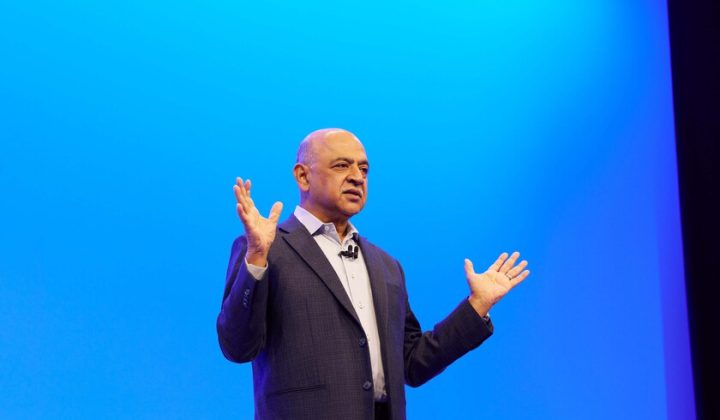
IBM CEO Puts a Number on the Open-Weight AI Value Proposition: 90% of the Performance at 10% of the Token Cost
IBM CEO Arvind Krishna told analysts that open-weight models now deliver about 90% of frontier-model effectiveness while costing between 10% and 25%…
Read article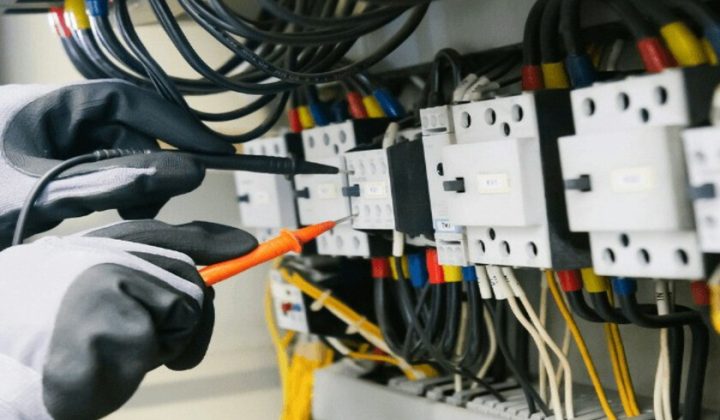
OCU Finds Spanish Homeowner Communities Overpaying Up to €1,500 on Electricity and €3,515 on Gas—Can AI Tools Optimize Shared Energy Bills?
A new OCU analysis of Spanish homeowner community bills reveals widespread overpayment due to non-competitive tariffs and excess contracted power. Could AI-driven…
Read article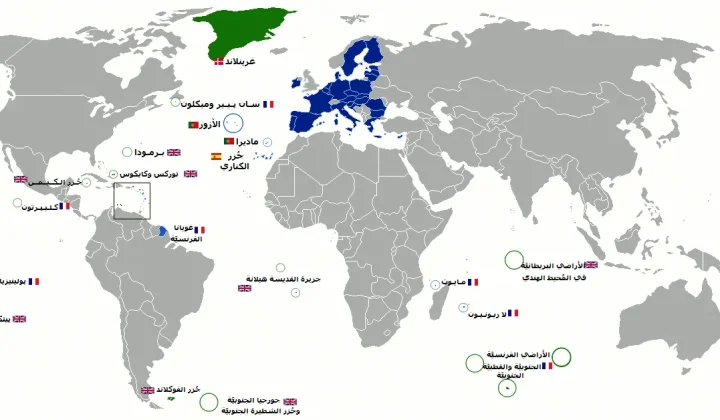
Mayotte fiber dispute does not meet ReviewArticle’s AI news brief
Le Monde reports that France’s competition authority has ordered Orange to suspend part of its fiber-optic rollout in Mayotte. The dispute is…
Read article
DiffEEG Model Uses Diffusion Pre-Training to Improve Seizure Detection from Minimal Labeled Data
Researchers have introduced DiffEEG, a 9.6-million-parameter foundation model that combines denoising diffusion pre-training with reinforcement learning fine-tuning to detect seizure events from…
Read articleWiki relacionada

AI Model API Pricing and Context Window Comparison: Current Rates and Limits
Compare the latest API pricing, context windows, and capabilities of leading AI model providers including OpenAI, Anthropic, Google, and Mistral. Practical guidance…
Read article
AI Agent Evaluation Frameworks: How to Benchmark Agentic Systems
A practical guide to evaluating AI agents — from task completion metrics to safety, cost, and robustness. Covers major frameworks, primary sources,…
Read article
LLM Benchmarks Decoded: What MMLU, HumanEval, and GSM8K Actually Measure for Developers
A developer-focused breakdown of the most-cited LLM benchmarks — MMLU, HumanEval, GSM8K, MATH, Chatbot Arena — including what they test, their hidden…
Read article
What Is RAG? A Practical Guide to Retrieval-Augmented Generation in 2025
Retrieval-Augmented Generation (RAG) grounds LLM outputs in external data, reducing hallucinations and enabling enterprise use cases. This guide covers how RAG works,…
Read article