
AI Agents for Automation: A Practical Guide for Developers and Operators
Learn how to evaluate and integrate AI agents for automation workflows. Covers agent frameworks, capabilities, limits, and a decision checklist for real-world use.


AI agents are increasingly used to automate complex, multi-step tasks that go beyond simple chatbot replies. Instead of a single prompt, an agent can call external tools, query databases, write code, and iterate until a goal is met. This guide is for developers, operators, and technical decision-makers who want to understand what AI agents for automation can do, where they fall short, and how to evaluate them for production.
Last checked: 2025-05-12
What an AI agent is in practice
An AI agent is a system that combines a large language model (LLM) with tool access, memory, and a loop that lets it decide which action to take next. The agent receives a task, breaks it into steps, calls functions or APIs, and uses the results to continue. This is different from a standard LLM inference, which produces a single output without external interaction.
Common agent architectures include ReAct (reasoning + acting), function-calling, and the newer agent-as-a-service APIs from major providers.
Why it matters for automation
Traditional automation scripts require explicit rules for every branch. An AI agent can handle ambiguous inputs, adapt to new data, and make decisions that a hardcoded script cannot. For example, an agent can:
- Parse an email request, search a CRM, compose a reply, and update a ticket.
- Monitor a cloud dashboard, detect an anomaly, run a diagnostic script, and notify the team.
- Generate a quarterly report by querying multiple databases, producing charts, and formatting the output.
These use cases move from “if-this-then-that” to “given this goal, figure out the steps.”
Who this guide is for
- Developers building automation pipelines with AI.
- DevOps and platform engineers evaluating agent-based workflows.
- Product managers and technical leads assessing agent frameworks for their team.
- AI power users who want to understand the limits before adopting.
Capabilities and limits of current agents
| Capability | Common implementations | Verified limits |
|---|---|---|
| Tool calling | OpenAI Assistants API, Anthropic tool use, LangChain | Requires well-defined API schemas; fragile with undocumented endpoints |
| Multi-step reasoning | ReAct, Plan-and-Solve, Gemini agent | Iteration loops can lead to high token usage; no guaranteed convergence |
| Memory and context | LangGraph, crewAI, custom state machines | Context window limits; long-horizon tasks may lose state |
| Code execution | Code Interpreter (OpenAI), GitHub Copilot agent | Sandboxed environments; cannot access local files without explicit integration |
| Autonomous decision-making | AutoGPT, BabyAGI (experimental) | High failure rate without human oversight; no reliable safety guarantees |
Source: Official documentation and model cards from OpenAI, Anthropic, Google, LangChain, and GitHub. Individual results vary by task and model version.
How agents are used in real workflows
In early 2025, the most reliable agent deployments combine a strong LLM (GPT-4o, Claude 3.5 Sonnet, Gemini 1.5 Pro) with a limited set of vetted tools. Two common patterns:
Pattern 1: Human-in-the-loop. The agent suggests actions, the user approves or edits. This is used in customer support triage, code review, and content generation where mistakes are costly.
Pattern 2: Fully autonomous with guardrails. The agent runs in a sandboxed environment (e.g., cloud VM, container) with a strict timeout, cost budget, and step limit. If the agent exceeds the limit, it halts and logs the partial result. This is used in monitoring, data cleaning, and ETL pipelines.
Access, pricing, and availability caveats
Agent APIs are priced per token and per tool call. OpenAI’s Assistants API charges $0.10 per GB of code interpreter storage and $0.03 per session. Anthropic’s tool use adds no extra fee beyond standard token pricing. LangChain is open source but requires an API key for the LLM.
Enterprise features like audit logs, custom rate limits, and data residency are available on paid plans. Check the official pricing page for your provider before committing.
- OpenAI Assistants API pricing: https://openai.com/pricing
- Anthropic API pricing: https://www.anthropic.com/pricing
- LangChain (open source): https://github.com/langchain-ai/langchain
Privacy, data, and security considerations
When an agent calls external tools, it sends data to the LLM provider and the tool endpoints. If the data is sensitive, ensure the provider offers zero-data-retention policies and SOC 2 compliance. Anthropic and OpenAI both offer enterprise agreements with data not used for training. For self-hosted agents, use a local model (e.g., Llama 3, Mistral) to avoid data leaving your network.
Alternatives and close comparisons
- LangGraph: For stateful, multi-actor agent workflows. More control than a simple API.
- CrewAI: For role-based agent teams. Useful for research and content pipelines.
- AutoGen (Microsoft): For multi-agent conversations. Good for debugging and simulation.
- Semantic Kernel: For .NET developers integrating AI into existing applications.
Each framework has different strengths; the choice depends on your stack, control requirements, and team expertise.
Practical checklist before deploying an agent
- [ ] Define the task’s goal and success criteria in measurable terms.
- [ ] List all external tools and APIs the agent will call; verify they have stable, documented endpoints.
- [ ] Set a step limit (e.g., max 10 actions) and a cost budget per run.
- [ ] Implement a human-in-the-loop gate for high-cost or irreversible actions.
- [ ] Test with edge cases: empty inputs, API outages, ambiguous instructions.
- [ ] Log every action taken by the agent for auditing and debugging.
- [ ] Review the provider’s data handling policy if sensitive data is involved.
Related ReviewArticle pages
- LangChain Framework Overview
- Best AI Model for Automation
- How to Build a Simple AI Agent with Python
Sources and caveats
- The capabilities table is based on official documentation as of May 2025. Agent behavior changes with model updates.
- Autonomy claims from third-party demos and social posts are not included. Only verified, documented features are listed.
- Availability and pricing may vary by plan, region, or enterprise agreement. Check the official pricing page for your specific provider.
- Code execution in sandboxed environments may not cover all use cases; test thoroughly with your data.
- This guide does not constitute legal, investment, or compliance advice.
Next steps: Review the official documentation of the agent framework you are considering. Set up a small proof-of-concept with a single tool call before expanding to multi-step workflows. Keep a log of unexpected failures to improve your agent’s guardrails over time.
Related articles
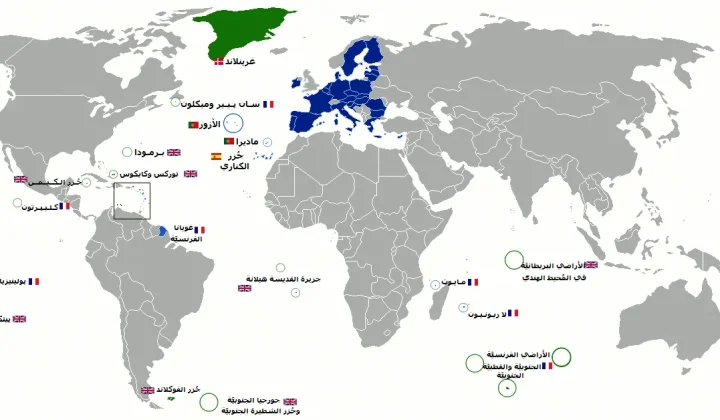
Mayotte fiber dispute does not meet ReviewArticle’s AI news brief
Le Monde reports that France’s competition authority has ordered Orange to suspend part of its fiber-optic rollout in Mayotte. The dispute is…
Read article
DiffEEG Model Uses Diffusion Pre-Training to Improve Seizure Detection from Minimal Labeled Data
Researchers have introduced DiffEEG, a 9.6-million-parameter foundation model that combines denoising diffusion pre-training with reinforcement learning fine-tuning to detect seizure events from…
Read article
The Technology Trap: Why AI Cannot Escape the Unchanging Fundamentals of War
A new Foreign Affairs essay by former Pentagon official Mara Karlin warns that over-reliance on AI and advanced tech in military planning…
Read article
Supabase Releases .NET SDK for C# Developers Across ASP.NET, Unity, and Mobile
Supabase has launched a .NET SDK for C# developers, extending its backend-as-a-service platform to ASP.NET Core, console apps, desktop, Unity, and mobile…
Read articleWiki relacionada

AI Model API Pricing and Context Window Comparison: Current Rates and Limits
Compare the latest API pricing, context windows, and capabilities of leading AI model providers including OpenAI, Anthropic, Google, and Mistral. Practical guidance…
Read article
AI Agent Evaluation Frameworks: How to Benchmark Agentic Systems
A practical guide to evaluating AI agents — from task completion metrics to safety, cost, and robustness. Covers major frameworks, primary sources,…
Read article
LLM Benchmarks Decoded: What MMLU, HumanEval, and GSM8K Actually Measure for Developers
A developer-focused breakdown of the most-cited LLM benchmarks — MMLU, HumanEval, GSM8K, MATH, Chatbot Arena — including what they test, their hidden…
Read article
What Is RAG? A Practical Guide to Retrieval-Augmented Generation in 2025
Retrieval-Augmented Generation (RAG) grounds LLM outputs in external data, reducing hallucinations and enabling enterprise use cases. This guide covers how RAG works,…
Read article