
AI Companies Recruit Philosophers to Define Machine Ethics and Behavior
As artificial intelligence advances, tech giants are increasingly hiring philosophers to guide AI development, focusing on ethical considerations and human-like interaction.

The landscape of artificial intelligence development is shifting, with major tech companies now actively recruiting philosophers to help define the ethical frameworks and behavioral guidelines for advanced AI systems. This trend marks a significant departure from traditional hiring practices, which heavily favored engineers and data scientists.
The High Demand for Philosophical Insight
Historically, a philosophy degree was often met with skepticism regarding career prospects. Data from 2023 indicated that philosophy graduates faced unemployment rates significantly higher than those in engineering fields. However, the rapid evolution of AI has created an unexpected demand for individuals trained in critical thinking, ethics, and the nuances of human values. Companies developing AI are finding that programming prowess alone is insufficient for creating AI that interacts meaningfully and ethically with millions of people. Consequently, the salaries offered for these philosophical roles are now competitive with those of senior engineers.
From Academia to AI Ethics
The shift is evident in employment trends. In 2013, only about 1% of job postings on PhilJobs, an academic job portal, mentioned artificial intelligence. By 2025, this figure had surged to nearly 16%, with many positions open to junior candidates. This indicates a growing recognition within the tech industry that philosophical expertise is crucial for shaping AI’s future.
Why AI Needs Philosophers
AI models can process vast amounts of data and emulate human neural networks, but their interactions are inherently with humans. Therefore, their responses and decisions must align with human ethical and moral values. Philosophers, with their centuries of study in these areas, are uniquely positioned to address this challenge.
Anthropic, a prominent AI company, exemplifies this trend. Their philosopher, Amanda Askell, leads the team responsible for shaping the character of their AI model, Claude. In January 2026, Anthropic released Claude’s “constitution,” a document exceeding twenty thousand words that outlines the core values guiding the AI’s behavior. Askell described her approach as akin to interacting with a highly intelligent child, emphasizing honesty and transparency.
Industry-Wide Adoption
Anthropic is not alone in recognizing the value of philosophical minds. Google DeepMind appointed Henry Shevlin, a philosopher of mind from the University of Cambridge, to a position explicitly titled “Philosopher” in April 2026. His work focuses on artificial consciousness, human-AI relationships, and preparing for artificial general intelligence (AGI).
OpenAI has also acknowledged the importance of philosophical input. CEO Sam Altman has stated that ChatGPT’s responses are the result of consultations with “hundreds of experts,” including philosophers who have contributed to discussions on technology ethics.
Academic institutions are also engaging with the field. The American Philosophical Association (APA) has introduced two annual awards of $10,000 since 2024 to support philosophical research on AI.
Challenges in a Rapidly Evolving Field
Despite the boom, some experts express concerns. Daniel Fogal, a bioethics professor at New York University, warned that the intense demand could distort the discipline. He noted that some philosophers may feel compelled to enter the AI field even if it doesn’t align with their core interests, potentially leading to a proliferation of mediocre work driven by a transient trend. Fogal emphasized that good philosophy requires time and deep reflection, qualities that can be at odds with the rapid release cycles of AI models. Nevertheless, he suggested that philosophers’ ability to grapple with complex, abstract issues makes them indispensable to the future of AI development.
Key facts
| Area | Development |
| :——————- | :———————————————————————————- |
| Hiring Trend | AI companies increasingly hiring philosophers for ethics and behavior roles. |
| Key Companies | Anthropic, Google DeepMind, OpenAI are actively recruiting. |
| Philosophical Roles | Defining AI ethics, values, and human-like interaction. |
| Expert Concerns | Potential for superficial work and the conflict between philosophical depth and AI speed. |
Source: El nuevo fichaje estrella de la IA no es un ingeniero ni un científico de datos, pero domina el estoicismo: los filósofos – Xataka, https://www.xataka.com/robotica-e-ia/nuevo-fichaje-estrella-ia-no-ingeniero-cientifico-datos-domina-estoicismo-filosofos
Datos clave
| Punto | Detalle |
|---|---|
| Fuente | Xataka IA |
| Fecha | 2026-07-03T06:31:54+00:00 |
| Tema | El nuevo fichaje estrella de la IA no es un ingeniero ni un científico de datos, pero domina el estoicismo: los filósofo |
Source
Xataka IA Publicacion original: 2026-07-03T06:31:54+00:00
Related articles
IBM CEO Puts a Number on the Open-Weight AI Value Proposition: 90% of the Performance at 10% of the Token Cost
IBM CEO Arvind Krishna told analysts that open-weight models now deliver about 90% of frontier-model effectiveness while costing between 10% and 25%…
Read article
OCU Finds Spanish Homeowner Communities Overpaying Up to €1,500 on Electricity and €3,515 on Gas—Can AI Tools Optimize Shared Energy Bills?
A new OCU analysis of Spanish homeowner community bills reveals widespread overpayment due to non-competitive tariffs and excess contracted power. Could AI-driven…
Read article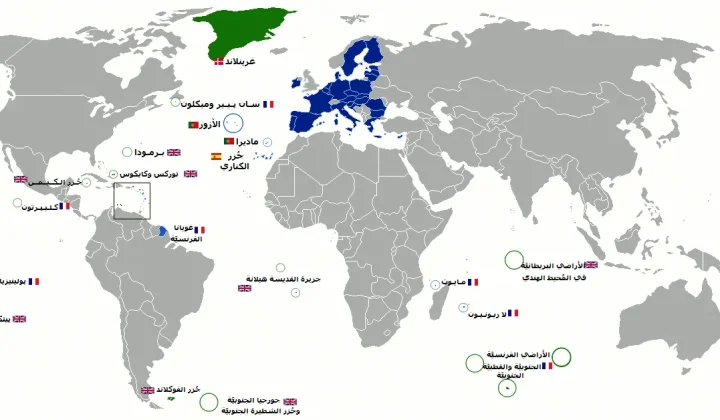
Mayotte fiber dispute does not meet ReviewArticle’s AI news brief
Le Monde reports that France’s competition authority has ordered Orange to suspend part of its fiber-optic rollout in Mayotte. The dispute is…
Read article
DiffEEG Model Uses Diffusion Pre-Training to Improve Seizure Detection from Minimal Labeled Data
Researchers have introduced DiffEEG, a 9.6-million-parameter foundation model that combines denoising diffusion pre-training with reinforcement learning fine-tuning to detect seizure events from…
Read articleWiki relacionada

AI Model API Pricing and Context Window Comparison: Current Rates and Limits
Compare the latest API pricing, context windows, and capabilities of leading AI model providers including OpenAI, Anthropic, Google, and Mistral. Practical guidance…
Read article
AI Agent Evaluation Frameworks: How to Benchmark Agentic Systems
A practical guide to evaluating AI agents — from task completion metrics to safety, cost, and robustness. Covers major frameworks, primary sources,…
Read article
LLM Benchmarks Decoded: What MMLU, HumanEval, and GSM8K Actually Measure for Developers
A developer-focused breakdown of the most-cited LLM benchmarks — MMLU, HumanEval, GSM8K, MATH, Chatbot Arena — including what they test, their hidden…
Read article
What Is RAG? A Practical Guide to Retrieval-Augmented Generation in 2025
Retrieval-Augmented Generation (RAG) grounds LLM outputs in external data, reducing hallucinations and enabling enterprise use cases. This guide covers how RAG works,…
Read article