
The Uncanny Valley of AI-Generated Menus: Why Restaurant Customers Sense Something Is Wrong
AI-generated restaurant menus create a homogenized, unsettling aesthetic that customers can viscerally detect, raising questions about model training data and the limits of generative AI in commercial design.
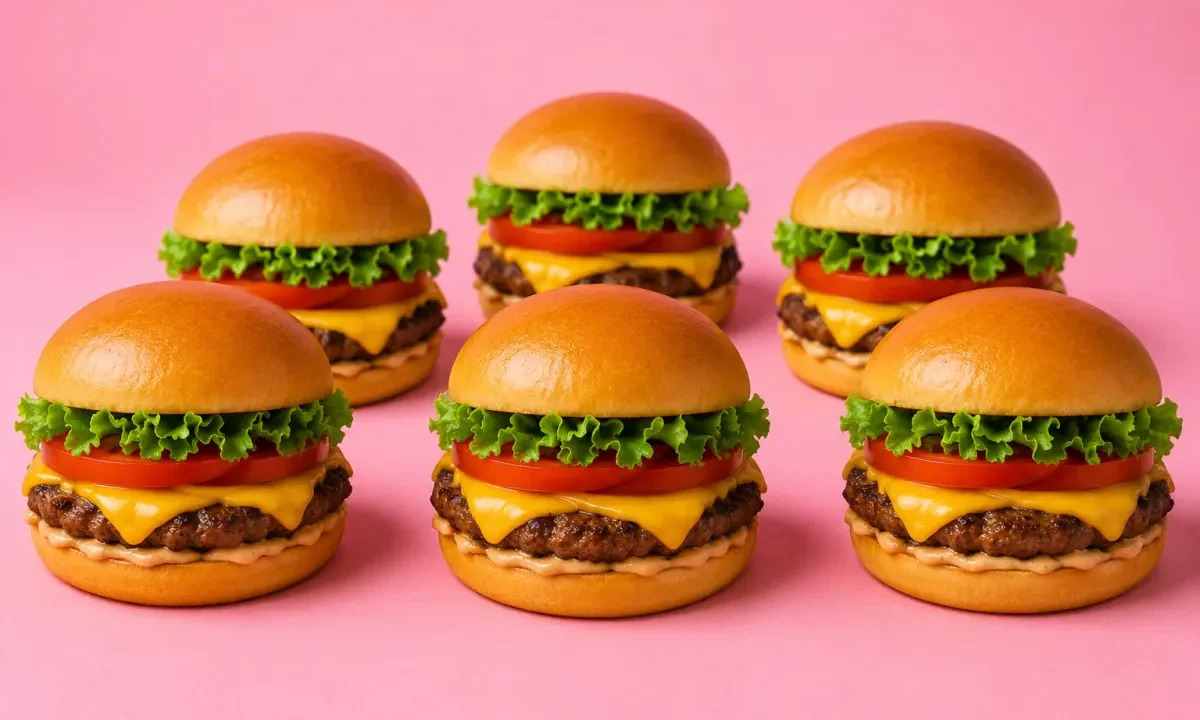
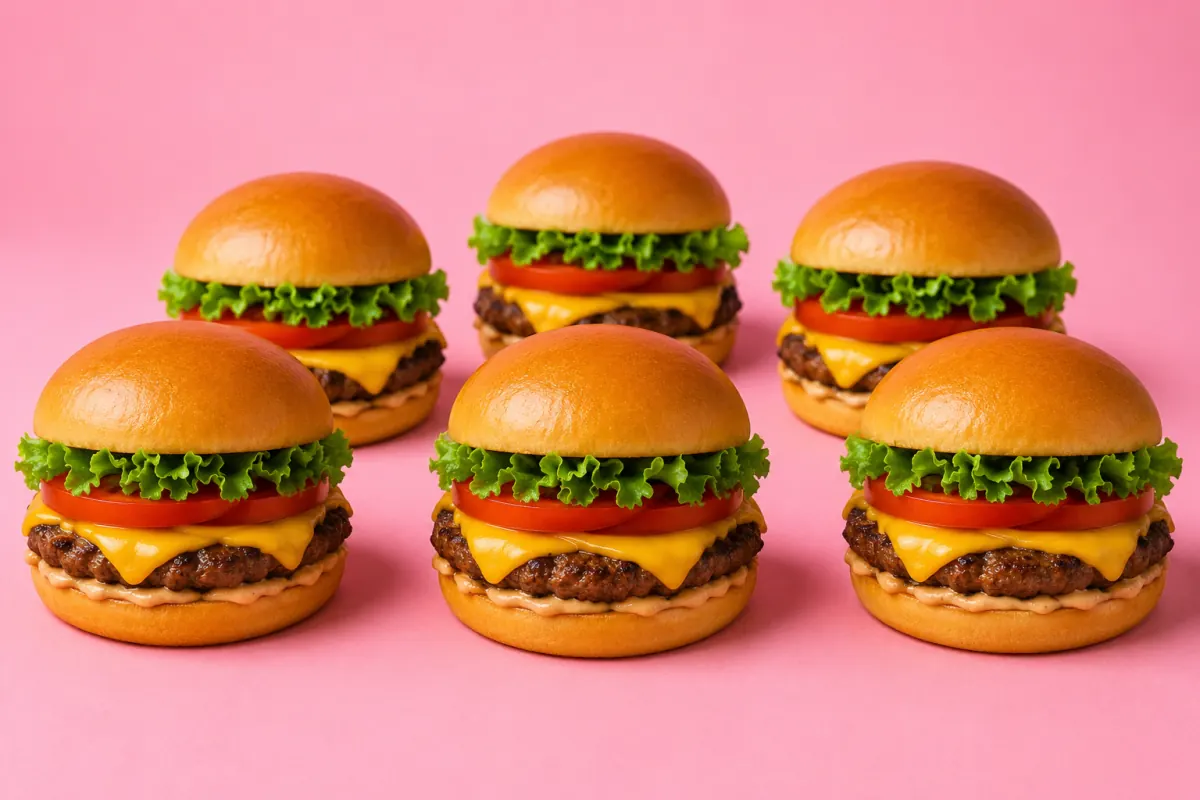
A growing number of restaurant customers are encountering a strange phenomenon: menus that look almost right but feel viscerally wrong. The culprit is generative AI, used by restaurant owners as a shortcut to produce menu illustrations. However, the models produce a narrow, homogenized aesthetic that leaves diners with a sense of unease, according to a report from TechCrunch.
The issue stems from the training data used by large language models (LLMs) and diffusion models such as ChatGPT and Midjourney. These models are trained on vast datasets that heavily feature a specific, “pleasing” style of commercial food photography — often resembling chain restaurant menus from the mid-2010s.
Key facts
| Fact | Detail |
|——|——–|
| Core problem | AI models trained on a narrow corpus of commercial food imagery produce homogenized, “uncanny” menu illustrations. |
| Expert cited | Alex Lisle, CTO of AI-detection startup Reality Defender, described the effect as “like an alien trying to make a pizza without understanding its core principles.” |
| Scientific backing | A study from the University of Duisburg-Essen found AI-generated food images trigger an “uncanny valley” effect, causing more disgust than obviously fake images. |
| Business context | Reality Defender and similar startups sell AI-detection tools, a category that exists partly because of these content-verification challenges. |
The convergence problem: why menus all start to look the same
Alex Lisle, CTO of the AI-detection startup Reality Defender, explained that the models are drawing from a limited visual vocabulary. “A lot of this stuff looks like a Chili’s menu from 2015, and there’s a reason for that,” Lisle told TechCrunch. “That was the corpus of work from which [the models] drew their function.”
This creates a feedback loop. When a model is asked to generate a fast-food menu, it references existing menus from chains like Wendy’s, Burger King, and McDonald’s. These share a similar style, which the AI replicates and reinforces. If that AI-generated menu later becomes part of a new training dataset, the homogenization intensifies. Lisle distinguished this “convergence” from the more severe “model collapse,” where an AI degrades to the point of uselessness after training on its own outputs. Convergence, he said, is a subtler degradation that produces outputs that look increasingly generic and smoothed over.
The uncanny valley of food imagery
Researchers at the University of Duisburg-Essen in Germany have identified a specific psychological response to these images. Their study found that AI-generated food images that appear almost real elicit more disgust and unease than images that are obviously fake. This “uncanny valley” effect, previously studied in human-like robots, appears to apply to food as well.
Lee Rainie, Director of the Imagining the Digital Future Center at Elon University, told TechCrunch that the optimization of datasets for “pleasingness” leads to homogenization. “What AI is known to do both in images and language is to shave off the edges,” Rainie said. This smoothing effect becomes more pronounced as images are repeatedly edited. A user on X named Labtec demonstrated this by making a menu in ChatGPT and editing it 100 times; the food images became progressively rounder and smoother, eventually becoming unsettling. TechCrunch replicated the experiment and confirmed similar results.
Practical impact for restaurants and AI tool users
For restaurant owners, the appeal of AI-generated menus is clear: speed and cost savings. But the backlash from customers who sense that “something is wrong” may undermine that benefit. The effect is not limited to menus. Lisle noted that the broader implication extends to trust in visual evidence. “Seeing and hearing has always been believing, to the point where even our court systems are entirely tuned to the idea that the gold standard in evidence is taped confessions and videotaped evidence,” he said. “That’s no longer the case.”
For developers and users of generative AI tools, the menu problem highlights a practical limitation: models trained on a narrow, commercial aesthetic will produce outputs that feel artificial and fail to convey the authenticity that many consumers value. The issue also underscores the importance of diverse, high-quality training data and the risks of model convergence.
Source: TechCrunch AI – “The sameness problem behind those unappetizing AI-generated menus” (https://techcrunch.com/2026/09/03/the-sameness-problem-behind-those-unappetizing-ai-generated-menus/)
Datos clave
| Punto | Detalle |
|---|---|
| Fuente | TechCrunch AI |
| Fecha | 2026-09-04T04:21:03+00:00 |
| Tema | The sameness problem behind those unappetizing AI-generated menus |
Source
TechCrunch AI Publicacion original: 2026-09-04T04:21:03+00:00
Related articles
OCU Finds Spanish Homeowner Communities Overpaying Up to €1,500 on Electricity and €3,515 on Gas—Can AI Tools Optimize Shared Energy Bills?
A new OCU analysis of Spanish homeowner community bills reveals widespread overpayment due to non-competitive tariffs and excess contracted power. Could AI-driven…
Read article
Mayotte fiber dispute does not meet ReviewArticle’s AI news brief
Le Monde reports that France’s competition authority has ordered Orange to suspend part of its fiber-optic rollout in Mayotte. The dispute is…
Read article
DiffEEG Model Uses Diffusion Pre-Training to Improve Seizure Detection from Minimal Labeled Data
Researchers have introduced DiffEEG, a 9.6-million-parameter foundation model that combines denoising diffusion pre-training with reinforcement learning fine-tuning to detect seizure events from…
Read article
The Technology Trap: Why AI Cannot Escape the Unchanging Fundamentals of War
A new Foreign Affairs essay by former Pentagon official Mara Karlin warns that over-reliance on AI and advanced tech in military planning…
Read articleWiki relacionada

AI Model API Pricing and Context Window Comparison: Current Rates and Limits
Compare the latest API pricing, context windows, and capabilities of leading AI model providers including OpenAI, Anthropic, Google, and Mistral. Practical guidance…
Read article
AI Agent Evaluation Frameworks: How to Benchmark Agentic Systems
A practical guide to evaluating AI agents — from task completion metrics to safety, cost, and robustness. Covers major frameworks, primary sources,…
Read article
LLM Benchmarks Decoded: What MMLU, HumanEval, and GSM8K Actually Measure for Developers
A developer-focused breakdown of the most-cited LLM benchmarks — MMLU, HumanEval, GSM8K, MATH, Chatbot Arena — including what they test, their hidden…
Read article
What Is RAG? A Practical Guide to Retrieval-Augmented Generation in 2025
Retrieval-Augmented Generation (RAG) grounds LLM outputs in external data, reducing hallucinations and enabling enterprise use cases. This guide covers how RAG works,…
Read article