
AI Policy Explained: What It Means for Everyday Users and Teams
AI policy is the mix of internal rules, governance processes, and external requirements that shape how people and organizations use AI. Here’s a practical guide to what it usually covers, why it exists, and what teams should check before using AI at work.
AI Policy Explained: What It Means for Everyday Users and Teams
In short: AI policy is not just one law or one company rule. In practice, it usually means a combination of internal organizational rules, risk-management processes, and external legal or regulatory requirements that affect how AI can be built, bought, deployed, or used. This article is a practical summary, not legal advice.
*Date-checked note: this overview was written for evergreen use, but AI rules and guidance change quickly. Readers should verify current local requirements before relying on it for compliance decisions.*
What is AI policy? A plain-English definition
In plain English, AI policy is the set of rules, responsibilities, and review steps that guide how AI is used. For a company or public-sector team, that can include internal instructions on approved tools, data handling, human review, documentation, and prohibited uses. At a broader level, it can also include laws, regulator guidance, and standards that affect AI systems and AI-enabled decisions.
A useful way to think about it: policy turns broad goals such as safety, privacy, security, fairness, and accountability into day-to-day operating rules. The exact content varies by jurisdiction, sector, and use case, so there is no single universal AI policy that fits every team.
Why AI policies exist
Organizations do not create AI rules just for paperwork. Public guidance from standards and government bodies consistently points to a few recurring concerns: managing risk, assigning responsibility, improving transparency, protecting people affected by automated decisions, and reducing security and privacy failures. The NIST AI Risk Management Framework centers governance, mapping, measurement, and management of AI risks, while the OECD AI Principles emphasize human rights, transparency, robustness, accountability, and responsible stewardship.
For everyday teams, that translates into practical questions such as:
- Is this tool approved for work use?
- Can staff enter personal, confidential, or customer data into it?
- Does a human need to review outputs before they are shared or acted on?
- Does the team need to document where the output came from?
- Are there uses that are banned entirely, such as certain sensitive decisions or unchecked external publication?
Common policy areas and what they mean in practice
Different organizations write their policies differently, but the same themes appear repeatedly in public frameworks and regulatory guidance.
| Policy area | What it usually covers | Practical impact for users and teams |
|---|---|---|
| Approved use | Which AI tools or use cases are allowed | Staff may need to use only organization-approved services and avoid personal or unreviewed tools |
| Data handling | Rules for confidential, personal, regulated, or client data | Teams may be told not to paste sensitive data into public AI services without authorization |
| Human oversight | When a person must review or approve AI output | AI output may be treated as draft material, not final advice or final decisions |
| Documentation | Records of prompts, outputs, decisions, or system purpose | Higher-risk uses may require written justification, review logs, or audit trails |
| Accuracy and testing | Checks for errors, failure modes, or unsafe output | Users may need to verify facts, calculations, or citations before use |
| Security | Access controls, vendor review, incident reporting | Teams may need approved accounts, restricted sharing, and clear escalation paths |
| Restricted uses | Uses the organization will not allow | Common examples include unsupervised sensitive decisions or use that conflicts with law or internal policy |
Data and privacy controls
Many AI policies focus heavily on data because staff can easily disclose sensitive material when using external tools. The UK ICO has said organizations using generative AI need to consider data protection obligations, including lawfulness, fairness, transparency, and governance. That does not mean every AI use is automatically unlawful; it means data protection analysis depends on the context, the data involved, and the purpose of use.
Human review and accountability
A common policy theme is that people remain accountable for important outputs and decisions. NIST’s framework emphasizes governance and risk management rather than handing responsibility to software. In practice, that usually means users should not assume AI output is correct simply because it is well-written or fast.
Transparency and recordkeeping
Teams may need to document where AI was used, especially in higher-risk workflows. The EU AI Act includes obligations for certain AI systems depending on risk category and role in the value chain, while some limited-risk uses trigger transparency duties. Those obligations are not universal for all readers everywhere, but they are a strong example of how policy can turn into concrete documentation and disclosure requirements.
How AI policy affects daily work
For most readers, AI policy matters less as abstract governance language and more as a set of everyday constraints.
If you use AI at work
You may be expected to:
- use only approved tools or accounts,
- avoid entering confidential or personal data unless your organization explicitly allows it,
- review outputs for accuracy, bias, or disclosure risk,
- label or document AI-assisted work where required, and
- escalate unusual, high-impact, or sensitive use cases for review.
If you manage a team
You may need to decide:
- which uses are low-risk and can move quickly,
- which uses need security, privacy, procurement, or legal review,
- who signs off on AI-assisted outputs,
- what training staff must complete, and
- how incidents or policy breaches should be reported.
A good internal policy connects directly to related controls such as procurement, security review, records management, and training. If you are also reviewing broader [AI security risks](/ai-security-risks), AI policy is usually the document that tells staff how those risks change day-to-day behavior.
Practical checklist for teams
Use this as a starting point for internal discussion, not as a substitute for legal or compliance advice.
What to check before adopting or expanding AI use
- Scope: What exact task is the AI tool being used for?
- Data: Will users enter personal, customer, confidential, or regulated data?
- Approval: Is the tool approved by IT, security, or procurement?
- Review: Who checks the output before it is used externally or for decisions?
- Documentation: Does the team need to keep records of prompts, outputs, or approvals?
- Restrictions: Are any proposed uses banned by internal policy or local law?
- Vendors: Has the organization reviewed contract terms, retention, and security controls?
- Incidents: Do staff know how to report errors, leaks, or unsafe output?
Limits, jurisdiction, and what to verify locally
The biggest practical limitation is that AI policy is not one global rulebook. Requirements differ by country, state, sector, employer, and use case. A hospital, bank, school, software company, and government agency may all have very different obligations even if they use similar AI tools.
That is especially important with legal references. For example, the EU AI Act applies within a specific legal framework and timetable, while privacy and data protection obligations depend on the jurisdiction and the facts of the processing activity. Readers should verify local law, sector rules, and internal policy before relying on general online guidance.
A practical AI policy summary
If you want a short version, an AI policy summary for most teams looks like this: use approved tools, protect sensitive data, keep people accountable, document higher-risk use, and check local legal or regulatory requirements before scaling deployment. That is the bridge between broad governance principles and everyday work.
If you are building an internal explainer, start with the [AI policy meaning](/ai-policy-meaning) for non-specialists, then turn that into role-based guidance for staff, managers, security reviewers, and procurement teams.
Cover image plan before publish
- Suggested image query: AI governance checklist on desk
- Alt text: Checklist for AI policy and governance requirements
- Caption angle: Editorial illustration or workplace image showing policy review, documentation, or checklist-based governance rather than a branded chatbot interface
Sources
- NIST AI Risk Management Framework (AI RMF 1.0) – National Institute of Standards and Technology.
- OECD AI Principles – Organisation for Economic Co-operation and Development.
- ICO guidance on generative AI and data protection – UK Information Commissioner's Office.
- EU Artificial Intelligence Act – Public text and implementation resource tracking the EU AI Act.
Related articles

AI-Driven Models Now Track Invasive Acacia Spread Across Post-Fire Landscapes in Spain
Researchers are using machine learning and satellite data to map how Acacia dealbata, introduced in 1824, exploits wildfires to colonize new terrain…
Read article
IBM CEO Puts a Number on the Open-Weight AI Value Proposition: 90% of the Performance at 10% of the Token Cost
IBM CEO Arvind Krishna told analysts that open-weight models now deliver about 90% of frontier-model effectiveness while costing between 10% and 25%…
Read article
OCU Finds Spanish Homeowner Communities Overpaying Up to €1,500 on Electricity and €3,515 on Gas—Can AI Tools Optimize Shared Energy Bills?
A new OCU analysis of Spanish homeowner community bills reveals widespread overpayment due to non-competitive tariffs and excess contracted power. Could AI-driven…
Read article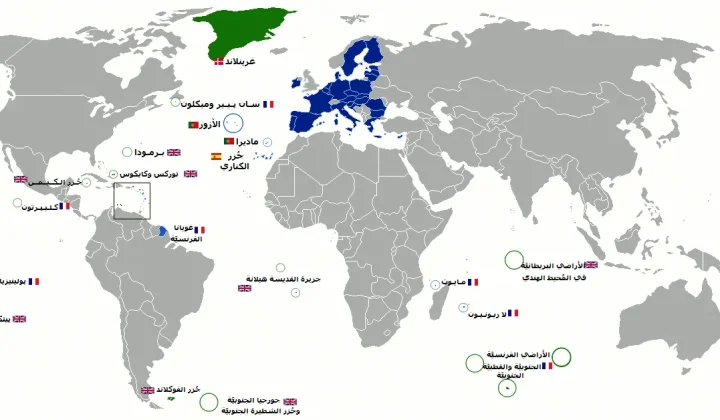
Mayotte fiber dispute does not meet ReviewArticle’s AI news brief
Le Monde reports that France’s competition authority has ordered Orange to suspend part of its fiber-optic rollout in Mayotte. The dispute is…
Read articleWiki relacionada

AI Model API Pricing and Context Window Comparison: Current Rates and Limits
Compare the latest API pricing, context windows, and capabilities of leading AI model providers including OpenAI, Anthropic, Google, and Mistral. Practical guidance…
Read article
AI Agent Evaluation Frameworks: How to Benchmark Agentic Systems
A practical guide to evaluating AI agents — from task completion metrics to safety, cost, and robustness. Covers major frameworks, primary sources,…
Read article
LLM Benchmarks Decoded: What MMLU, HumanEval, and GSM8K Actually Measure for Developers
A developer-focused breakdown of the most-cited LLM benchmarks — MMLU, HumanEval, GSM8K, MATH, Chatbot Arena — including what they test, their hidden…
Read article
What Is RAG? A Practical Guide to Retrieval-Augmented Generation in 2025
Retrieval-Augmented Generation (RAG) grounds LLM outputs in external data, reducing hallucinations and enabling enterprise use cases. This guide covers how RAG works,…
Read article