
Air Conditioning Becomes Political Battleground in France Amidst Escalating Heatwaves
As France grapples with intense heatwaves, air conditioning has emerged as a contentious political issue, dividing the far-right's push for widespread installation from environmentalists' concerns over energy consumption and climate impact.
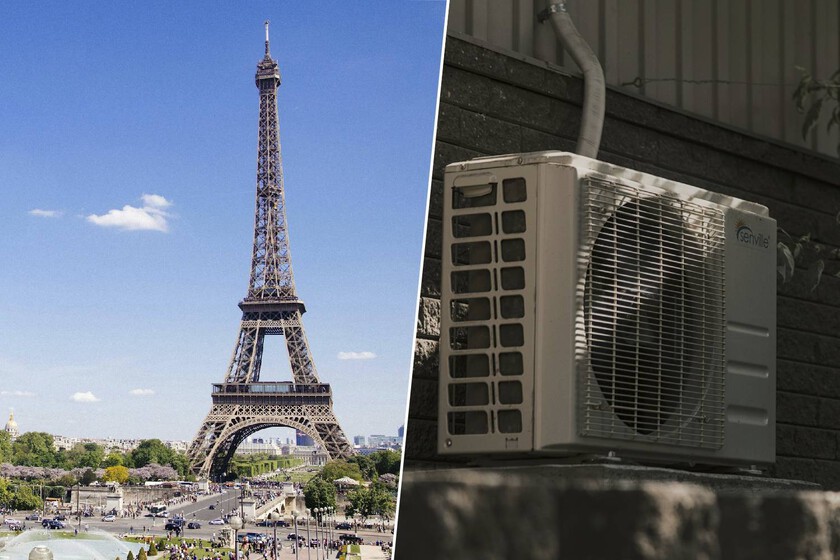
France is witnessing a significant political realignment driven by the escalating intensity of heatwaves across Europe. Air conditioning, once a secondary consideration in a nation historically hesitant about artificial cooling, has become a potent political weapon and a focal point of debate, particularly between the far-right and environmentalist factions. This shift highlights the complex challenges of adapting to climate change while balancing public comfort, economic proposals, and ecological concerns.
The immediate trigger for this intensified debate is the uncharacteristic frequency and severity of heatwaves, pushing temperatures in France towards 40°C. Traditional methods of staying cool, such as ceiling fans and closed shutters, are proving increasingly inadequate for a population unaccustomed to such prolonged and extreme heat. This widespread discomfort has created fertile ground for political proposals promising immediate relief.
The Far-Right’s Climate Plan
Leading the charge for increased air conditioning access is Marine Le Pen’s National Rally party. They have put forth a “climate plan” that effectively advocates for near-universal installation of cooling systems. A key component of this proposal is a €20 billion zero-interest loan fund. This fund is intended to assist between 30 to 40 million French households in acquiring reversible heat pump systems and improving their home insulation.
This strategy is widely perceived as a politically astute move, capitalizing on the immediate, tangible benefit of cooler homes during a period of intense public discomfort. The promise of affordable cooling solutions presents a strong appeal to voters facing oppressive heat. However, these proposals directly challenge France’s existing national climate adaptation strategies, which often prioritize broader, systemic solutions over individual appliance adoption.
Environmentalists’ Difficult Stance
The green political bloc finds itself in a particularly challenging position. Historically, environmentalists have opposed widespread air conditioning due to its substantial environmental footprint. The operation of these units significantly increases energy consumption, and if the electricity grid is not entirely powered by renewable or nuclear sources, this leads to a rise in greenhouse gas emissions.
However, the stark reality of public health and safety during extreme heatwaves presents a difficult dilemma. Denying access to cooling for vulnerable populations, such as those in hospitals and elder care facilities, is seen as politically untenable and poses an unacceptable risk to public health. This has forced a recalibration of their discourse, shifting from outright prohibition to acknowledging that, in specific circumstances, air conditioning may be an “inevitable” necessity.
The Problem of “Maladaptation”
Beyond the immediate political discourse, technical experts and media outlets are framing the widespread embrace of air conditioning as a problematic response. Publications like Le Monde, alongside institutions such as the Climate Economics Institute, have classified the mass adoption of air conditioning as “maladaptation.” This term signifies a short-term fix that fails to address the root causes of climate change and may even exacerbate the problem in the long run.
Experts emphasize that air conditioning units do not eliminate heat; they merely transfer it from the interior of a building to the exterior. In densely populated urban environments, this can lead to a significant increase in ambient outdoor temperatures.
A Vicious Cycle in Urban Areas
Climate modeling for cities like Paris suggests a concerning feedback loop. If a large proportion of buildings activate their air conditioning simultaneously during a heatwave, the outdoor temperature in the surrounding streets could rise by an additional 1°C to 2°C. This not only worsens the immediate heat but also intensifies the urban heat island effect, disproportionately affecting communities with fewer resources who may not be able to afford air conditioning. This creates a stark divide between those who can escape the heat indoors and those who are increasingly exposed to its harshest effects.
France’s Long-Term Adaptation Strategy
Separate from the immediate electoral promises, France’s official climate adaptation roadmap is designed to prepare the nation for a potential future with 4°C of warming. This long-term strategy focuses on systemic solutions. Key initiatives include enhancing building insulation, increasing green spaces by replacing asphalt with trees, and developing centralized urban cooling systems that utilize underground cold water networks. These approaches are considered more efficient and environmentally sustainable than relying on millions of individual air conditioning units.
| Aspect | Description |
|---|---|
| Political Debate | Air conditioning has become a central political issue in France, dividing the far-right and environmentalists. |
| Far-Right Proposal | The National Rally proposes a €20 billion loan fund for households to install air conditioning and improve insulation. |
| Environmental Concerns | Widespread AC use increases energy consumption and greenhouse gas emissions; experts label it “maladaptation.” |
| Urban Impact | Simultaneous AC use can increase street temperatures, exacerbating urban heat island effects. |
| Long-Term French Plan | Focuses on building insulation, green spaces, and centralized urban cooling networks. |
This situation in France underscores the complex trade-offs inherent in climate change adaptation. The debate over air conditioning highlights how immediate public needs and political opportunism can clash with long-term environmental strategies. For readers interested in AI and automation, this situation points to the need for innovative, sustainable cooling technologies and urban planning solutions that move beyond individual appliance reliance. The political discourse in France serves as a case study for other regions facing similar climate challenges.
Source: El aire acondicionado es la nueva gran arma política en Francia: por qué ecologistas y extrema derecha se pelean por ello – Xataka IA (https://www.xataka.com/ecologia-y-naturaleza/aire-acondicionado-nueva-gran-arma-politica-francia-que-ecologistas-extrema-derecha-se-pelean-ello)
Source
Xataka IA Publicacion original: 2026-07-01T11:30:58+00:00
Related articles
OCU Finds Spanish Homeowner Communities Overpaying Up to €1,500 on Electricity and €3,515 on Gas—Can AI Tools Optimize Shared Energy Bills?
A new OCU analysis of Spanish homeowner community bills reveals widespread overpayment due to non-competitive tariffs and excess contracted power. Could AI-driven…
Read article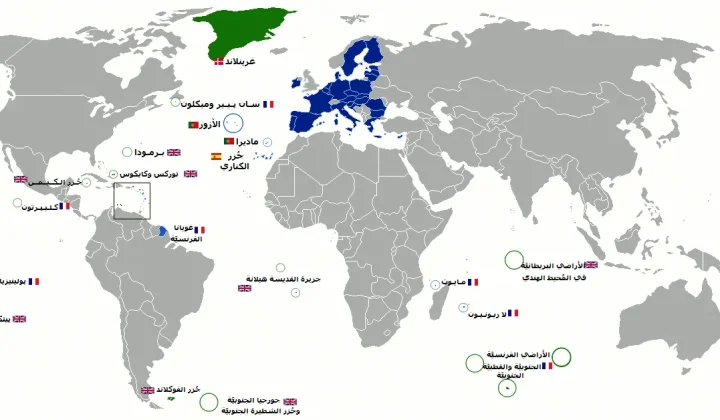
Mayotte fiber dispute does not meet ReviewArticle’s AI news brief
Le Monde reports that France’s competition authority has ordered Orange to suspend part of its fiber-optic rollout in Mayotte. The dispute is…
Read article
DiffEEG Model Uses Diffusion Pre-Training to Improve Seizure Detection from Minimal Labeled Data
Researchers have introduced DiffEEG, a 9.6-million-parameter foundation model that combines denoising diffusion pre-training with reinforcement learning fine-tuning to detect seizure events from…
Read article
The Technology Trap: Why AI Cannot Escape the Unchanging Fundamentals of War
A new Foreign Affairs essay by former Pentagon official Mara Karlin warns that over-reliance on AI and advanced tech in military planning…
Read articleWiki relacionada

AI Model API Pricing and Context Window Comparison: Current Rates and Limits
Compare the latest API pricing, context windows, and capabilities of leading AI model providers including OpenAI, Anthropic, Google, and Mistral. Practical guidance…
Read article
AI Agent Evaluation Frameworks: How to Benchmark Agentic Systems
A practical guide to evaluating AI agents — from task completion metrics to safety, cost, and robustness. Covers major frameworks, primary sources,…
Read article
LLM Benchmarks Decoded: What MMLU, HumanEval, and GSM8K Actually Measure for Developers
A developer-focused breakdown of the most-cited LLM benchmarks — MMLU, HumanEval, GSM8K, MATH, Chatbot Arena — including what they test, their hidden…
Read article
What Is RAG? A Practical Guide to Retrieval-Augmented Generation in 2025
Retrieval-Augmented Generation (RAG) grounds LLM outputs in external data, reducing hallucinations and enabling enterprise use cases. This guide covers how RAG works,…
Read article