
Astronomical Triple Threat: 2026 to Host Solar Eclipse, Peak Perseids, and Planetary Alignment
On August 12, 2026, stargazers will witness a rare convergence of celestial events, including a solar eclipse, the peak of the Perseid meteor shower, and a planetary alignment.
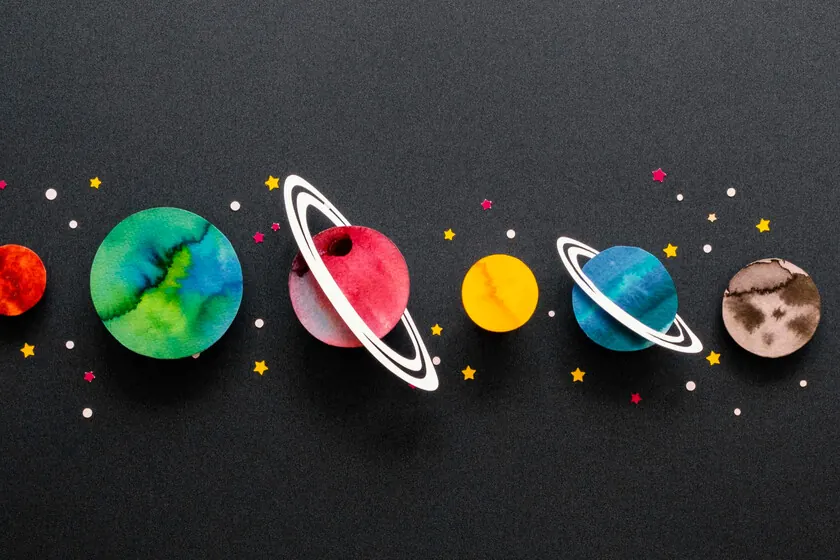
A rare trifecta of astronomical events is set to captivate skywatchers on August 12, 2026. This extraordinary convergence includes a solar eclipse, the peak of the annual Perseid meteor shower, and a notable planetary alignment, promising a night of celestial wonder.
Cosmic Convergence
The main event of August 12, 2026, will be a solar eclipse. Occurring near sunset, the eclipse will be visible from west to east, with some locations observing the sun setting while still partially or fully eclipsed. This offers a unique viewing opportunity for those positioned in western vantage points, where the sun will be low on the horizon.
Accompanying the eclipse, the night of August 12 will also mark the peak of the Perseid meteor shower. While the brief period of totality during the eclipse may not be ideal for spotting meteors, the early morning hours following the eclipse will provide ample opportunity to witness the Perseids’ display.
Adding to the cosmic spectacle, the dawn of August 12 will feature a significant planetary alignment. Mercury, Mars, Jupiter, Saturn, Uranus, and Neptune are expected to be visible in the sky, appearing closely grouped. This alignment will be observable in the early morning, with some lingering effects visible into the early hours of August 13.
Viewing the Phenomena
The solar eclipse will be best viewed towards the west, as the sun dips towards the horizon. For the planetary alignment, observers should look towards the east just before sunrise.
While Mars, Saturn, and Mercury are expected to be visible to the naked eye, Jupiter’s proximity to the horizon and the sun’s glare may hinder its visibility. Uranus and Neptune will likely require binoculars, with Neptune being the most challenging to spot and potentially needing a telescope. The article notes that many towns and cities will likely organize public viewing events with telescopes due to the eclipse, which could provide opportunities to view fainter celestial bodies.
The term “alignment” in this context refers to the planets appearing very close together in the sky, a phenomenon that does not occur frequently. While they will appear grouped, they will not form an exact straight line. Astronomy applications such as Stellarium can assist in identifying the precise viewing direction.
The Perseid meteor shower, renowned for its bright streaks of light, will be at its peak on the night of August 12. Although the total darkness of the eclipse might be too brief to catch a meteor, the hours following the eclipse will offer a prime viewing window. Many communities are expected to host events that combine eclipse viewing with meteor shower observation.
A Celestial Celebration
The evening of August 12, 2026, presents an ideal date for amateur astronomers and casual observers alike. The combination of a solar eclipse, a peak meteor shower, and a planetary gathering offers a rare opportunity to experience multiple significant astronomical events in a single night. For those new to astronomy, this spectacular celestial display might serve as an introduction to the wonders of the night sky.
Key facts
| Event | Date | Timeframe | Visibility Notes |
| :———————— | :————— | :———————— | :————————————————— |
| Solar Eclipse | August 12, 2026 | Near sunset | Best viewed towards the west, low on the horizon. |
| Perseid Meteor Shower Peak| August 12, 2026 | Night and early morning | Visible after the eclipse; some during totality. |
| Planetary Alignment | August 12, 2026 | Dawn | Eastward view; Mercury, Mars, Saturn visible naked eye. |
This celestial convergence is of particular interest to ReviewArticle readers as it highlights a rare and accessible natural phenomenon. While the site focuses on AI and technology, the underlying scientific principles and the human fascination with the cosmos are universal. Understanding how such events are predicted and observed can inspire curiosity in scientific inquiry and potentially connect with audiences interested in data, prediction, and observation, even if not directly AI-driven. The event also underscores the importance of public access to scientific knowledge and the organization of community events for shared experiences.
Source: Eclipse, Perseidas y alineación planetaria: el 12 de agosto de 2026 va a ser una locura para los aficionados a la astronomía, Xataka, https://www.xataka.com/espacio/eclipse-perseidas-alineacion-planetaria-12-agosto-2026-va-a-ser-locura-para-aficionados-a-astronomia
Datos clave
| Punto | Detalle |
|---|---|
| Fuente | Xataka IA |
| Fecha | 2026-07-17T06:02:01+00:00 |
| Tema | Eclipse, Perseidas y alineación planetaria: el 12 de agosto de 2026 va a ser una locura para los aficionados a la astron |
Source
Xataka IA Publicacion original: 2026-07-17T06:02:01+00:00
Related articles
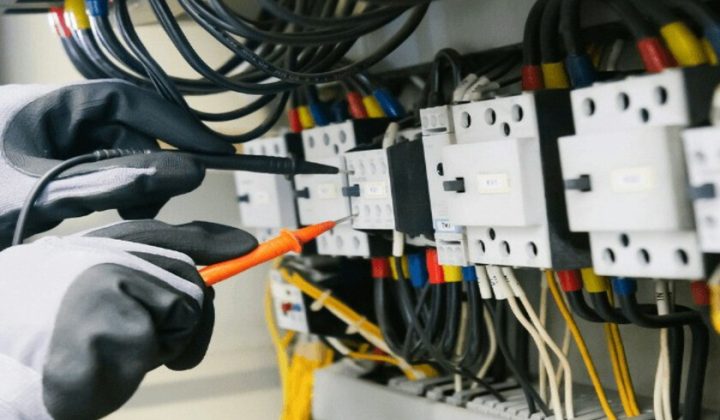
OCU Finds Spanish Homeowner Communities Overpaying Up to €1,500 on Electricity and €3,515 on Gas—Can AI Tools Optimize Shared Energy Bills?
A new OCU analysis of Spanish homeowner community bills reveals widespread overpayment due to non-competitive tariffs and excess contracted power. Could AI-driven…
Read article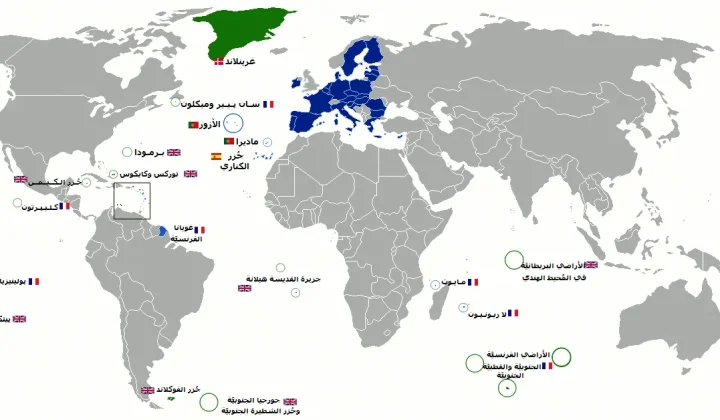
Mayotte fiber dispute does not meet ReviewArticle’s AI news brief
Le Monde reports that France’s competition authority has ordered Orange to suspend part of its fiber-optic rollout in Mayotte. The dispute is…
Read article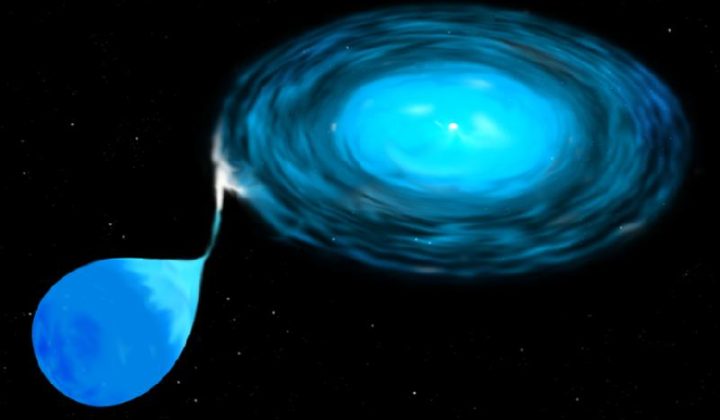
DiffEEG Model Uses Diffusion Pre-Training to Improve Seizure Detection from Minimal Labeled Data
Researchers have introduced DiffEEG, a 9.6-million-parameter foundation model that combines denoising diffusion pre-training with reinforcement learning fine-tuning to detect seizure events from…
Read article
The Technology Trap: Why AI Cannot Escape the Unchanging Fundamentals of War
A new Foreign Affairs essay by former Pentagon official Mara Karlin warns that over-reliance on AI and advanced tech in military planning…
Read articleWiki relacionada

AI Model API Pricing and Context Window Comparison: Current Rates and Limits
Compare the latest API pricing, context windows, and capabilities of leading AI model providers including OpenAI, Anthropic, Google, and Mistral. Practical guidance…
Read article
AI Agent Evaluation Frameworks: How to Benchmark Agentic Systems
A practical guide to evaluating AI agents — from task completion metrics to safety, cost, and robustness. Covers major frameworks, primary sources,…
Read article
LLM Benchmarks Decoded: What MMLU, HumanEval, and GSM8K Actually Measure for Developers
A developer-focused breakdown of the most-cited LLM benchmarks — MMLU, HumanEval, GSM8K, MATH, Chatbot Arena — including what they test, their hidden…
Read article
What Is RAG? A Practical Guide to Retrieval-Augmented Generation in 2025
Retrieval-Augmented Generation (RAG) grounds LLM outputs in external data, reducing hallucinations and enabling enterprise use cases. This guide covers how RAG works,…
Read article