
AWS CEO Warns Over 100 US Data Center Moratoriums Risk “Potentially Irreparable” Damage to AI Leadership
Amazon Web Services CEO Matt Garman warns that more than 100 local moratoriums on data center construction across the US threaten the country's AI competitiveness, comparing the current infrastructure challenge to the 1956 interstate highway system.
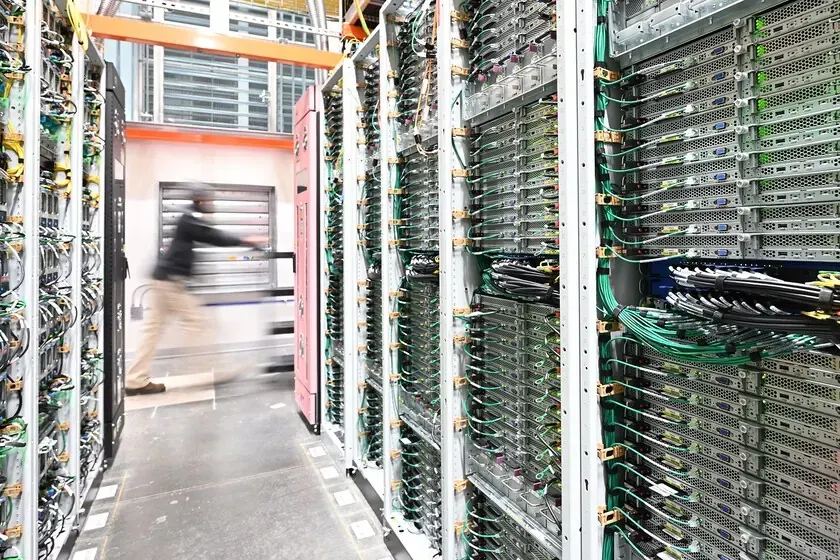
Amazon Web Services CEO Matt Garman has issued a stark warning about the future of US artificial intelligence leadership, stating that more than 100 local moratoriums on data center construction across the country could cause “potentially irreparable” harm to the nation’s competitive position. The comments mark one of the most direct interventions by a major cloud provider in the growing debate over the physical infrastructure required to power AI.
Speaking about the mounting local opposition, Garman drew a historical parallel to the US interstate highway system, which began in 1956. He argued that the current moment is comparable: the computing capacity that will underpin AI depends on a major expansion of data center facilities, and losing momentum could leave the US behind other nations for generations.
Key facts
| Metric | Value |
|——–|——-|
| Estimated US data center electricity share (2024) | 4.7% (Lawrence Berkeley National Laboratory) |
| Projected US data center electricity share (2030) | 11.8% (Lawrence Berkeley reference scenario) |
| AWS average daily water consumption per data center | Less than 13,000 gallons (company claim) |
| AWS “Built Together” community investment pledge | $1 billion over five years |
The scale of local resistance
According to Data Center Watch, dozens of data center projects across the US have been delayed or blocked by local opposition. Garman confirmed that more than 100 moratoriums are now being considered in various jurisdictions. The resistance is not abstract: communities are raising concerns about electricity demand, water consumption, and the long-term economic benefits of facilities that require intensive construction but may generate relatively few permanent jobs.
The Lawrence Berkeley National Laboratory estimates that US data centers consumed approximately 4.7% of the nation’s electricity in 2024. Under its reference scenario, that share could rise to 11.8% by 2030, a trajectory that is forcing utilities and regulators to plan new generation capacity and grid upgrades.
Amazon’s response to the critics
Amazon has responded with what Garman describes as a list of “myths” about data center operations. The company claims its facilities consume an average of less than 13,000 gallons of water per day, compared to 170,000 gallons it attributes to a typical data center. It also argues that backup generators remain idle 99.9% of the time, and rejects the notion that data centers are the primary driver of rising electricity rates.
These figures are Amazon’s own defense, not an independent consensus, and should be read as the company’s position in an ongoing debate.
A formal community commitment
Beyond rebutting criticism, Amazon has formalized a set of commitments that include greater transparency on water and energy consumption, ending non-disclosure agreements with public administrations, and working to ensure that grid upgrades needed for its data centers do not fall on local residents.
The company also announced “Built Together,” a $1 billion five-year initiative for education, training, energy efficiency, and local priorities. The message is clear: to continue building, Amazon needs to win community support.
The broader AI infrastructure bottleneck
Garman’s intervention reframes the data center debate as a question of national competitiveness. For AI developers and enterprises using AWS, the implication is direct: if the company cannot secure permits, energy, land, and local acceptance, the next bottleneck for AI may not be models or chips, but the physical infrastructure needed to run them.
The company’s Spanish region in Aragon, operational since November 2022, has also faced legal challenges from environmental groups, illustrating that the tension between AI infrastructure expansion and local acceptance is not limited to the US.
What this means for AI practitioners and developers
For businesses building on AWS or planning AI workloads, the moratorium debate carries practical consequences. Data center availability affects latency, pricing, and the ability to scale compute-intensive applications. If moratoriums spread, new AWS regions or availability zones could face delays, potentially impacting capacity planning for AI training and inference workloads.
The next check for readers: monitor how local and state-level data center legislation evolves in 2025, particularly in Virginia, Ohio, and Arizona, where data center concentration is highest. AWS’s ability to deliver on its $1 billion community pledge and transparency commitments will be a test of whether voluntary measures can reduce local opposition.
Source: Xataka IA – “Cada vez más gente quiere frenar los centros de datos. Amazon acaba de explicar por qué cree que sería un error histórico” (https://www.xataka.com/robotica-e-ia/cada-vez-gente-quiere-frenar-centros-datos-amazon-acaba-explicar-que-cree-que-seria-error-historico)
Datos clave
| Punto | Detalle |
|---|---|
| Fuente | Xataka IA |
| Fecha | 2026-10-07T04:31:22+00:00 |
| Tema | Cada vez más gente quiere frenar los centros de datos. Amazon acaba de explicar por qué cree que sería un error históric |
Source
Xataka IA Publicacion original: 2026-10-07T04:31:22+00:00
Related articles

Trump Announces Deal for Russia to Resume Diesel Sales to US as Zelensky Warns of ‘Gift to Putin’
The US Treasury’s OFAC issued a temporary license allowing Russian diesel imports through April 2027. President Trump claims the deal will lower…
Read article
Why the 24-Hour Day Is a Convenient Fiction, Not a Scientific Fact
The 24-hour day is an average, not a constant. Earth’s elliptical orbit and axial tilt mean most days are slightly shorter or…
Read article
Lightweight AI Framework Turns Smartphone Photos of Paper ECGs Into Heart Attack Screenings
A new compute-light framework called ECGLight can digitize paper ECG printouts from a smartphone photo and screen for myocardial infarction in under…
Read article
New Caltech Simulation Suggests Solar System’s End May Come Sooner Than Expected
A new simulation from Caltech researchers indicates that even the gas giants like Jupiter may not survive the Sun’s red giant phase…
Read articleWiki relacionada

AI Model API Pricing and Context Window Comparison: Current Rates and Limits
Compare the latest API pricing, context windows, and capabilities of leading AI model providers including OpenAI, Anthropic, Google, and Mistral. Practical guidance…
Read article
AI Agent Evaluation Frameworks: How to Benchmark Agentic Systems
A practical guide to evaluating AI agents — from task completion metrics to safety, cost, and robustness. Covers major frameworks, primary sources,…
Read article
LLM Benchmarks Decoded: What MMLU, HumanEval, and GSM8K Actually Measure for Developers
A developer-focused breakdown of the most-cited LLM benchmarks — MMLU, HumanEval, GSM8K, MATH, Chatbot Arena — including what they test, their hidden…
Read article
What Is RAG? A Practical Guide to Retrieval-Augmented Generation in 2025
Retrieval-Augmented Generation (RAG) grounds LLM outputs in external data, reducing hallucinations and enabling enterprise use cases. This guide covers how RAG works,…
Read article