
Cadaver Fat Injectables Gain Traction as GLP-1 Weight Loss Creates New Cosmetic Demand
A new injectable made from donated cadaver fat, AlloClae, is being marketed to patients who lose unwanted facial and body volume after weight loss from drugs like Ozempic. The product raises legal and ethical questions about tissue consent.
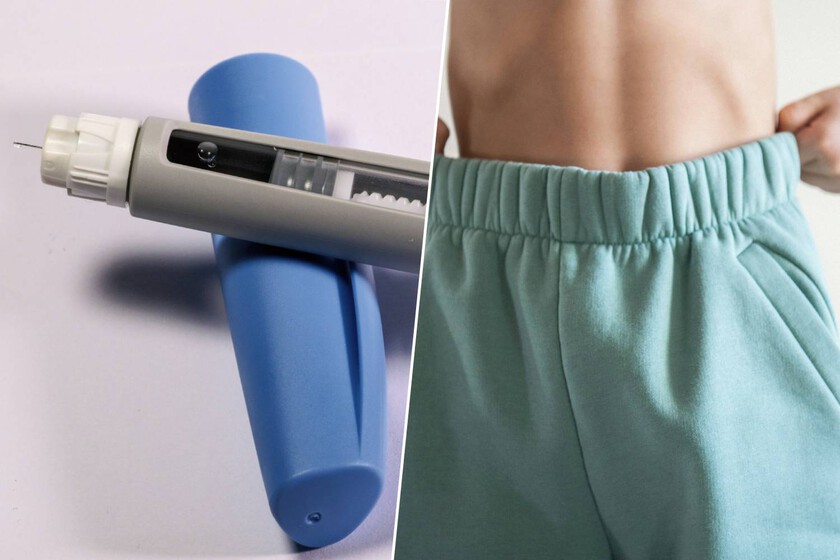
A new class of cosmetic injectables is gaining attention in the United States as a non-surgical solution for patients who lose unwanted facial and body volume after significant weight loss from GLP-1 drugs like Ozempic and Wegovy. The product, AlloClae, is made from processed cadaver fat and has been used on more than 2,000 patients since May 2025, according to its manufacturer, Tiger Aesthetics.
The rise of GLP-1 medications has reshaped weight management in the U.S. According to the Gallup National Health and Well-Being Index, approximately 11% of American adults are currently using drugs such as Ozempic or Wegovy to lose weight. A known side effect of this rapid weight loss is the loss of volume in the face, chest, and buttocks, creating a new cosmetic demand for volume restoration without invasive surgery.
AlloClae is a ready-to-use injectable derived from donated human adipose tissue. Unlike traditional fat grafting, where a patient’s own fat is extracted via liposuction and re-injected, AlloClae is processed to remove the donor’s DNA, according to the manufacturer. The product received clearance from the U.S. Food and Drug Administration, though the specific regulatory pathway (whether it cleared as a medical device or a biologic) is not detailed in the source. The company reports that the treatment can be administered in a clinic in about one hour without general anesthesia.
Key facts
| Fact | Detail |
|---|---|
| Product name | AlloClae, manufactured by Tiger Aesthetics |
| Patients treated | Over 2,000 since May 2025 |
| Maximum injection volume | 25 cubic centimeters per session |
| Competitor product | Renuva (MTF Biologics), limited to 3 cubic centimeters |
| Regulatory action | New York blocked distribution; Tiger Aesthetics sued for at least $500,000 in lost sales |
The product is not entirely new. Renuva, made by the non-profit tissue bank MTF Biologics, has been used for more than a decade to inject cadaver fat. However, Renuva is limited to a maximum of three cubic centimeters per injection. AlloClae can deliver up to 25 cubic centimeters, making it suitable for larger areas such as the breasts or buttocks.
Since January 2026, Tiger Aesthetics has expanded who can administer AlloClae. The procedure is no longer restricted to plastic surgeons; nurse practitioners and physician assistants can now apply it, subject to certain restrictions. This change has made the treatment more accessible but also raised concerns among medical professionals about oversight.
Legal and ethical questions
The legal landscape for cadaver tissue products in the U.S. is fragmented. Organ donation is governed by federal law, but tissue donation and the use of donated bodies for commercial products fall under state jurisdiction. This patchwork has created complications for Tiger Aesthetics. New York state blocked the distribution of AlloClae, citing concerns over the source of the tissue. Tiger Aesthetics has responded by suing the state, seeking at least $500,000 in lost sales, while simultaneously searching for new tissue banks in other states.
The deeper ethical issue involves informed consent. Donors or their families sign a consent form that allows tissue to be used for research, commercial purposes, or without restriction. The forms do not explicitly mention that the tissue could be processed into a cosmetic injectable like AlloClae. Critics argue that this allows companies to profit from a gesture intended as altruistic, without the donor’s specific knowledge or approval.
Plastic surgeon Dr. Luis Macias, quoted in the source, noted that patients who lose weight on GLP-1 drugs are increasingly seeking volume restoration in the face, chest, and glutes. The convenience of a non-surgical, clinic-based procedure is a strong draw.
Limits and next checks
The source for this story is primarily a Spanish-language report from Xataka, which itself draws on a CNN article, the Gallup National Health and Well-Being Index, and statements from Tiger Aesthetics. The FDA clearance status and the exact number of patients treated come from the manufacturer and have not been independently verified by this publication. The legal challenge in New York is ongoing, and the outcome of the lawsuit may set a precedent for how cadaver tissue is used in commercial cosmetic products.
Readers should treat the patient count and clinical claims as company-reported data. Independent clinical studies on the long-term safety and efficacy of AlloClae are not yet publicly available. The ethical debate over tissue consent is likely to intensify as demand for these injectables grows alongside the continued use of GLP-1 weight loss medications.
Source: Xataka, “Adelgazar con Ozempic está vaciando los cuerpos. La industria de la belleza ya sabe cómo llenarlos: con grasa de cadáver” (https://www.xataka.com/medicina-y-salud/adelgazar-ozempic-esta-vaciando-cuerpos-industria-belleza-sabe-como-llenarlos-grasa-cadaver)
Source
Xataka IA Publicacion original: 2026-07-25T16:30:27+00:00
Related articles

OCU Finds Spanish Homeowner Communities Overpaying Up to €1,500 on Electricity and €3,515 on Gas—Can AI Tools Optimize Shared Energy Bills?
A new OCU analysis of Spanish homeowner community bills reveals widespread overpayment due to non-competitive tariffs and excess contracted power. Could AI-driven…
Read article
Mayotte fiber dispute does not meet ReviewArticle’s AI news brief
Le Monde reports that France’s competition authority has ordered Orange to suspend part of its fiber-optic rollout in Mayotte. The dispute is…
Read article
DiffEEG Model Uses Diffusion Pre-Training to Improve Seizure Detection from Minimal Labeled Data
Researchers have introduced DiffEEG, a 9.6-million-parameter foundation model that combines denoising diffusion pre-training with reinforcement learning fine-tuning to detect seizure events from…
Read article
The Technology Trap: Why AI Cannot Escape the Unchanging Fundamentals of War
A new Foreign Affairs essay by former Pentagon official Mara Karlin warns that over-reliance on AI and advanced tech in military planning…
Read articleWiki relacionada

AI Model API Pricing and Context Window Comparison: Current Rates and Limits
Compare the latest API pricing, context windows, and capabilities of leading AI model providers including OpenAI, Anthropic, Google, and Mistral. Practical guidance…
Read article
AI Agent Evaluation Frameworks: How to Benchmark Agentic Systems
A practical guide to evaluating AI agents — from task completion metrics to safety, cost, and robustness. Covers major frameworks, primary sources,…
Read article
LLM Benchmarks Decoded: What MMLU, HumanEval, and GSM8K Actually Measure for Developers
A developer-focused breakdown of the most-cited LLM benchmarks — MMLU, HumanEval, GSM8K, MATH, Chatbot Arena — including what they test, their hidden…
Read article
What Is RAG? A Practical Guide to Retrieval-Augmented Generation in 2025
Retrieval-Augmented Generation (RAG) grounds LLM outputs in external data, reducing hallucinations and enabling enterprise use cases. This guide covers how RAG works,…
Read article