
China-Backed Salvador-Itaparica Sea Bridge Project Underway in Brazil
Brazil's ambitious Salvador-Itaparica sea bridge, a 12.4 km megastructure, is under construction with significant Chinese investment and engineering. The project aims to connect Salvador with the Baixo Sul region, promising to cut travel time and boost regional economy, though technical risks and toll fees remain undis
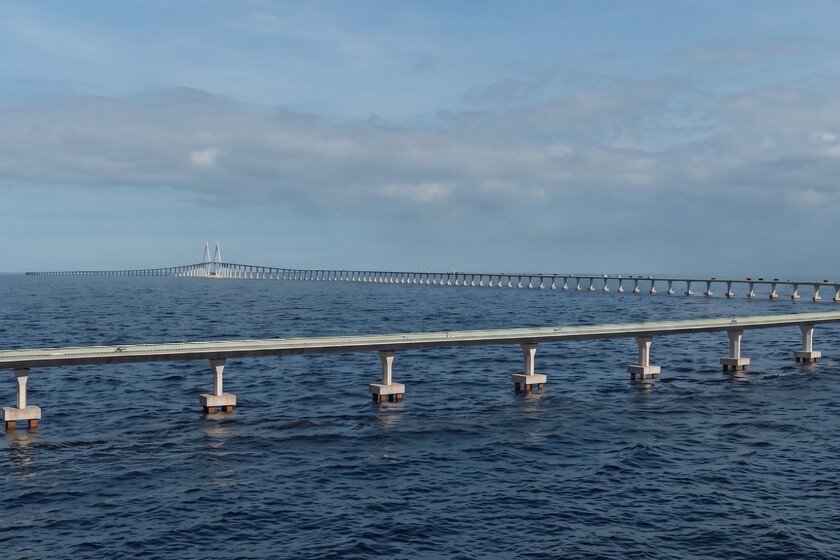
Brazil has commenced construction on what is set to be the longest sea bridge in Latin America, the Salvador-Itaparica Sea System. The ambitious infrastructure project, which began on July 1, 2026, with a kickoff ceremony led by President Lula Da Silva, is designed to significantly enhance connectivity and reduce travel times in the Bahia region. The bridge, spanning 12.4 kilometers, will link the state capital, Salvador, with the Baixo Sul region across the Bay of All Saints.
Key Facts
| Feature | Detail |
|---|---|
| Length | 4 kilometers |
| Estimated Cost | €1.98 billion |
| Chinese Investment | €940.5 million (from concessionaire) |
| Construction Time | 5 years, completion expected June 2031 |
| Concession Period | 35 years (including 1 year for studies/licensing) |
| Daily Traffic | Estimated 28,000 vehicles |
The project, officially known as the Sistema Vial Puente Salvador – Isla de Itaparica, is a significant public-private partnership. It involves the Government of the State of Bahia and the Concessionária Ponte Salvador–Itaparica, with substantial engineering and financial backing from two major Chinese groups: China Communications Construction Company (CCCC) and China Civil Engineering Construction Corporation (CCECC). The construction phase is projected to last five years, with an expected completion date in June 2031.
Economic and Social Impact
Authorities in the Bahia region estimate that the new infrastructure will benefit approximately 10 million people residing in the surrounding 250 municipalities. The primary benefit cited is a reduction in travel time by up to two hours for commuters and freight. The bridge is anticipated to handle a daily flow of 28,000 vehicles.
Mateus da Cunha Dias, Extraordinary Secretary of the Western Road System, highlighted the project’s potential to generate an economic impact of R$40 billion (approximately €6.84 billion) for the region. Governor Jerônimo Rodrigues noted that goods transported from western Bahia will travel 200 kilometers less. President Lula da Silva summarized the project’s broader goals as fostering “employment, income, mobility, tourism, and collaboration with the private sector, with a direct benefit for the population of Bahia.”
Project Scope and Technical Details
The 12.4-kilometer bridge will feature four lanes. Its central section will include a 682-meter-long cable-stayed span, elevated 85 meters above sea level to permit the passage of large vessels, thereby minimizing disruption to port operations. Beyond the main bridge, the system includes 4.4 kilometers of new access roads in Salvador, a 22-kilometer express route on Itaparica island to bypass urban centers, and the duplication of 8 kilometers of the BA-001 highway.
Geotechnical studies for the project involved drilling 105 wells along the bridge’s alignment. These studies extended from shallow waters, about 10 meters deep near Vera Cruz, to the central channel where the seabed is at a depth of 67 meters. Materials have been extracted from depths of up to 200 meters, as per regional government reports. The construction is expected to create 7,000 jobs.
Areas for Further Scrutiny
While official sources and stakeholders have provided comprehensive data on the project’s scale and operational plans, specific details regarding the technical risks associated with construction and maintenance in a challenging marine environment remain undisclosed. These risks include potential issues related to wave action and corrosion.
The president of the Chinese concessionaire acknowledged “world-class maritime engineering technical challenges” during the project’s commencement, citing factors such as wave patterns and complex seabed geology. However, a detailed technical study substantiating these risk assessments has not been publicly shared. Furthermore, the exact toll fees for using the bridge, a crucial factor for evaluating the project’s long-term financial viability, have not yet been specified.
Source: El puente marítimo más largo de todo el Sur de América es made in China: 12,4 kilómetros y 35 años de concesión – Xataka
Source
Xataka IA Publicacion original: 2026-07-11T16:31:57+00:00
Related articles
IBM CEO Puts a Number on the Open-Weight AI Value Proposition: 90% of the Performance at 10% of the Token Cost
IBM CEO Arvind Krishna told analysts that open-weight models now deliver about 90% of frontier-model effectiveness while costing between 10% and 25%…
Read article
OCU Finds Spanish Homeowner Communities Overpaying Up to €1,500 on Electricity and €3,515 on Gas—Can AI Tools Optimize Shared Energy Bills?
A new OCU analysis of Spanish homeowner community bills reveals widespread overpayment due to non-competitive tariffs and excess contracted power. Could AI-driven…
Read article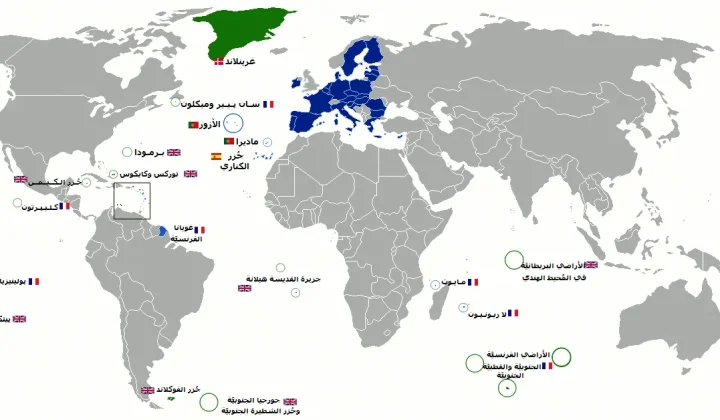
Mayotte fiber dispute does not meet ReviewArticle’s AI news brief
Le Monde reports that France’s competition authority has ordered Orange to suspend part of its fiber-optic rollout in Mayotte. The dispute is…
Read article
DiffEEG Model Uses Diffusion Pre-Training to Improve Seizure Detection from Minimal Labeled Data
Researchers have introduced DiffEEG, a 9.6-million-parameter foundation model that combines denoising diffusion pre-training with reinforcement learning fine-tuning to detect seizure events from…
Read articleWiki relacionada

AI Model API Pricing and Context Window Comparison: Current Rates and Limits
Compare the latest API pricing, context windows, and capabilities of leading AI model providers including OpenAI, Anthropic, Google, and Mistral. Practical guidance…
Read article
AI Agent Evaluation Frameworks: How to Benchmark Agentic Systems
A practical guide to evaluating AI agents — from task completion metrics to safety, cost, and robustness. Covers major frameworks, primary sources,…
Read article
LLM Benchmarks Decoded: What MMLU, HumanEval, and GSM8K Actually Measure for Developers
A developer-focused breakdown of the most-cited LLM benchmarks — MMLU, HumanEval, GSM8K, MATH, Chatbot Arena — including what they test, their hidden…
Read article
What Is RAG? A Practical Guide to Retrieval-Augmented Generation in 2025
Retrieval-Augmented Generation (RAG) grounds LLM outputs in external data, reducing hallucinations and enabling enterprise use cases. This guide covers how RAG works,…
Read article