
China’s Himalayan Megaproject: Motuo Dam Sparks Environmental and Geological Concerns
China's ambitious Motuo Dam on the Yarlung Tsangpo River aims to be the world's largest hydroelectric facility, but faces significant geological risks and internal doubts about its justification and long-term sustainability.
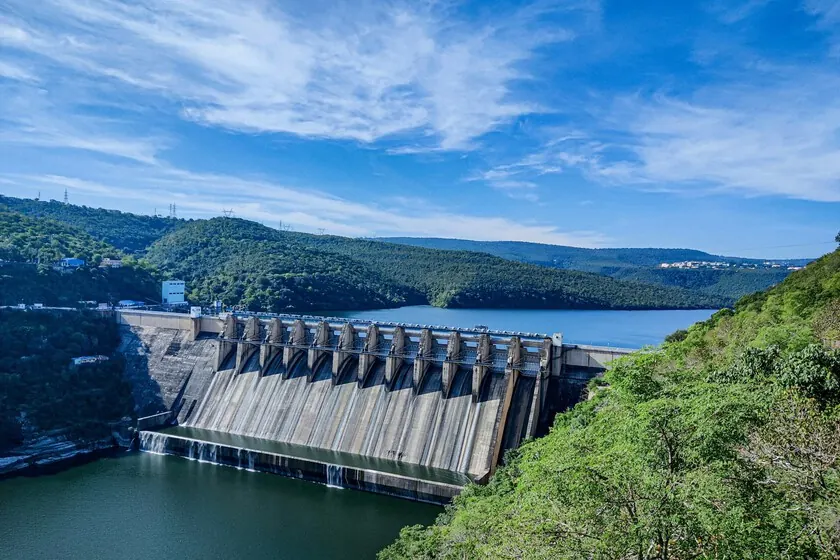
China is undertaking a colossal hydroelectric project in the Himalayas, the Motuo Dam on the Yarlung Tsangpo River, with the ambition of becoming the largest hydroelectric power station globally. This ambitious undertaking by China aims to significantly surpass the capacity of the already immense Three Gorges Dam. However, the project is also drawing attention for its potential environmental and geological ramifications, with some experts describing it as an attempt to “tame nature.”
Scale of the Project
The sheer scale of the Motuo Dam is staggering. Experts estimate its generation capacity to be between 60 and 70 GW. Annually, it is projected to produce approximately 300 billion kWh of energy, which is three times the output of the Three Gorges Dam. To put this into perspective, this would generate enough power to meet the annual energy consumption of the entire United Kingdom. The construction involves tunneling 20 kilometers through mountainous terrain and will consist of five interconnected hydroelectric power stations. The estimated cost for this monumental endeavor ranges between $167 billion and $170 billion USD.
Geological Risks and Instability
A primary concern surrounding the Motuo Dam is its location within the seismically active Himalayan belt. The region is known for its extreme geological instability, and a report by Probe International highlights the significant seismic risks posed to the superproject. This is particularly concerning given that the Tibetan region already hosts 68 dams and has another 101 planned. Recent seismic events have underscored the real danger to infrastructure situated in this geologically sensitive area.
Internal Doubts and Justification
Even within China, the project is not without its critics. Chinese geologist Fan Xiao has raised concerns about the project’s justification, citing the associated risks and a potentially insufficient demand for electricity in sparsely populated Tibet. Furthermore, the substantial economic and energy costs associated with transmitting electricity from the remote dam site to urban centers are also a point of contention.
Sustainability and Alternatives
While Beijing champions the Motuo Dam as a crucial step towards decarbonization and a key element of China’s strategy to reduce its reliance on coal, experts offer a more nuanced view. Darrin Magee, an expert in hydropower from Western Washington University, points out that reservoirs can produce significant greenhouse gas emissions, questioning the long-term sustainability of such large-scale hydropower projects. Magee suggests that a more prudent approach in Tibet would involve a mix of wind and solar power plants alongside hydropower.
Key facts
| Aspect | Detail |
|---|---|
| Project Name | Motuo Dam |
| Location | Yarlung Tsangpo River, Himalayas, China |
| Estimated Capacity | 60-70 GW |
| Estimated Annual Production | 300 billion kWh |
| Estimated Cost | $167 – $170 billion USD |
| Primary Concerns | Geological instability, seismic activity, environmental impact, transmission costs |
The development of the Motuo Dam highlights the complex trade-offs between large-scale renewable energy ambitions and the inherent environmental and geological challenges. For readers interested in AI and technology, this project represents a massive application of engineering and resource management, but also underscores the critical need for rigorous risk assessment and sustainable energy planning in the face of complex natural environments.
Source: El triple de potente que las Tres Gargantas: así es el coloso hidroeléctrico con el que China “está intentando domar la naturaleza”, https://www.xataka.com/energia/triple-potente-que-tres-gargantas-asi-coloso-hidroelectrico-que-china-esta-intentando-domar-naturaleza
Source
Xataka IA Publicacion original: 2026-06-20T17:01:08+00:00
Related articles

IBM CEO Puts a Number on the Open-Weight AI Value Proposition: 90% of the Performance at 10% of the Token Cost
IBM CEO Arvind Krishna told analysts that open-weight models now deliver about 90% of frontier-model effectiveness while costing between 10% and 25%…
Read article
OCU Finds Spanish Homeowner Communities Overpaying Up to €1,500 on Electricity and €3,515 on Gas—Can AI Tools Optimize Shared Energy Bills?
A new OCU analysis of Spanish homeowner community bills reveals widespread overpayment due to non-competitive tariffs and excess contracted power. Could AI-driven…
Read article
Mayotte fiber dispute does not meet ReviewArticle’s AI news brief
Le Monde reports that France’s competition authority has ordered Orange to suspend part of its fiber-optic rollout in Mayotte. The dispute is…
Read article
DiffEEG Model Uses Diffusion Pre-Training to Improve Seizure Detection from Minimal Labeled Data
Researchers have introduced DiffEEG, a 9.6-million-parameter foundation model that combines denoising diffusion pre-training with reinforcement learning fine-tuning to detect seizure events from…
Read articleWiki relacionada

AI Model API Pricing and Context Window Comparison: Current Rates and Limits
Compare the latest API pricing, context windows, and capabilities of leading AI model providers including OpenAI, Anthropic, Google, and Mistral. Practical guidance…
Read article
AI Agent Evaluation Frameworks: How to Benchmark Agentic Systems
A practical guide to evaluating AI agents — from task completion metrics to safety, cost, and robustness. Covers major frameworks, primary sources,…
Read article
LLM Benchmarks Decoded: What MMLU, HumanEval, and GSM8K Actually Measure for Developers
A developer-focused breakdown of the most-cited LLM benchmarks — MMLU, HumanEval, GSM8K, MATH, Chatbot Arena — including what they test, their hidden…
Read article
What Is RAG? A Practical Guide to Retrieval-Augmented Generation in 2025
Retrieval-Augmented Generation (RAG) grounds LLM outputs in external data, reducing hallucinations and enabling enterprise use cases. This guide covers how RAG works,…
Read article