
China’s Tumen River Ambitions Tested by Russia-North Korea Ties
A centuries-old geographic constraint is at the heart of growing strategic tensions in Northeast Asia as China seeks direct Pacific access while Russia and North Korea deepen their bilateral cooperation.
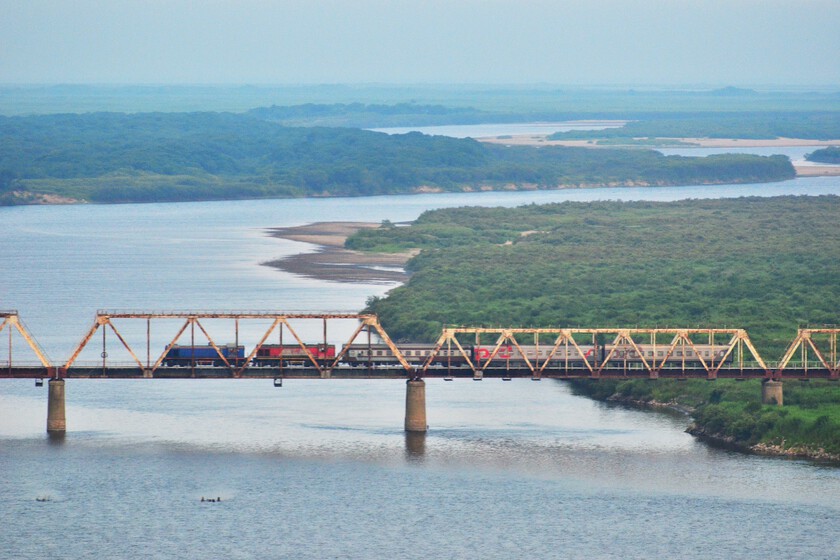
For over 160 years, China has been geographically constrained from direct access to the Sea of Japan, a situation stemming from territorial cessions made to the Russian Empire in 1860. This historical disadvantage continues to shape Beijing’s strategic considerations, particularly concerning its aspiration to secure unobstructed passage to the northeastern Pacific.
The Tumen River, a seemingly minor waterway, lies at the crux of this long-standing ambition. It forms a narrow border between China, Russia, and North Korea, and the limited navigable sections are crucial for China’s goal of reaching the Sea of Japan without relying on longer, more heavily monitored routes. This geographical bottleneck is now emerging as a test of China’s strategic patience, as it gauges the extent to which Moscow and Pyongyang will accommodate Beijing’s expanding influence.
Historical Grievance and Strategic Aspirations
The current geopolitical landscape is rooted in the 1860 Convention of Peking, which saw China cede territories that now form part of Russia’s Primorsky Krai. This historical agreement left China with only a few kilometers of coastline before the Sea of Japan, a situation that has fueled a quiet, decades-long ambition to regain easier access via the Tumen River.
This pursuit is not merely economic. Direct navigation through the Tumen would provide China with a critical gateway into a region actively patrolled by Russia’s Pacific Fleet in Vladivostok and forces from U.S. allies like Japan and South Korea. The Tumen, therefore, represents a small river with potentially significant strategic implications.
Moscow and Pyongyang’s Divergent Agendas
Complicating China’s objectives are the distinct strategic calculations of its neighbors, Russia and North Korea. While official statements from Russia have indicated a willingness to cooperate, ground-level realities suggest a more ambiguous stance.
A recent agreement between Kim Jong-un and Vladimir Putin in 2024 to construct a bridge over the Tumen River adds another layer of complexity. This infrastructure project appears to be more than just a physical link; it signals a political alignment between Moscow and Pyongyang. Their strengthening bilateral ties, while potentially beneficial for both, do not automatically translate into greater strategic space for China.
Allies with Different Dreams
The dynamic between China, Russia, and North Korea underscores a common pattern: shared interests do not always equate to identical objectives. China seeks strategic depth and access, while North Korea prioritizes Russian military and technological support without becoming overly dependent on Beijing. Russia, in turn, aims to leverage Pyongyang as a military partner and maintain China’s proximity, but not to the point of feeling strategically encircled in its own Far East. This complex relationship is often summarized as the three nations being “in the same bed, but dreaming different dreams.”
Regional Repercussions of Tumen Access
Should China succeed in fully opening the Tumen River corridor, the regional security equation would shift. Initially, this could mean increased Chinese merchant shipping into the Sea of Japan. However, the potential for future military vessel passage raises significant alarms.
For North Korea, it would mean coexisting with a more pronounced Chinese naval presence directly offshore. For Russia, it would necessitate accepting a greater Chinese strategic shadow over its Pacific flank. For Japan, South Korea, and the United States, it would confirm the emergence of a more active military axis in one of Asia’s most volatile regions.
Limits to Beijing’s Patience
The understated nature of discussions regarding the Tumen River following the latest summit between Xi Jinping and Kim Jong Un suggests underlying strategic maneuvering. China continues to press its objectives, but neither Russia nor North Korea appears fully inclined to grant Beijing its desired access.
This impasse risks becoming a source of friction. For China, the Tumen River is more than just a waterway; it is a symbol of prestige, access, and power projection. As Moscow and Pyongyang deepen their cooperation without fully accounting for Beijing’s strategic needs, China may increasingly feel that its partners are benefiting from its support without reciprocating by offering crucial strategic space in return.
Key Facts
| Aspect | Details |
|---|---|
| Historical Context | 1860 Convention of Peking ceded Tumen River region to Russian Empire. |
| China’s Goal | Direct, unobstructed access to the Sea of Japan via the Tumen River. |
| Recent Development | Russia-North Korea agreement in 2024 to build a bridge over the Tumen River. |
| Strategic Impact | Potential shift in regional naval balance and influence in Northeast Asia. |
This development matters to ReviewArticle readers as it highlights the complex geopolitical dynamics influencing AI and technology development in Asia. Access to strategic waterways can impact trade routes, military deployments, and the overall regional stability, which in turn affects international collaboration and competition in the AI and tech sectors.
Source: Un pequeño río perdido entre Rusia y Corea del Norte está poniendo a prueba algo mucho más grande: la paciencia de China con ambos – Xataka https://www.xataka.com/magnet/pequeno-rio-perdido-rusia-corea-norte-esta-poniendo-a-prueba-algo-mucho-grande-paciencia-china-ambos
Source
Xataka IA Publicacion original: 2026-06-24T09:01:01+00:00
Related articles
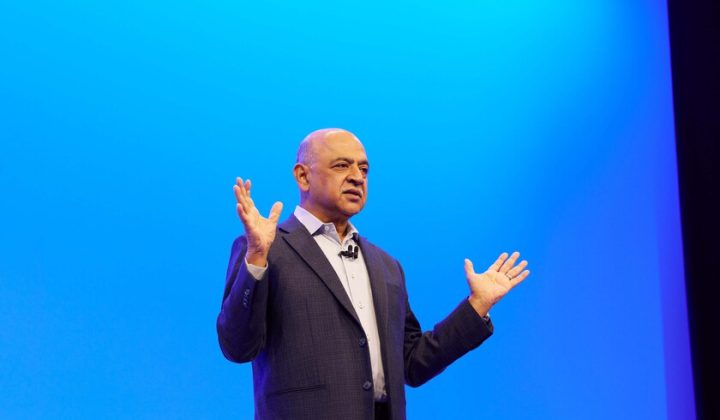
IBM CEO Puts a Number on the Open-Weight AI Value Proposition: 90% of the Performance at 10% of the Token Cost
IBM CEO Arvind Krishna told analysts that open-weight models now deliver about 90% of frontier-model effectiveness while costing between 10% and 25%…
Read article
OCU Finds Spanish Homeowner Communities Overpaying Up to €1,500 on Electricity and €3,515 on Gas—Can AI Tools Optimize Shared Energy Bills?
A new OCU analysis of Spanish homeowner community bills reveals widespread overpayment due to non-competitive tariffs and excess contracted power. Could AI-driven…
Read article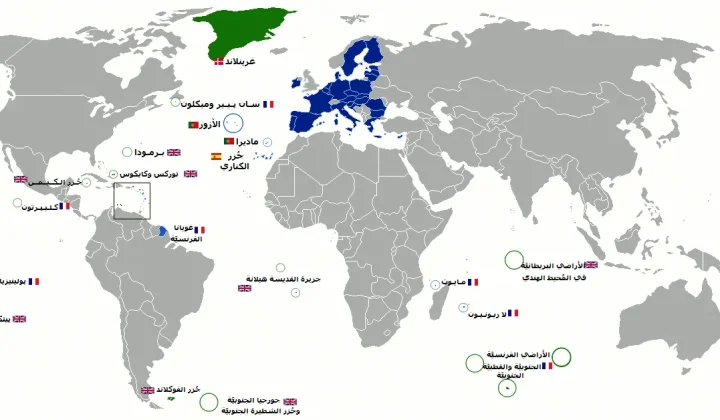
Mayotte fiber dispute does not meet ReviewArticle’s AI news brief
Le Monde reports that France’s competition authority has ordered Orange to suspend part of its fiber-optic rollout in Mayotte. The dispute is…
Read article
DiffEEG Model Uses Diffusion Pre-Training to Improve Seizure Detection from Minimal Labeled Data
Researchers have introduced DiffEEG, a 9.6-million-parameter foundation model that combines denoising diffusion pre-training with reinforcement learning fine-tuning to detect seizure events from…
Read articleWiki relacionada

AI Model API Pricing and Context Window Comparison: Current Rates and Limits
Compare the latest API pricing, context windows, and capabilities of leading AI model providers including OpenAI, Anthropic, Google, and Mistral. Practical guidance…
Read article
AI Agent Evaluation Frameworks: How to Benchmark Agentic Systems
A practical guide to evaluating AI agents — from task completion metrics to safety, cost, and robustness. Covers major frameworks, primary sources,…
Read article
LLM Benchmarks Decoded: What MMLU, HumanEval, and GSM8K Actually Measure for Developers
A developer-focused breakdown of the most-cited LLM benchmarks — MMLU, HumanEval, GSM8K, MATH, Chatbot Arena — including what they test, their hidden…
Read article
What Is RAG? A Practical Guide to Retrieval-Augmented Generation in 2025
Retrieval-Augmented Generation (RAG) grounds LLM outputs in external data, reducing hallucinations and enabling enterprise use cases. This guide covers how RAG works,…
Read article