
China’s New AI Billionaires: DeepSeek Founder Tops $36 Billion as Low-Profile Tech Elite Rises
A new generation of Chinese tech billionaires, led by DeepSeek’s Liang Wenfeng and CXMT’s Zhu Yiming, is building AI and semiconductor fortunes while deliberately staying out of the public eye. The shift signals a changing center of gravity in global AI investment and talent.
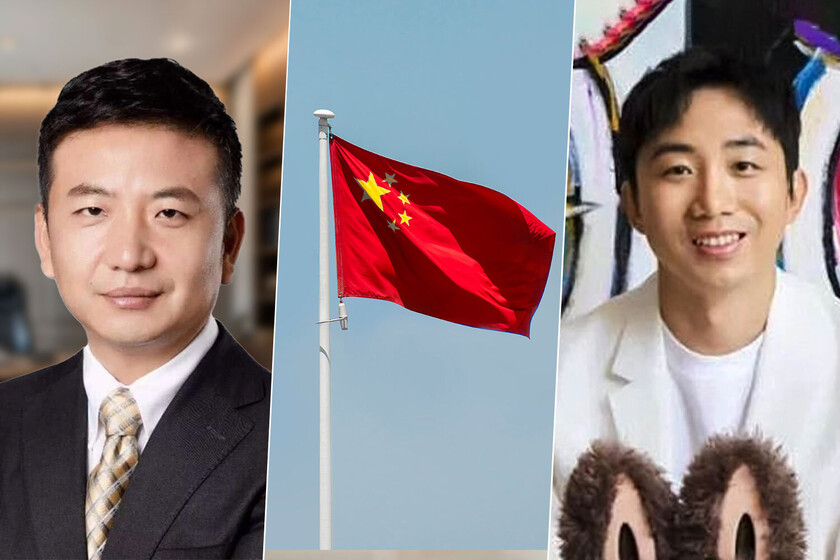
China’s new generation of tech billionaires is rewriting the rules of wealth creation in artificial intelligence and semiconductors. Unlike their real-estate predecessors, these entrepreneurs are building globally competitive AI companies, raising fortunes that rival or exceed those of Silicon Valley leaders — and they are doing it with a deliberate low profile.
The most prominent example is Liang Wenfeng, founder of DeepSeek, the AI lab that shook the industry with its cost-efficient large language models. According to the Hurun 2026 report, Liang’s fortune now stands at $36 billion, placing him above Dario Amodei (Anthropic) and Sam Altman (OpenAI). DeepSeek recently closed a new funding round, and the company’s valuation has soared. Yet Liang rarely gives interviews, mirroring a broader trend among China’s new tech elite.
Por que importa
Key facts
| Name | Company | Estimated fortune (2026) | Sector |
|——|———|————————–|——–|
| Liang Wenfeng | DeepSeek | $36 billion | AI large language models |
| Zhu Yiming | CXMT (ChangXin Memory Technologies) | $15.5 billion | DRAM semiconductor chips |
The rise of a new Chinese tech elite
The shift from brick-and-mortar wealth to technology-driven fortunes is stark. The Hurun 2026 report counts 29 self-made billionaires aged 40 or younger in China. Two decades ago, engineers like Zhu Yiming were dismissed as visionaries. In a 2005 email, Zhu predicted that the global memory chip business would eventually fall to Chinese companies. Today, his company CXMT is the largest DRAM manufacturer in China. When CXMT debuted on the Shanghai stock exchange, its shares surged 500% in a single day, briefly surpassing Intel in market capitalization. Zhu had committed to forgoing his salary until the company turned profitable — a promise he kept.
Contexto
DeepSeek’s Liang Wenfeng leads the AI wealth wave
Liang Wenfeng’s fortune is the most direct AI story. DeepSeek’s models, such as DeepSeek-R1, demonstrated that high-performance reasoning could be achieved with lower training costs, challenging the assumption that only massive capital expenditure could produce frontier AI. The company’s rapid valuation growth reflects investor confidence in its approach. Liang’s willingness to remain out of the spotlight contrasts sharply with the global publicity strategies of Western AI founders.
Global ambitions and a break from the past
The new Chinese tech billionaires differ from the 1990s generation, which built wealth on real estate, manufacturing, and the 996 work culture (9 a.m. to 9 p.m., six days a week). Figures like Jack Ma and the founder of JD.com publicly defended that model. The new generation rejects it, adopting more flexible work policies to attract top talent. They also think globally from the start. Wang Ning, creator of Pop Mart’s Labubu toys, became the youngest person in China’s top ten fortunes by selling globally. Junjie Zhang founded Chagee tea chain in 2017 and listed on Nasdaq within nine years, operating in multiple countries. For AI companies like DeepSeek and CXMT, global reach is built into the product strategy.
Regulatory risks keep billionaires in the shadows
Despite their wealth, these entrepreneurs remain cautious. The Chinese government has shown it can move decisively against prominent figures, as demonstrated by the 2020 crackdown on Jack Ma after his criticism of financial regulators. In 2026, Beijing blocked the sale of Manu, an AI startup, to Meta for $2 billion. The deal would have made its founder, Xiao Hong, a billionaire — but the intervention prevented it. Such incidents reinforce a culture of discretion. The new billionaires let their products cross borders and grab headlines, but their faces remain largely unknown.
Why this matters for ReviewArticle readers
The rise of self-made Chinese AI billionaires with global ambitions has direct implications for the AI tool ecosystem. DeepSeek’s models are already used by developers worldwide, and CXMT’s memory chips are critical for AI hardware supply chains. The regulatory environment means that partnerships, funding rounds, and product releases from these companies may face additional scrutiny. For AI practitioners and investors, tracking the fortunes of figures like Liang Wenfeng and Zhu Yiming is no longer a distant curiosity — it is a barometer of where the next wave of AI innovation and capital is flowing.
Source: Xataka (Rubén Andrés) — original article in Spanish, published July 28, 2026. Available at https://www.xataka.com/empresas-y-economia/china-ha-alumbrado-nueva-elite-tecnologica-rica-globalizada-cada-vez-invisible
Datos clave
| Punto | Detalle |
|---|---|
| Fuente | Xataka IA |
| Fecha | 2026-07-28T12:45:35+00:00 |
| Tema | China ha alumbrado una nueva élite tecnológica: rica, globalizada y cada vez más invisible |
Source
Xataka IA Publicacion original: 2026-07-28T12:45:35+00:00
Related articles
OCU Finds Spanish Homeowner Communities Overpaying Up to €1,500 on Electricity and €3,515 on Gas—Can AI Tools Optimize Shared Energy Bills?
A new OCU analysis of Spanish homeowner community bills reveals widespread overpayment due to non-competitive tariffs and excess contracted power. Could AI-driven…
Read article
Mayotte fiber dispute does not meet ReviewArticle’s AI news brief
Le Monde reports that France’s competition authority has ordered Orange to suspend part of its fiber-optic rollout in Mayotte. The dispute is…
Read article
DiffEEG Model Uses Diffusion Pre-Training to Improve Seizure Detection from Minimal Labeled Data
Researchers have introduced DiffEEG, a 9.6-million-parameter foundation model that combines denoising diffusion pre-training with reinforcement learning fine-tuning to detect seizure events from…
Read article
The Technology Trap: Why AI Cannot Escape the Unchanging Fundamentals of War
A new Foreign Affairs essay by former Pentagon official Mara Karlin warns that over-reliance on AI and advanced tech in military planning…
Read articleWiki relacionada

AI Model API Pricing and Context Window Comparison: Current Rates and Limits
Compare the latest API pricing, context windows, and capabilities of leading AI model providers including OpenAI, Anthropic, Google, and Mistral. Practical guidance…
Read article
AI Agent Evaluation Frameworks: How to Benchmark Agentic Systems
A practical guide to evaluating AI agents — from task completion metrics to safety, cost, and robustness. Covers major frameworks, primary sources,…
Read article
LLM Benchmarks Decoded: What MMLU, HumanEval, and GSM8K Actually Measure for Developers
A developer-focused breakdown of the most-cited LLM benchmarks — MMLU, HumanEval, GSM8K, MATH, Chatbot Arena — including what they test, their hidden…
Read article
What Is RAG? A Practical Guide to Retrieval-Augmented Generation in 2025
Retrieval-Augmented Generation (RAG) grounds LLM outputs in external data, reducing hallucinations and enabling enterprise use cases. This guide covers how RAG works,…
Read article