
Decades-Long Structural Flaw in NYC Skyscraper Revealed by Student’s Research
A critical design flaw in New York City's Citigroup Center, involving faulty bolts and inadequate wind resistance calculations, went unnoticed for two decades until a student's thesis brought it to light, prompting urgent, covert repairs.
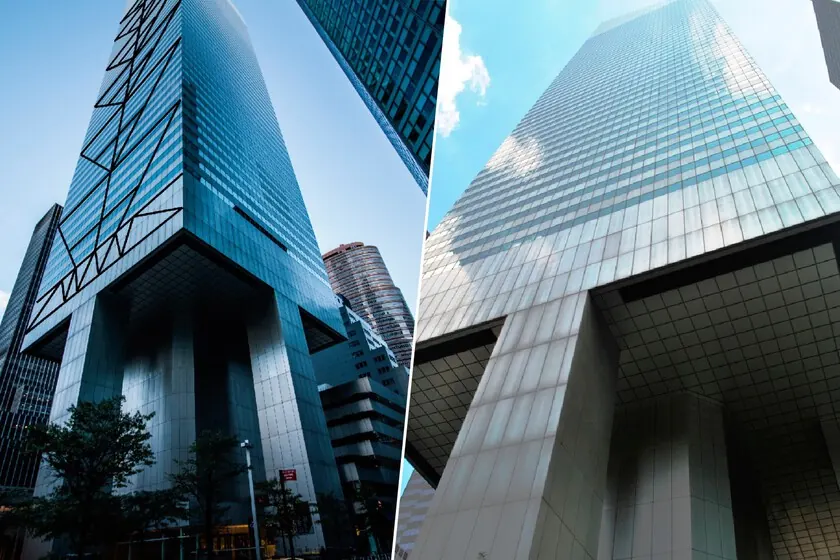
For two decades, hundreds of thousands of people entered and exited New York City’s Citigroup Center, unaware of a critical structural flaw that threatened the building’s integrity. The oversight, involving the skyscraper’s bolted joints and their capacity to withstand diagonal winds, was only discovered through the diligent research of an architecture student.
The building, originally known as Citicorp Center, was completed in 1977. Designed by Hugh Stubbins & Associates with engineering by William LeMessurier, it stood as a 59-story, 279-meter marvel with a distinctive sloping roof and a unique base supported by four massive pillars instead of corner foundations. This design choice, intended to create an open space below and give the building a “levitating” effect, distributed the skyscraper’s weight to an external steel frame.
A critical aspect of the design was the use of bolted joints for the triangular frames hidden beneath the facade. While intended to withstand perpendicular winds, it was later found that these joints were not adequately designed for winds blowing from diagonal directions.
The building also featured one of the earliest tuned mass dampers (TMD) – a 360-ton concrete sphere embedded in oil – to counteract vibrations from wind and ground movement, helping the skyscraper maintain balance.
The Near Catastrophe
Despite initial praise, questions about the building’s resilience to strong winds, particularly those exceeding 100 km/h from various directions, began to surface. The true extent of the danger became apparent about a year after the building’s 1977 opening.
Diane Hartley, an architecture student at Princeton University, was researching the Citigroup Center for her thesis. Her professor had expressed concerns about the building’s inclined structure and non-corner support columns. Hartley’s calculations of the building’s wind load capacity differed significantly from LeMessurier’s original figures. When she requested detailed wind load calculations for different wind directions, she reportedly only received data for perpendicular winds, along with assurances of structural soundness.
LeMessurier initially dismissed her professor’s concerns. However, a second inquiry from another student, Lee DeCarolis from the New Jersey Institute of Technology, prompted LeMessurier to re-evaluate his own calculations.
The Alarming Results
LeMessurier’s recalculations revealed a chilling truth: when winds blew diagonally, the steel triangles on the structure experienced up to a 40% increase in maximum load. This significantly overloaded the connecting bolts, increasing the load on all connection joints by as much as 160%. He realized that the bolted joints, as opposed to the originally intended welds, might not be strong enough to withstand such forces, potentially leading to a catastrophic structural failure.
The engineer understood that the force of wind on tall buildings is immense, and while gravity helps hold structures together through compression, the joints must resist forces not counteracted by gravity. He feared the bolts were insufficient for the task.
Covert Repairs
After consulting with lawyers and specialists, LeMessurier initiated a plan for urgent, covert repairs. Working primarily at night to avoid public panic, construction crews reinforced approximately 200 bolted joints by welding 2-inch-thick steel plates over them. The integrity of the columns and the entire skeleton was continuously monitored. A contingency plan for a potential collapse was reportedly in place, though kept secret from the public.
The repairs were completed by the end of 1978, a year after the structural flaw was identified. The public remained unaware of the near-disaster until a 1995 New Yorker article brought the story to light, nearly two decades after the fact.
Despite the significant oversight and the potentially disastrous consequences, neither LeMessurier nor the involved architects and engineers faced legal repercussions. The millions of dollars required for the modifications were reportedly covered by the company’s insurance.
The incident serves as a stark reminder of the complexities of skyscraper engineering and the critical importance of rigorous analysis and verification, especially when dealing with unique architectural designs and the forces of nature. It also highlights the crucial role of independent research and the unexpected places where vital discoveries can emerge.
Key facts
| Detail | Information |
|---|---|
| Building Name | Citigroup Center (formerly Citicorp Center) |
| Location | New York City |
| Completion Year | 1977 |
| Height | 279 meters (59 stories) |
| Discovered Flaw | Inadequate bolt strength for diagonal winds |
| Discovered By | Diane Hartley (Princeton University student) |
| Repair Period | 1978 |
The near-catastrophe at the Citigroup Center underscores the critical importance of robust engineering analysis and the potential for unforeseen structural weaknesses in complex modern architecture. For readers interested in AI, this story highlights how human error and oversights in critical systems can be identified and potentially mitigated through diligent, data-driven analysis, echoing the principles of rigorous verification sought in AI development and deployment.
Source: Decades-long structural flaw in NYC skyscraper revealed by student’s research, Xataka IA, https://www.xataka.com/ingenieria-y-megaconstrucciones/durante-decadas-subimos-a-este-rascacielos-nueva-york-saber-que-tornillos-que-sujetaban-no-aguantaban-1
Source
Xataka IA Publicacion original: 2026-06-16T07:30:17+00:00
Related articles

IBM CEO Puts a Number on the Open-Weight AI Value Proposition: 90% of the Performance at 10% of the Token Cost
IBM CEO Arvind Krishna told analysts that open-weight models now deliver about 90% of frontier-model effectiveness while costing between 10% and 25%…
Read article
OCU Finds Spanish Homeowner Communities Overpaying Up to €1,500 on Electricity and €3,515 on Gas—Can AI Tools Optimize Shared Energy Bills?
A new OCU analysis of Spanish homeowner community bills reveals widespread overpayment due to non-competitive tariffs and excess contracted power. Could AI-driven…
Read article
Mayotte fiber dispute does not meet ReviewArticle’s AI news brief
Le Monde reports that France’s competition authority has ordered Orange to suspend part of its fiber-optic rollout in Mayotte. The dispute is…
Read article
DiffEEG Model Uses Diffusion Pre-Training to Improve Seizure Detection from Minimal Labeled Data
Researchers have introduced DiffEEG, a 9.6-million-parameter foundation model that combines denoising diffusion pre-training with reinforcement learning fine-tuning to detect seizure events from…
Read articleWiki relacionada

AI Model API Pricing and Context Window Comparison: Current Rates and Limits
Compare the latest API pricing, context windows, and capabilities of leading AI model providers including OpenAI, Anthropic, Google, and Mistral. Practical guidance…
Read article
AI Agent Evaluation Frameworks: How to Benchmark Agentic Systems
A practical guide to evaluating AI agents — from task completion metrics to safety, cost, and robustness. Covers major frameworks, primary sources,…
Read article
LLM Benchmarks Decoded: What MMLU, HumanEval, and GSM8K Actually Measure for Developers
A developer-focused breakdown of the most-cited LLM benchmarks — MMLU, HumanEval, GSM8K, MATH, Chatbot Arena — including what they test, their hidden…
Read article
What Is RAG? A Practical Guide to Retrieval-Augmented Generation in 2025
Retrieval-Augmented Generation (RAG) grounds LLM outputs in external data, reducing hallucinations and enabling enterprise use cases. This guide covers how RAG works,…
Read article