
EU Crypto Regulation Takes Effect, Impacting Retail Investors in France
New European Union regulations governing crypto-asset service providers are now in effect, requiring platforms operating in France to obtain specific licensing or cease operations, with potential implications for individual investors.


Starting July 1st, a significant new regulatory framework for crypto-asset service providers (CASPs) comes into force across the European Union, with immediate effects for investors in France. Platforms that have not secured the required licensing under the Markets in Crypto-Assets (MiCA) regulation are no longer permitted to operate within the country and must initiate a process to wind down their activities.
This regulatory shift represents a concerted effort by the EU to bring greater oversight and consumer protection to the volatile world of digital assets. The primary objective is to establish a harmonized legal framework that fosters innovation while mitigating risks associated with cryptocurrency investments.
Key Facts
| Aspect | Detail |
|---|---|
| Regulation Name | Markets in Crypto-Assets (MiCA) |
| Effective Date | July 1, 2026 |
| Impacted Entities | Crypto-asset service providers (CASPs) operating in the EU |
| Requirement for Platforms | Obtain specific licensing or implement a cessation plan |
| Primary Goal | Harmonized EU crypto market, investor protection, risk mitigation |
Licensing Mandate for Platforms
Under the new rules, CASPs that wish to continue offering their services within France must have obtained the necessary authorization as a crypto-asset service provider. This licensing process is designed to ensure that these platforms meet stringent standards for operational resilience, security, and compliance.
For platforms that have not met this licensing threshold, the regulation mandates the implementation of a cessation plan. This plan outlines the orderly shutdown of operations, aiming to minimize disruption and protect the interests of existing clients. The specific details of these cessation plans would typically involve clear communication to users regarding asset withdrawal procedures and timelines.
Implications for Retail Investors
The enforcement of this regulation has direct implications for individual investors, particularly those in France. Investors using platforms that have failed to obtain the required license will need to be aware of the operational status of their chosen service providers.
The most immediate concern for investors would be ensuring the security and accessibility of their digital assets. Platforms undergoing a cessation process will need to facilitate the withdrawal of funds and assets by their clients. Investors are advised to closely monitor communications from their crypto platforms regarding compliance status and any instructions related to asset retrieval.
While the article from Le Monde Pixels does not provide specific details on the number of platforms affected or the exact timeline for cessation plans, the directive is clear: non-compliant entities must cease operations. This regulatory action is intended to bolster trust in the crypto market by weeding out entities that may not adhere to established financial and security protocols.
A Harmonized European Approach
The MiCA regulation is a landmark piece of legislation that aims to create a unified market for crypto-assets across all EU member states. Prior to MiCA, regulations surrounding crypto-assets varied significantly from one country to another, creating a fragmented and often confusing landscape for both businesses and consumers.
By establishing common rules for CASPs, the EU seeks to prevent regulatory arbitrage and ensure a level playing field. This harmonization is expected to foster greater investment and innovation within the European crypto sector, while also providing a more robust framework for consumer protection. The regulation covers a wide range of crypto-assets, including stablecoins, and introduces requirements for issuers and service providers alike.
Looking Ahead: Compliance and Consumer Confidence
The successful implementation of MiCA is anticipated to be a crucial step in building consumer confidence in the cryptocurrency market. By imposing clear rules and oversight, the EU aims to reduce the risks of fraud, market manipulation, and operational failures that have plagued the industry.
For investors, this means a potentially safer environment for engaging with digital assets. However, it also underscores the importance of due diligence in selecting crypto platforms. Investors should always seek out licensed and regulated providers, understand the risks associated with crypto investments, and never invest more than they can afford to lose.
The coming weeks and months will likely see further developments as platforms either demonstrate compliance or begin their cessation processes. Investors are encouraged to stay informed and proactive in managing their digital asset portfolios.
Source: Cryptomonnaies : ce que change la nouvelle réglementation européenne pour les épargnants (Le Monde Pixels) – https://www.lemonde.fr/argent/article/2026/07/01/cryptomonnaies-ce-que-change-la-nouvelle-reglementation-europeenne-pour-les-epargnants_6717466_1657007.html
Source
Le Monde Pixels Publicacion original: 2026-07-01T05:10:44+00:00
Related articles

IBM CEO Puts a Number on the Open-Weight AI Value Proposition: 90% of the Performance at 10% of the Token Cost
IBM CEO Arvind Krishna told analysts that open-weight models now deliver about 90% of frontier-model effectiveness while costing between 10% and 25%…
Read article
OCU Finds Spanish Homeowner Communities Overpaying Up to €1,500 on Electricity and €3,515 on Gas—Can AI Tools Optimize Shared Energy Bills?
A new OCU analysis of Spanish homeowner community bills reveals widespread overpayment due to non-competitive tariffs and excess contracted power. Could AI-driven…
Read article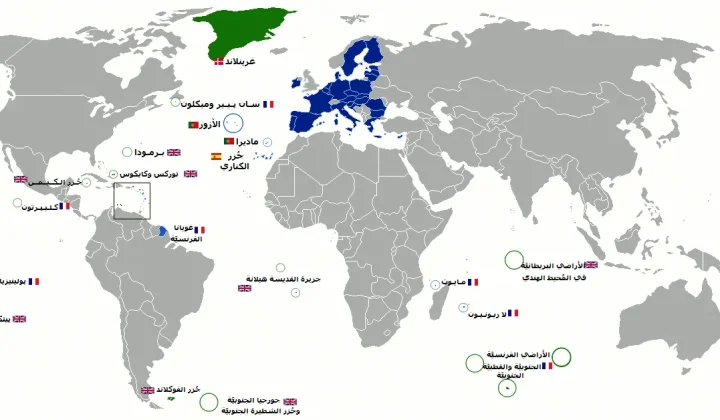
Mayotte fiber dispute does not meet ReviewArticle’s AI news brief
Le Monde reports that France’s competition authority has ordered Orange to suspend part of its fiber-optic rollout in Mayotte. The dispute is…
Read article
DiffEEG Model Uses Diffusion Pre-Training to Improve Seizure Detection from Minimal Labeled Data
Researchers have introduced DiffEEG, a 9.6-million-parameter foundation model that combines denoising diffusion pre-training with reinforcement learning fine-tuning to detect seizure events from…
Read articleWiki relacionada

AI Model API Pricing and Context Window Comparison: Current Rates and Limits
Compare the latest API pricing, context windows, and capabilities of leading AI model providers including OpenAI, Anthropic, Google, and Mistral. Practical guidance…
Read article
AI Agent Evaluation Frameworks: How to Benchmark Agentic Systems
A practical guide to evaluating AI agents — from task completion metrics to safety, cost, and robustness. Covers major frameworks, primary sources,…
Read article
LLM Benchmarks Decoded: What MMLU, HumanEval, and GSM8K Actually Measure for Developers
A developer-focused breakdown of the most-cited LLM benchmarks — MMLU, HumanEval, GSM8K, MATH, Chatbot Arena — including what they test, their hidden…
Read article
What Is RAG? A Practical Guide to Retrieval-Augmented Generation in 2025
Retrieval-Augmented Generation (RAG) grounds LLM outputs in external data, reducing hallucinations and enabling enterprise use cases. This guide covers how RAG works,…
Read article