
Europe Reorients Defense Strategy Amid Shifting Global Alliances
European nations are significantly increasing defense spending and re-evaluating their security partnerships, driven by concerns over Russia and a perceived unreliability from the United States.
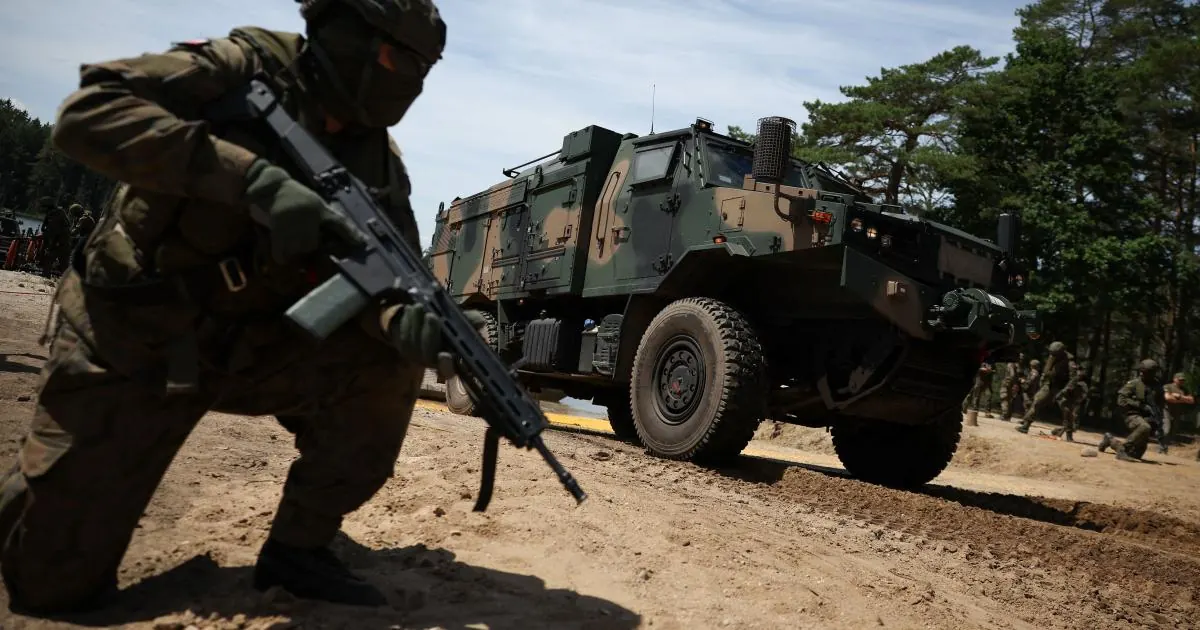
Europe is undergoing a significant strategic reorientation, marked by a substantial increase in defense spending and a reevaluation of its security alliances. This shift is driven by growing concerns about Russia’s actions and a perceived decline in reliability from the United States, prompting European nations to forge a new geopolitical and strategic trajectory.
The continent’s traditional reliance on “wealth without military strength, influence without sacrifice, and protection without obligation” is being challenged. For decades, European countries largely aligned with Washington’s priorities, even participating in U.S.-led wars that were not always viewed favorably by their own publics or governments. However, this paradigm is changing, with European nations now signaling a greater willingness to invest in their own defense capabilities and potentially reduce their dependence on U.S. military hardware.
Geopolitical Shifts and Security Concerns
A key driver of this transformation is the heightened sense of insecurity stemming from Russia’s ongoing conflict in Ukraine. Polling for the European Commission indicates that 77 percent of Europeans view Russia’s actions as a direct threat to Europe’s survival. This concern is not confined to Eastern and Northern Europe; major European powers like Germany (59 percent), France (50 percent), and the United Kingdom (49 percent) also identify Russia as their primary national security threat. This signals a significant shift, moving the perceived threat from Europe’s periphery to its core.
Diminishing Trust in U.S. Alliance
Compounding these security concerns is a growing realization among Europeans that they can no longer unconditionally rely on the United States for their security. A recent poll commissioned by the European Council on Foreign Relations revealed a sharp decline in European confidence in the U.S. as an ally, with only 11 percent of respondents in 15 surveyed countries viewing the U.S. as such. Majorities across these countries expressed doubt that the U.S. would provide defense assistance in the event of an attack, with a notable 25 percent now seeing the U.S. as a rival or adversary. This erosion of trust, particularly evident in countries like Hungary and Poland, is a recent but significant development.
Increased Defense Spending and Military Buildup
In response to these perceived threats and the changing transatlantic relationship, many European nations are backing increased national defense expenditures. Majorities in Denmark, Estonia, France, Germany, Poland, Portugal, and the United Kingdom favor boosting defense spending. Italy stands out as the only country where a clear majority opposes such increases.
Notably, there is growing support for collective EU borrowing to finance defense initiatives, with 47 percent of respondents across the surveyed countries in favor. This represents a significant policy shift, as such a concept was previously considered politically unthinkable.
Furthermore, a majority of Europeans now favor reducing dependence on U.S. military equipment and prioritizing European alternatives. Support for purchasing European-made defense products is particularly strong in Denmark, the Netherlands, and Sweden.
Resurgence of Conscription and Industrial Capacity
The shift is also reflected in attitudes toward military service. Majorities in France, Germany, and Poland now support the reinstatement of mandatory military service, a policy already in place in countries like Denmark, Estonia, and Switzerland. This marks a departure from the trend over the past three decades, where support for conscription had dwindled to minority positions.
Europe is also actively working to bolster its own military-industrial capacity to reduce reliance on U.S. equipment. Startups in Germany, such as Helsing and Stark Defense, are reportedly competing for significant drone contracts, indicating a move towards greater European self-sufficiency in defense manufacturing.
Germany’s Leading Role
Germany has emerged as a significant player in this rearmament effort. In 2024, the EU’s 27 member states collectively spent approximately $402 billion on defense, exceeding Russia’s military outlays. Germany accounts for roughly a quarter of this total EU spending, positioning itself as the world’s fourth-largest military spender. Berlin is projected to spend $172 billion, or about 3.6 percent of its GDP, by 2029, representing an almost 200 percent increase from 2022 levels. This increased armament by Germany has been largely welcomed by other European nations, with Polish Foreign Minister Radoslaw Sikorski expressing more concern about German aversion to armament than the German army itself. France, however, is reportedly adjusting to this new dynamic by seeking to foster Franco-German defense industrial cooperation.
Key Facts
| Aspect | Details |
|---|---|
| EU Defense Spending | Approx. $402 billion in 2024, surpassing Russia’s $160 billion. |
| German Spending | ~25% of total EU defense spending; projected $172 billion by 2029 (3.6% of GDP). |
| European Threat Perception | 77% see Russia’s war in Ukraine as a direct threat; 25% see U.S. as rival/adversary. |
| Support for Increased Defense | Majorities favor increasing national defense expenditures in Denmark, France, Germany, Poland, UK. |
The implications of this strategic shift are profound for the global security landscape. European nations are demonstrating a clear intent to take greater responsibility for their own defense, potentially altering existing alliances and power dynamics. For readers interested in AI and technology, this development could spur innovation and investment in European defense tech sectors, including AI-driven defense systems, cybersecurity, and autonomous systems, as the continent seeks to build its own advanced military capabilities.
Source: foreignaffairs.com, https://www.foreignaffairs.com/europe/europe-goes-its-own-way
Source
foreignaffairs.com Publicacion original: 2026-06-29T04:00:00+00:00
Related articles

IBM CEO Puts a Number on the Open-Weight AI Value Proposition: 90% of the Performance at 10% of the Token Cost
IBM CEO Arvind Krishna told analysts that open-weight models now deliver about 90% of frontier-model effectiveness while costing between 10% and 25%…
Read article
OCU Finds Spanish Homeowner Communities Overpaying Up to €1,500 on Electricity and €3,515 on Gas—Can AI Tools Optimize Shared Energy Bills?
A new OCU analysis of Spanish homeowner community bills reveals widespread overpayment due to non-competitive tariffs and excess contracted power. Could AI-driven…
Read article
Mayotte fiber dispute does not meet ReviewArticle’s AI news brief
Le Monde reports that France’s competition authority has ordered Orange to suspend part of its fiber-optic rollout in Mayotte. The dispute is…
Read article
DiffEEG Model Uses Diffusion Pre-Training to Improve Seizure Detection from Minimal Labeled Data
Researchers have introduced DiffEEG, a 9.6-million-parameter foundation model that combines denoising diffusion pre-training with reinforcement learning fine-tuning to detect seizure events from…
Read articleWiki relacionada

AI Model API Pricing and Context Window Comparison: Current Rates and Limits
Compare the latest API pricing, context windows, and capabilities of leading AI model providers including OpenAI, Anthropic, Google, and Mistral. Practical guidance…
Read article
AI Agent Evaluation Frameworks: How to Benchmark Agentic Systems
A practical guide to evaluating AI agents — from task completion metrics to safety, cost, and robustness. Covers major frameworks, primary sources,…
Read article
LLM Benchmarks Decoded: What MMLU, HumanEval, and GSM8K Actually Measure for Developers
A developer-focused breakdown of the most-cited LLM benchmarks — MMLU, HumanEval, GSM8K, MATH, Chatbot Arena — including what they test, their hidden…
Read article
What Is RAG? A Practical Guide to Retrieval-Augmented Generation in 2025
Retrieval-Augmented Generation (RAG) grounds LLM outputs in external data, reducing hallucinations and enabling enterprise use cases. This guide covers how RAG works,…
Read article