
From Ancient Vessels to Pasteur’s Germ Theory: The Evolving Story of the Baby Bottle
An exploration of the baby bottle's long history, from prehistoric ceramic vessels to modern hygienic designs, highlighting technological and scientific advancements that shaped infant feeding.
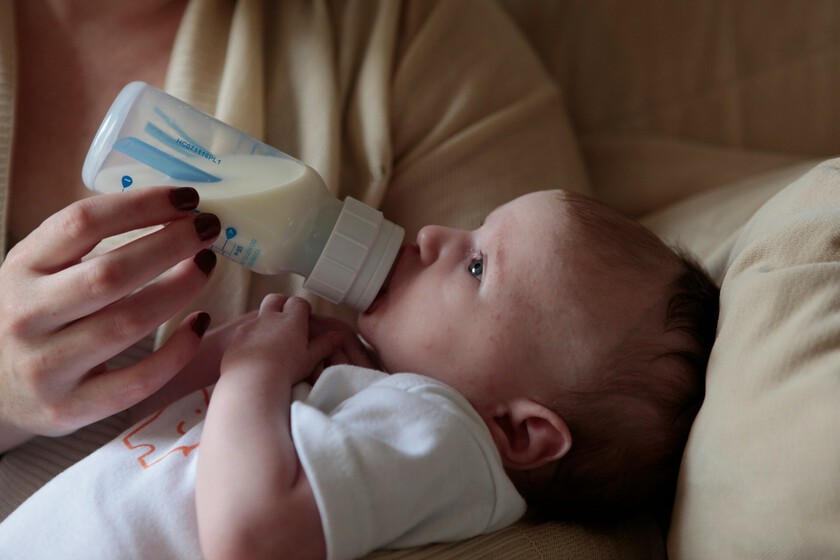
The humble baby bottle, a seemingly simple object of modern hygiene, carries a history spanning millennia, marked by trial, error, and significant scientific breakthroughs. Far from being a recent invention, its evolution reflects humanity’s long-standing efforts to ensure infant survival and health when breastfeeding is not an option.
Ancient Origins of Infant Feeding
Evidence suggests that non-maternal feeding practices are ancient. Anthropological and archaeological studies have uncovered ceramic vessels in Greece, Rome, and Egypt dating back to antiquity, hinting at early attempts at artificial feeding. A significant discovery, published in Nature in 2019, analyzed terracotta vessels from Bronze and Iron Age child tombs. Isotope analysis and lipid residue revealed the presence of ruminant milk, providing the most robust chemical evidence to date of prehistoric containers resembling modern baby bottles. These findings underscore that the concept of providing milk from a vessel other than the breast is not a modern phenomenon but a practice with deep historical roots.
A Dark Age of Infant Feeding
As societies advanced, the need for artificial feeding methods became more pronounced when breastfeeding was impossible and wet nurses were unavailable. Early attempts at artificial feeding relied on rudimentary tools such as rags and animal horns. However, this pre-modern era of artificial feeding came at a devastating cost. Between the 17th and 19th centuries, early attempts to create artificial feeding containers led to alarmingly high infant mortality rates. Medical literature from the period unequivocally links the use of unhygienic feeding bottles to mass infant deaths from enteritis and diarrhea. The lack of sanitation transformed these early vessels into deadly instruments, a critical issue in an era beginning to view populations as productive units, where the survival of children was directly tied to future economic growth.
Innovations and the Rise of Hygiene
Efforts to combat this crisis led to the establishment of “milk dispensaries” (gotas de leche) in the late 19th and early 20th centuries. These charitable institutions, originating in France and later adopted in Spain, aimed to distribute sterilized milk to mothers unable to breastfeed or afford wet nurses. Concurrently, material technology played a crucial role in the transition to more effective feeding devices. The 19th century saw the introduction of glass bottles, but a truly functional emulation of breastfeeding required a flexible, durable nipple. The industrial revolution, and specifically Charles Goodyear’s discovery of the vulcanization of rubber in 1844, paved the way for the adoption of rubber nipples, offering a significant functional improvement over previous crude methods.
The Pasteur Revolution
Despite these material advancements, infant mortality remained a significant challenge. The true turning point arrived not from engineering but from microbiology. The groundbreaking work of Louis Pasteur on germ theory in the 1860s revolutionized medicine and bacteriology. Pasteur’s discoveries led to a paradigm shift in hygiene practices, driving public health reforms and the systematic sterilization of bottles and milk. The combination of glass bottles, rubber nipples, and advancements in microbiological hygiene laid the definitive foundation for the safe and modern baby bottle used today.
Dispelling Myths
The evolution of the baby bottle was not a sudden invention but a gradual process of refinement. While Charles Windship registered a baby bottle patent in the US in 1841, historical consensus indicates no single individual can be credited with inventing the “first modern baby bottle.” Instead, the 19th century saw numerous patent applications and incremental improvements, reflecting a collective, evolutionary progress towards the device we recognize now.
Key facts
| Aspect | Detail |
|—|—|
| Prehistoric Evidence | Ceramic vessels with milk residue found in child tombs dating to the Bronze and Iron Ages. |
| 17th-19th Centuries | High infant mortality linked to unhygienic feeding vessels, rags, and animal horns. |
| Late 19th/Early 20th Century | Introduction of “milk dispensaries” and advancements in materials like glass and vulcanized rubber for nipples. |
| Mid-19th Century onwards | Louis Pasteur’s germ theory and advancements in microbiology led to systematic sterilization practices. |
This historical journey of the baby bottle is a testament to human ingenuity and the continuous pursuit of improved infant care. It highlights how scientific understanding, particularly in hygiene and microbiology, has been as critical as material innovation in ensuring the safety and efficacy of tools designed for the most vulnerable.
Source: El biberón no es solo un trozo de plástico: es el resultado de miles de años de ensayo, error y la teoría germinal de Pasteur – Xataka: https://www.xataka.com/medicina-y-salud/biberon-no-solo-trozo-plastico-resultado-miles-anos-ensayo-error-teoria-germinal-pasteur
Datos clave
| Punto | Detalle |
|---|---|
| Fuente | Xataka IA |
| Fecha | 2026-06-13T10:30:16+00:00 |
| Tema | El biberón no es solo un trozo de plástico: es el resultado de miles de años de ensayo, error y la teoría germinal de Pa |
Source
Xataka IA Publicacion original: 2026-06-13T10:30:16+00:00
Related articles

IBM CEO Puts a Number on the Open-Weight AI Value Proposition: 90% of the Performance at 10% of the Token Cost
IBM CEO Arvind Krishna told analysts that open-weight models now deliver about 90% of frontier-model effectiveness while costing between 10% and 25%…
Read article
OCU Finds Spanish Homeowner Communities Overpaying Up to €1,500 on Electricity and €3,515 on Gas—Can AI Tools Optimize Shared Energy Bills?
A new OCU analysis of Spanish homeowner community bills reveals widespread overpayment due to non-competitive tariffs and excess contracted power. Could AI-driven…
Read article
Mayotte fiber dispute does not meet ReviewArticle’s AI news brief
Le Monde reports that France’s competition authority has ordered Orange to suspend part of its fiber-optic rollout in Mayotte. The dispute is…
Read article
DiffEEG Model Uses Diffusion Pre-Training to Improve Seizure Detection from Minimal Labeled Data
Researchers have introduced DiffEEG, a 9.6-million-parameter foundation model that combines denoising diffusion pre-training with reinforcement learning fine-tuning to detect seizure events from…
Read articleWiki relacionada

AI Model API Pricing and Context Window Comparison: Current Rates and Limits
Compare the latest API pricing, context windows, and capabilities of leading AI model providers including OpenAI, Anthropic, Google, and Mistral. Practical guidance…
Read article
AI Agent Evaluation Frameworks: How to Benchmark Agentic Systems
A practical guide to evaluating AI agents — from task completion metrics to safety, cost, and robustness. Covers major frameworks, primary sources,…
Read article
LLM Benchmarks Decoded: What MMLU, HumanEval, and GSM8K Actually Measure for Developers
A developer-focused breakdown of the most-cited LLM benchmarks — MMLU, HumanEval, GSM8K, MATH, Chatbot Arena — including what they test, their hidden…
Read article
What Is RAG? A Practical Guide to Retrieval-Augmented Generation in 2025
Retrieval-Augmented Generation (RAG) grounds LLM outputs in external data, reducing hallucinations and enabling enterprise use cases. This guide covers how RAG works,…
Read article