
Experts Warn of Cat Stress and Behavioral Issues from Apartment Confinement
New research highlights that confining cats to apartments without adequate stimulation can lead to boredom, stress, and significant health and behavioral problems, contrasting with the common perception of cats as solitary, adaptable indoor pets.
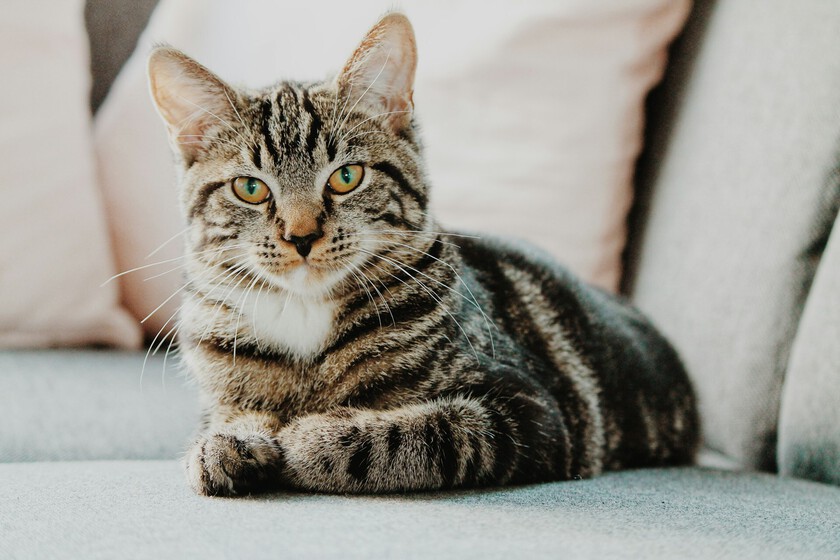
Understanding Feline Needs Beyond the Sofa
The common perception of domestic cats as independent, lazy creatures content with apartment living is being challenged by experts. New insights suggest that this confined lifestyle, devoid of adequate stimulation, can lead to significant boredom and stress, fundamentally altering a cat’s natural behavior and well-being. This shift in understanding is crucial for pet owners to provide environments that cater to their feline companions’ intrinsic needs.
Biological Imperatives of Cats
Domestic cats retain many instincts from their wild ancestors. Irene Rochlitz, from the Animal Welfare and Human-Animal Interactions group at Cambridge, has extensively documented the essential behavioral requirements of felines. These include the need for a structured territory, designated areas for biological needs, and continuous opportunities for play and simulated hunting sequences. When these innate predatory and territorial drives are thwarted by the limited space of an apartment without proper enrichment, the risks to a cat’s mental and physical health escalate considerably.
Human Role in Feline Well-being
Animal behavior guidelines indicate that a lack of stimulation in confined environments necessitates proactive human intervention. Evidence from various feline housing settings demonstrates the critical importance of implementing specific recommendations to mitigate the impacts of limited space, rather than accepting it as a normal condition. Owners play a vital role in ensuring their cats’ environments are enriching and stimulating.
Chronic Boredom and Clinical Consequences
The boredom experienced by indoor cats is not merely a fleeting sadness but a serious clinical trigger. Rigorous, evidence-based reviews detail how cats lacking adequate outlets for scratching, hunting, or playing develop severe health and behavioral problems. When instinctual drives cannot be channeled appropriately, cats may resort to behaviors that owners mistakenly label as “misbehavior” or aggression, when in reality, these are physiological responses to an inadequate environment.
Health Impacts of Sedentarism and Anxiety
Prolonged sedentarism and anxiety take a significant toll on a cat’s physical health, mirroring effects seen in humans. Experts emphasize that confinement, whether in a home or a shelter cage, requires immediate implementation of enrichment strategies to prevent medical issues. A particularly severe and recurrent consequence of environment-induced anxiety is Feline Lower Urinary Tract Disease (FLUTD).
Pandemic Insights into Cat Behavior
The COVID-19 pandemic provided a unique, large-scale scenario for scientists to study feline behavior amidst abrupt changes in routines and increased confinement with human owners. A recent empirical study comparatively evaluated various feline metrics across three phases: pre-pandemic, during strict lockdowns, and post-lockdown. The study measured the well-being, behavioral alterations, and body condition of domestic cats. Results indicated an increase in behavioral problems and a notable weight gain among cats during the lockdown periods, highlighting the negative impact of prolonged confinement.
Strategies for Enriching Apartment Living
For cat owners living in apartments, applying various strategies to create a comfortable and stimulating environment is essential. Providing elements that allow cats to express natural marking behaviors, such as scratching posts, is recommended. Structuring the home territory with the integration of refuges and elevated platforms is also crucial, as visual control from height is an intrinsic behavioral need for felines.
Key Facts
| Aspect | Detail |
|---|---|
| Core Issue | Confinement and lack of stimulation cause stress and boredom in cats. |
| Expert Consensus | Absolute confinement alters natural feline behavior and well-being. |
| Health Risks | Behavioral problems, increased weight, Feline Lower Urinary Tract Disease. |
| Recommended Solutions | Scratching posts, elevated platforms, structured territory. |
This development matters to ReviewArticle readers as it highlights the intersection of AI-driven research, animal welfare, and the practical challenges of pet ownership in urban environments. Understanding these behavioral science insights, often informed by systematic data analysis and research methodologies, is key for pet owners and for developers creating AI-powered pet care solutions.
Source: Experts Warn of Cat Stress and Behavioral Issues from Apartment Confinement, originally published on Xataka by José A. Lizana.
Source
Xataka IA Publicacion original: 2026-07-14T16:00:08+00:00
Related articles

IBM CEO Puts a Number on the Open-Weight AI Value Proposition: 90% of the Performance at 10% of the Token Cost
IBM CEO Arvind Krishna told analysts that open-weight models now deliver about 90% of frontier-model effectiveness while costing between 10% and 25%…
Read article
OCU Finds Spanish Homeowner Communities Overpaying Up to €1,500 on Electricity and €3,515 on Gas—Can AI Tools Optimize Shared Energy Bills?
A new OCU analysis of Spanish homeowner community bills reveals widespread overpayment due to non-competitive tariffs and excess contracted power. Could AI-driven…
Read article
Mayotte fiber dispute does not meet ReviewArticle’s AI news brief
Le Monde reports that France’s competition authority has ordered Orange to suspend part of its fiber-optic rollout in Mayotte. The dispute is…
Read article
DiffEEG Model Uses Diffusion Pre-Training to Improve Seizure Detection from Minimal Labeled Data
Researchers have introduced DiffEEG, a 9.6-million-parameter foundation model that combines denoising diffusion pre-training with reinforcement learning fine-tuning to detect seizure events from…
Read articleWiki relacionada

AI Model API Pricing and Context Window Comparison: Current Rates and Limits
Compare the latest API pricing, context windows, and capabilities of leading AI model providers including OpenAI, Anthropic, Google, and Mistral. Practical guidance…
Read article
AI Agent Evaluation Frameworks: How to Benchmark Agentic Systems
A practical guide to evaluating AI agents — from task completion metrics to safety, cost, and robustness. Covers major frameworks, primary sources,…
Read article
LLM Benchmarks Decoded: What MMLU, HumanEval, and GSM8K Actually Measure for Developers
A developer-focused breakdown of the most-cited LLM benchmarks — MMLU, HumanEval, GSM8K, MATH, Chatbot Arena — including what they test, their hidden…
Read article
What Is RAG? A Practical Guide to Retrieval-Augmented Generation in 2025
Retrieval-Augmented Generation (RAG) grounds LLM outputs in external data, reducing hallucinations and enabling enterprise use cases. This guide covers how RAG works,…
Read article