
Ferrari Luce: Electric Supercar’s Identity Crisis Reflects Broader Industry Challenges
The unveiling of Ferrari's first electric vehicle, the Luce, has sparked debate about the challenges of translating the visceral experience of supercars into an electric future, highlighting a struggle for brands to connect with a new generation of buyers.
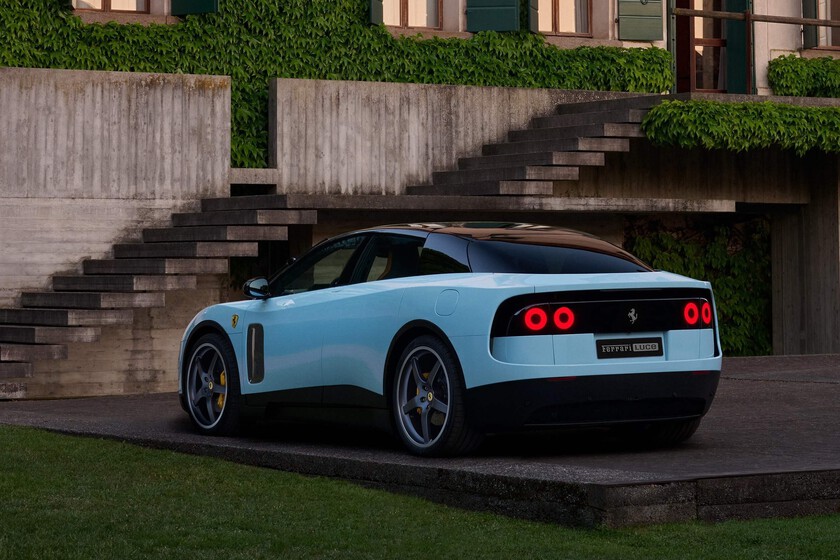
Ferrari’s entry into the electric vehicle market with the new Luce has been met with significant skepticism, with critics and even former executives questioning the brand’s direction. The vehicle, designed by Jony Ive and Marc Newson, has drawn criticism for its departure from Ferrari’s traditional aesthetic and performance identity, raising questions about the future of electric supercars and the industry’s ability to replicate the emotional connection associated with combustion engines.
The reaction to the Luce suggests a broader challenge for electric supercars: bridging the gap between superior performance metrics and the intangible, sensory experiences that define luxury performance vehicles. As brands explore electrification, they face the difficult task of satisfying existing loyalists while appealing to a new demographic.
Ferrari’s Strategy for the Luce
Ferrari appears to be consciously separating the Luce from its core sports car image, potentially aiming to attract a new customer base. This strategy comes at a time when the electric supercar market shows signs of struggle, with models like the Porsche Taycan facing stagnation and the Rimac Nevera experiencing low sales. This indicates a potential lack of demand for purely performance-oriented electric supercars, suggesting that traditional buyers may not be fully embracing this segment yet.
The core issue, as highlighted by the article, is that while electric supercars can outperform their gasoline counterparts in terms of acceleration and speed, they often lack the sensory engagement that enthusiasts value. The tactile feedback, the roar of an engine, the vibrations, and even the smell of gasoline are integral parts of the supercar experience, elements that are difficult for electric vehicles to replicate authentically.
The Electric Supercar Experience
The article posits that the appeal of a supercar extends beyond raw performance numbers. It’s about the experience, the emotion, and the connection drivers feel with the machine. This is contrasted with the efficiency and effectiveness of electric vehicles, which, while technically superior, may feel sterile or soulless to some.
Examples like the Tesla Model 3 Performance, which boasts impressive acceleration, are compared to a meticulously prepared paella versus a quickly manufactured nutritional supplement. Both might provide sustenance, but only one offers a rich, enjoyable experience. This analogy suggests that for luxury performance vehicles, the subjective experience is as crucial as objective performance.
Brands are increasingly aware of this disconnect. The use of artificial engine sounds in vehicles like the Mercedes-AMG GT, and Ferrari’s own approach with the Luce, demonstrates an effort to infuse electric vehicles with a sense of character and engagement.
Ferrari’s approach to sound in the Luce is particularly noteworthy. The company claims to have developed an internal system that captures and amplifies vibrations from the car’s mechanics to simulate a driving experience akin to a combustion engine, even incorporating paddle shifters for gear change simulation despite the absence of a traditional gearbox. This reliance on simulated experiences has led to accusations of “lies upon lies” aimed at constructing an artificial identity.
This trend is not unique to Ferrari. Other manufacturers, including Mercedes, Toyota, and Honda, are employing similar tactics to enhance the auditory and tactile experience of their electric vehicles, acknowledging the challenge of replicating the emotional resonance of internal combustion engines.
The Future of Electric Supercars
The article suggests that the electric supercar, in its current form, may be stripping away the experiential aspects that have historically defined the segment. While materials like anodized aluminum are being used to enhance tactile feedback, the broader shift towards screen-centric interfaces and voice assistants could further dilute the driver’s connection to the machine.
Ferrari’s Luce, therefore, represents not just a new model for the brand, but a case study in the broader industry’s struggle to redefine the supercar in the electric era. It raises questions about whether electric vehicles can truly capture the “soul” of a performance car or if they will ultimately be seen as something fundamentally different, appealing to a new set of priorities and experiences.
Datos clave
| Aspecto | Descripción |
|—|—|
| Vehículo | Ferrari Luce (primer coche eléctrico de Ferrari) |
| Diseño | Jony Ive y Marc Newson |
| Críticas | Desviación estética y de identidad, falta de experiencia sensorial |
| Mercado | Desafíos en el segmento de superdeportivos eléctricos (Porsche Taycan, Rimac Nevera) |
| Estrategia de Sonido | Sistema interno para simular experiencia de motor de combustión |
Fuente: El Ferrari Luce es un juego de mentiras. Y eso dice mucho de los problemas que tienen todos los superdeportivos eléctricos (Xataka)
Datos clave
| Punto | Detalle |
|---|---|
| Fuente | Xataka IA |
| Fecha | 2026-05-27T14:00:57+00:00 |
| Tema | El Ferrari Luce es un juego de mentiras. Y eso dice mucho de los problemas que tienen todos los superdeportivos eléctric |
Source
Xataka IA Publicacion original: 2026-05-27T14:00:57+00:00
Related articles

Mayotte fiber dispute does not meet ReviewArticle’s AI news brief
Le Monde reports that France’s competition authority has ordered Orange to suspend part of its fiber-optic rollout in Mayotte. The dispute is…
Read article
DiffEEG Model Uses Diffusion Pre-Training to Improve Seizure Detection from Minimal Labeled Data
Researchers have introduced DiffEEG, a 9.6-million-parameter foundation model that combines denoising diffusion pre-training with reinforcement learning fine-tuning to detect seizure events from…
Read article
The Technology Trap: Why AI Cannot Escape the Unchanging Fundamentals of War
A new Foreign Affairs essay by former Pentagon official Mara Karlin warns that over-reliance on AI and advanced tech in military planning…
Read article
Supabase Releases .NET SDK for C# Developers Across ASP.NET, Unity, and Mobile
Supabase has launched a .NET SDK for C# developers, extending its backend-as-a-service platform to ASP.NET Core, console apps, desktop, Unity, and mobile…
Read articleWiki relacionada

AI Model API Pricing and Context Window Comparison: Current Rates and Limits
Compare the latest API pricing, context windows, and capabilities of leading AI model providers including OpenAI, Anthropic, Google, and Mistral. Practical guidance…
Read article
AI Agent Evaluation Frameworks: How to Benchmark Agentic Systems
A practical guide to evaluating AI agents — from task completion metrics to safety, cost, and robustness. Covers major frameworks, primary sources,…
Read article
LLM Benchmarks Decoded: What MMLU, HumanEval, and GSM8K Actually Measure for Developers
A developer-focused breakdown of the most-cited LLM benchmarks — MMLU, HumanEval, GSM8K, MATH, Chatbot Arena — including what they test, their hidden…
Read article
What Is RAG? A Practical Guide to Retrieval-Augmented Generation in 2025
Retrieval-Augmented Generation (RAG) grounds LLM outputs in external data, reducing hallucinations and enabling enterprise use cases. This guide covers how RAG works,…
Read article