
Financial Institutions Embrace Transaction Foundation Models for Unified AI Intelligence
NVIDIA's AI Blog highlights how leading financial firms are adopting transformer-based transaction foundation models to overcome data silos and build a cohesive understanding of customer behavior, enhancing AI capabilities across various applications.


Financial institutions are increasingly adopting transaction foundation models to consolidate their AI efforts and achieve a more unified understanding of customer financial behavior. This shift addresses the limitations of previously siloed, task-specific AI models, enabling a more comprehensive approach to intelligence gathering.
The current landscape sees a significant portion of financial institutions utilizing AI, with a strong trend towards deploying or assessing these technologies and maintaining or increasing investment. However, the complexity of scaling AI has brought fragmented model architectures to the forefront as a limiting factor. To counter this, leading firms are moving from specialized models to transformer-based transaction foundation models. These models are trained on vast amounts of proprietary financial events, transforming raw data into actionable intelligence.
A Unified View of Consumer Behavior
Unlike traditional fraud models that examine isolated signals, foundation models interpret financial events within their broader context. Factors such as timing, device, location, and prior activity are crucial in shaping the meaning of a transaction. This contextual depth, powered by transformer architectures applied to tabular data, allows for the extraction of signals previously undetectable by older algorithms.
Revolut, in collaboration with NVIDIA, has developed PRAGMA, a series of transformer-based foundation models. Trained on billions of events across millions of user records globally, PRAGMA leverages NVIDIA’s AI stack, including Hopper GPUs and the Nemotron open models, running on Nebius cloud. A single PRAGMA model has demonstrated superior performance to task-specific models in credit scoring, fraud detection, and product recommendations, significantly reducing the need for manual feature engineering.
Industry Leaders Adopt Foundation Models
Mastercard is developing its own proprietary large tabular foundation model for payments. This model, trained on billions of anonymized transactions and designed to scale, integrates data from various sources including fraud, authorization, and loyalty information. Built with support from NVIDIA, AWS, and Databricks, the model aims to reduce reliance on numerous individual AI models and has shown promising early results in outperforming standard machine learning techniques across applications like cybersecurity and personalization.
Adyen has already deployed transaction foundation models to process trillions of dollars in payments. By employing reinforcement learning, Adyen optimizes conversion rates and minimizes risk for merchants, noting that even minor improvements in authorization rates can lead to substantial financial gains.
The Rise of Agentic AI and Transactional Understanding
With 42% of financial firms already exploring or using agentic AI, systems capable of executing transactions are becoming more prevalent. This evolution necessitates AI that understands the full context of transactional behavior. Stripe, utilizing NVIDIA and AWS platforms, is building foundation models to achieve this, having blocked significant amounts of fraud and achieved substantial reductions in fraud rates by moving beyond reactive, signal-based detection.
The core advantage of transaction foundation models lies in their utilization of unique, proprietary transaction data that competitors cannot easily replicate. The necessary data already exists within institutions, the architecture is proven, and the infrastructure is readily available.
Implementation and Support
NVIDIA offers a “Build Your Own Transaction Foundation Model” developer example, enabling teams to begin building transformer embeddings on tabular transaction data without requiring a complete overhaul of existing systems. This example is accessible on Amazon Web Services (AWS), deployed via Amazon SageMaker HyperPod, and on Nebius AI Cloud.
Beyond self-service, financial services firms can engage with partners like EXL, Infosys, GFT IT Consulting, and Thoughtworks. EXL is integrating these models into its EXLerate.ai platform to create a unified intelligence layer from siloed data. Thoughtworks is assisting institutions in operationalizing these models within complex banking environments, focusing on integration into payment, servicing, and risk management, alongside establishing governance frameworks.
Datos clave
| Aspect | Description |
| :———————- | :———————————————————————– |
| Core Technology | Transformer-based Transaction Foundation Models |
| Key Benefit | Unified understanding of consumer financial behavior, breaking data silos |
| Performance Improvement | Enhanced accuracy in fraud detection, credit scoring, and recommendations |
| Industry Adoption | Featured companies: Revolut, Mastercard, Adyen, Stripe |
| NVIDIA Contribution | AI stack, GPUs, NeMo framework, developer examples |
This development is significant for ReviewArticle’s readership as it signifies a major architectural shift in how financial institutions leverage AI. By moving towards unified foundation models, firms can achieve deeper insights, improve risk management, and enhance customer experiences by understanding financial behavior in a more holistic and contextualized manner. This trend indicates a maturing AI landscape within finance, moving beyond isolated solutions to integrated intelligence systems.
Fuente: NVIDIA AI Blog, https://blogs.nvidia.com/blog/financial-institutions-transaction-foundation-models/
Datos clave
| Punto | Detalle |
|---|---|
| Fuente | NVIDIA AI Blog |
| Fecha | 2026-06-02T06:00:36+00:00 |
| Tema | Why Financial Institutions Are Converging on Transaction Foundation Models to Build Their Own Intelligence |
Source
NVIDIA AI Blog Publicacion original: 2026-06-02T06:00:36+00:00
Related articles
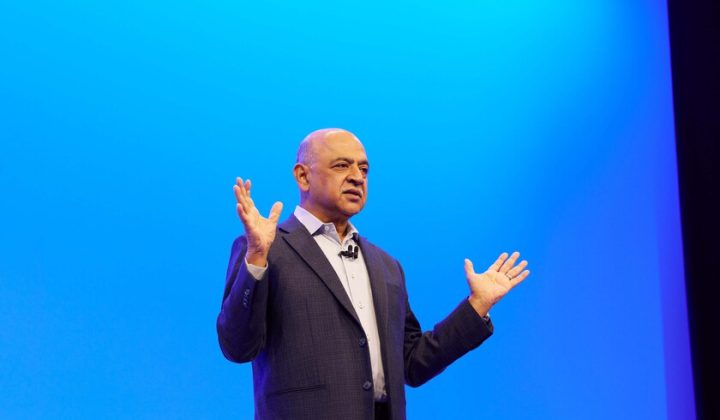
IBM CEO Puts a Number on the Open-Weight AI Value Proposition: 90% of the Performance at 10% of the Token Cost
IBM CEO Arvind Krishna told analysts that open-weight models now deliver about 90% of frontier-model effectiveness while costing between 10% and 25%…
Read article
OCU Finds Spanish Homeowner Communities Overpaying Up to €1,500 on Electricity and €3,515 on Gas—Can AI Tools Optimize Shared Energy Bills?
A new OCU analysis of Spanish homeowner community bills reveals widespread overpayment due to non-competitive tariffs and excess contracted power. Could AI-driven…
Read article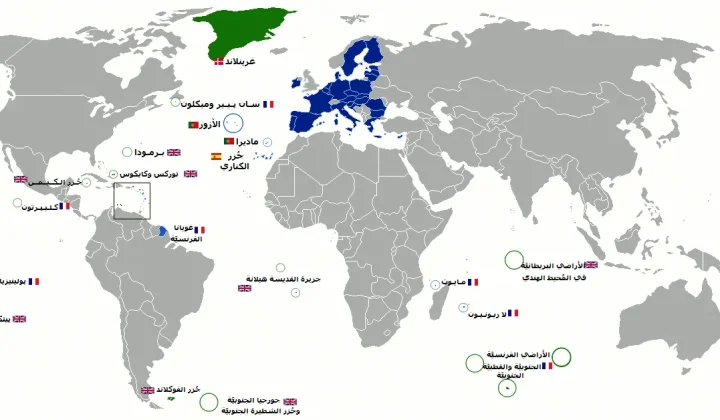
Mayotte fiber dispute does not meet ReviewArticle’s AI news brief
Le Monde reports that France’s competition authority has ordered Orange to suspend part of its fiber-optic rollout in Mayotte. The dispute is…
Read article
DiffEEG Model Uses Diffusion Pre-Training to Improve Seizure Detection from Minimal Labeled Data
Researchers have introduced DiffEEG, a 9.6-million-parameter foundation model that combines denoising diffusion pre-training with reinforcement learning fine-tuning to detect seizure events from…
Read articleWiki relacionada

AI Model API Pricing and Context Window Comparison: Current Rates and Limits
Compare the latest API pricing, context windows, and capabilities of leading AI model providers including OpenAI, Anthropic, Google, and Mistral. Practical guidance…
Read article
AI Agent Evaluation Frameworks: How to Benchmark Agentic Systems
A practical guide to evaluating AI agents — from task completion metrics to safety, cost, and robustness. Covers major frameworks, primary sources,…
Read article
LLM Benchmarks Decoded: What MMLU, HumanEval, and GSM8K Actually Measure for Developers
A developer-focused breakdown of the most-cited LLM benchmarks — MMLU, HumanEval, GSM8K, MATH, Chatbot Arena — including what they test, their hidden…
Read article
What Is RAG? A Practical Guide to Retrieval-Augmented Generation in 2025
Retrieval-Augmented Generation (RAG) grounds LLM outputs in external data, reducing hallucinations and enabling enterprise use cases. This guide covers how RAG works,…
Read article