
The Galician Mathematician Who Helped Define the Meter: A Historical AI-Free Profile
Pedro Xosé Rodríguez González, a self-taught mathematician from rural Galicia, played a key role in the expedition that fixed the length of the meter. His story offers a human angle on scientific standardization, though it falls outside ReviewArticle’s AI and developer beat.
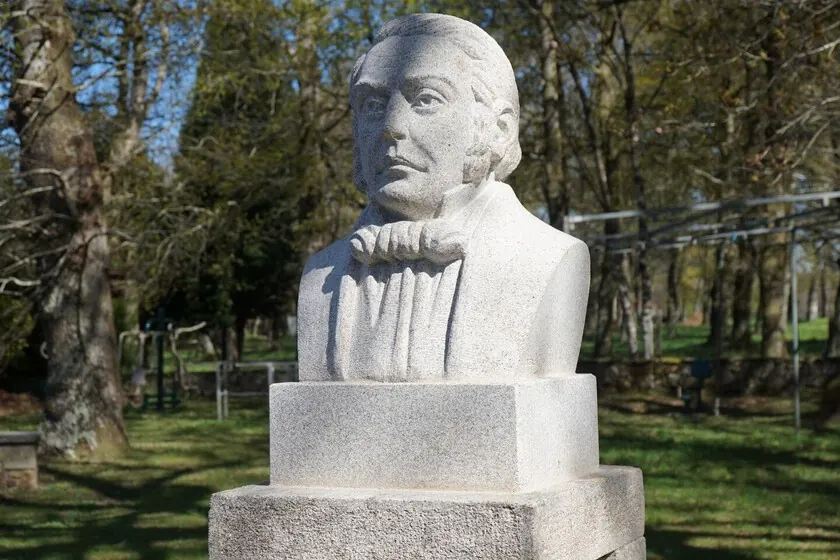
The original source from Xataka IA recounts the life of Pedro Xosé Rodríguez González, an 18th-century Galician mathematician who contributed to the international effort to define the meter. While the story is rich in historical detail, it has no explicit or central AI angle. ReviewArticle’s editorial focus is on AI tools, models, prompts, developer workflows, cloud AI, automation, agents, benchmarks, and AI business or product news. This biography does not fit that beat. However, the story is worth noting as a piece of scientific history, and this article provides a summary for readers who may encounter the original piece elsewhere.
Who Was Pedro Rodríguez?
Pedro Xosé Rodríguez González was born on October 25, 1770, in the parish of Bermés, Lalín, in Pontevedra, Galicia. He was the seventh son of a farming family. With few options, he studied grammar, Latin, philosophy, and theology, but he preferred mathematics, which he taught himself. By 1798 he was a substitute professor of “sublime mathematics” (calculus) at the University of Santiago de Compostela. Two years later, he won the full chair by examination. The tribunal wrote to King Charles IV: “Rodríguez is one of those geniuses that providence rarely forms for sublime knowledge.”
The Metric Expedition
In 1806, the Spanish government appointed Rodríguez as a commissioner in an international expedition led by François Arago and Jean-Baptiste Biot. The mission was to extend the measurement of the Paris meridian arc from Dunkerque and Barcelona to the island of Formentera. That measurement would become the basis for the exact length of the meter: one ten-millionth of the quadrant of the meridian passing through Paris. The team successfully measured the 17th geodetic triangle, with vertices on Ibiza, Formentera, and Mallorca. It was the first large geodetic triangle measured over the sea.
War and Espionage
In 1808, with Napoleon’s troops in Spain and the Peninsular War underway, the scientists’ signal fires on mountain peaks made them suspects. Arago, a Frenchman, was accused of being a spy. He was detained in the Bellver Castle in Mallorca. Rodríguez helped him escape. The data from the expedition survived, but the work was delayed by months.
Correcting a Famous Geographer
In 1809, Rodríguez traveled to England to examine British scientific institutions. There he corrected Lieutenant Colonel William Mudge, who had claimed that the Earth was flattened at the equator. Using the Delambre method, Rodríguez found a latitude error in Mudge’s Arbury Hill station. His correction, presented to the Royal Society on June 4, 1812, demonstrated that Newton was correct: the Earth is flattened at the poles. This is considered his most important individual contribution to science.
A Neglected End
Rodríguez later refused offers from the Tsar of Russia to direct the St. Petersburg Observatory and from the Paris Academy of Sciences for a chair in astronomy. The Spanish government appointed him director of the Madrid Observatory in 1819. He was also a founder of the Central University of Madrid, the predecessor of the Complutense University. He served as a deputy for Galicia during the Liberal Triennium (1821-1823). When Ferdinand VII restored absolutism in 1823, Rodríguez lost his chair. Ill and without resources, he fled to Portugal, then returned to Santiago, where he died on September 30, 1824. He was buried in the Church of San Agustín under an unmarked slab.
Why This Matters to ReviewArticle Readers
This story has no AI angle. It is published as a historical note because the original source appeared in a feed that sometimes includes science history. The key lesson for developers and technologists is that the metric system, which underpins all scientific and engineering work, was defined through international collaboration and precise measurement. The human story of Rodríguez illustrates the importance of rigorous mathematics and the cost of political instability on scientific progress.
What Remains Unclear
The exact details of Rodríguez’s relationship with Arago and Biot are not fully documented. The source does not specify how much of the meridian measurement was directly done by Rodríguez versus other team members. The extent of his mathematical methods beyond the Delambre recalculation is not detailed in the article. The original Xataka article is based on secondary sources and does not cite primary archival records.
Source: https://www.xataka.com/magnet/gallego-ayudo-a-que-sistema-metrico-se-usara-mundo-entero-espana-dejo-tirado
Datos clave
| Punto | Detalle |
|---|---|
| Fuente | Xataka IA |
| Fecha | 2026-07-25T10:30:27+00:00 |
| Tema | Un gallego ayudó a que el sistema métrico se usara en el mundo entero. España lo dejó tirado |
Source
Xataka IA Publicacion original: 2026-07-25T10:30:27+00:00
Related articles

Inside LinkedIn’s Cognitive Memory Agent for Agentic Personalization
LinkedIn’s hiring assistant now uses a four-layer memory system to retain recruiter preferences across sessions, moving beyond simple session context to persistent…
Read article
Nvidia Raises AI Server Prices Over 15% as Memory Costs Bite Data Center Operators
Nvidia is informing large customers that its AI server systems for data centers will cost over 15% more starting early 2027, driven…
Read article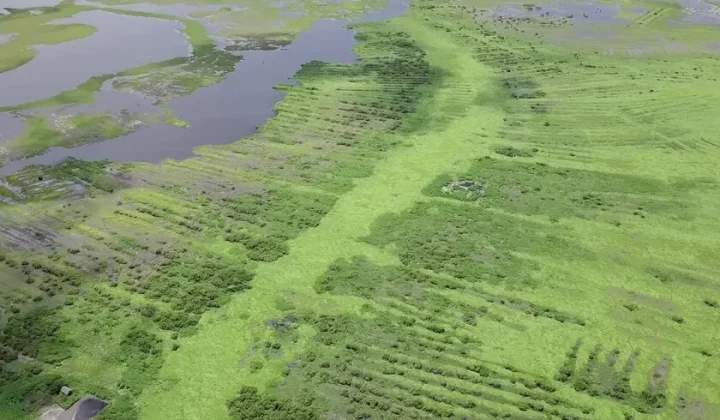
Satellite LiDAR Study Reveals Ancient Colombian Water Systems Were Built Without Centralized Leadership
High-precision LiDAR mapping and spatial analysis show that pre-Hispanic agricultural and hydraulic networks in La Mojana were constructed through community self-organization rather…
Read article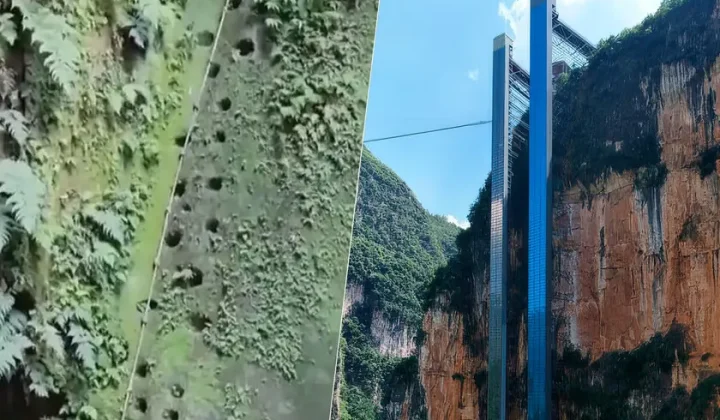
China’s Vertical Elevator Cuts a 3-Hour School Trek to 30 Minutes in Yunnan’s Nizhuhe Canyon
A 288-meter elevator system in Yunnan, China, has reduced a dangerous mountain commute for students from over three hours to about 30…
Read articleWiki relacionada

AI Model API Pricing and Context Window Comparison: Current Rates and Limits
Compare the latest API pricing, context windows, and capabilities of leading AI model providers including OpenAI, Anthropic, Google, and Mistral. Practical guidance…
Read article
AI Agent Evaluation Frameworks: How to Benchmark Agentic Systems
A practical guide to evaluating AI agents — from task completion metrics to safety, cost, and robustness. Covers major frameworks, primary sources,…
Read article
LLM Benchmarks Decoded: What MMLU, HumanEval, and GSM8K Actually Measure for Developers
A developer-focused breakdown of the most-cited LLM benchmarks — MMLU, HumanEval, GSM8K, MATH, Chatbot Arena — including what they test, their hidden…
Read article
What Is RAG? A Practical Guide to Retrieval-Augmented Generation in 2025
Retrieval-Augmented Generation (RAG) grounds LLM outputs in external data, reducing hallucinations and enabling enterprise use cases. This guide covers how RAG works,…
Read article