
IBM CEO Puts a Number on the Open-Weight AI Value Proposition: 90% of the Performance at 10% of the Token Cost
IBM CEO Arvind Krishna told analysts that open-weight models now deliver about 90% of frontier-model effectiveness while costing between 10% and 25% per token. The claim, made during IBM’s earnings call, adds a CFO-friendly data point to the ongoing debate about whether enterprises always need the most capable—and most
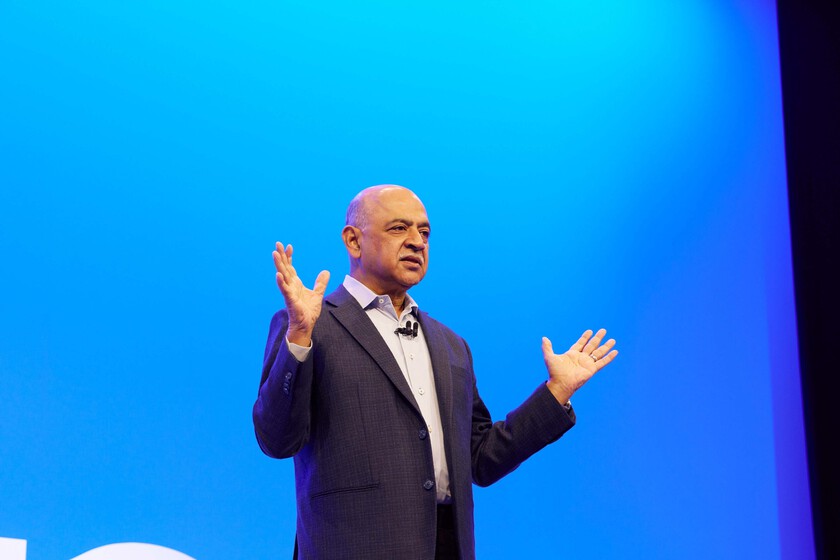
The question of whether enterprises should pay a premium for the most capable AI models now has a concrete data point from one of the industry’s largest vendors. IBM CEO Arvind Krishna told financial analysts during the company’s latest earnings call that open-weight models have reached roughly 90% of the effectiveness of frontier closed models—while costing between 10% and 25% per token.
The claim, first reported by Xataka, came during the Q&A session of IBM’s earnings presentation. RBC Capital Markets analyst Matt Swanson asked how large companies are reconciling two pressures: controlling AI spending and maintaining control over deployments. Krishna’s response traced the evolution of open-weight alternatives over the past two years, framing a cost-performance shift that he argues is reshaping enterprise procurement decisions.
Key facts
| Metric | Late 2024 (Krishna’s estimate) | Late 2025 (Krishna’s estimate) | Current (Krishna’s estimate) |
|---|---|---|---|
| Frontier model score (broad eval) | 70 | 70 | ~90% of frontier |
| Open-weight model score | 20–30 | 50 | ~90% of frontier |
| Open-weight cost vs. frontier | Not specified | Not specified | 10–25% per token |
Krishna’s timeline of the gap
Krishna described a narrowing gap that he said reached an inflection point. At the end of 2024, he told analysts, a frontier model might score 70 points on a broad evaluation, while an open-weight alternative scored 20 to 30. “It’s too big a gap. Nobody is going to accept it,” he said. By the end of 2025, the frontier still scored around 70, but open-weight models had climbed to about 50. Now, he estimates open-weight models reach roughly 90% of frontier effectiveness, at a fraction of the per-token cost.
Krishna did not name specific benchmarks or models during the call. The numbers are his own characterizations of the market landscape, not a published benchmark result. IBM develops the Granite family of open-weight models and also maintains a commercial alliance with OpenAI, giving the company interests on both sides of the closed-versus-open debate.
What the numbers mean for enterprise buyers
The cost calculation hinges on how AI services are billed. Providers charge per token—a unit representing fragments of input or output text. A system that costs 10% as much per token can deliver dramatic savings at scale, but only if the quality difference is acceptable for the task.
Krishna argued that many common enterprise use cases do not require a frontier model. He listed examples including summarizing an email, drafting a reply, reviewing a contract, or handling a customer call. “All of that can be done just as well with the much cheaper alternative,” he said. The statement is his assessment of typical workloads, not a guarantee of equivalent results across all scenarios.
The infrastructure trade-off
Running open-weight models on private infrastructure introduces its own cost structure. Krishna estimated that a large enterprise could start with two or three server racks to run these alternatives. That equipment requires capital investment, electricity, cooling, maintenance, and specialized staff. For lower-volume workloads, contracting an API from a closed-model provider may still be the cheaper option, even at a higher per-token rate.
Outside validation and caveats
Krishna’s claims are not unsupported. In May 2026, the OECD published a report that placed open-weight models at roughly 90% of the quality index of closed alternatives at market launch, with a cloud-service price around 20% of the closed equivalent. The report was based on earlier data and carries its own methodological notes.
Stanford’s AI Index 2026 offers a slightly different picture. As of March 2026, the best closed model outperformed the best open-weight model by 3.3% in the Chatbot Arena leaderboard, a ranking based on user preference evaluations. That is a narrower gap than the raw 10 percentage-point difference implied by Krishna’s 90% framing, but it measures user preference rather than benchmark accuracy.
Neither metric establishes a universal capability equivalence. The choice between model types depends on task complexity, reliability requirements, and total cost of ownership at a given usage volume.
The bottom line for AI procurement
Krishna’s argument is not neutral—IBM sells both Granite models and infrastructure for running them—but the underlying trend is real. Open-weight models have improved faster than many observers expected, and the cost gap with proprietary frontier models remains wide. For enterprises, the question is shifting from “which model is best?” to “which model is good enough for this specific task, and at what total cost?”
The answer will vary by organization, workload, and risk tolerance. But Krishna’s 90/10 framing gives procurement teams a number to test against their own use cases.
Source: Xataka – “IBM tiene unas cifras que desafían a los gigantes de la IA cerrada: 90% del rendimiento por solo el 10% del coste por token” (https://www.xataka.com/robotica-e-ia/ibm-tiene-unas-cifras-que-desafian-a-gigantes-ia-cerrada-90-rendimiento-solo-10-coste-token)
Source
Xataka IA Publicacion original: 2026-10-23T19:30:07+00:00
Related articles
OCU Finds Spanish Homeowner Communities Overpaying Up to €1,500 on Electricity and €3,515 on Gas—Can AI Tools Optimize Shared Energy Bills?
A new OCU analysis of Spanish homeowner community bills reveals widespread overpayment due to non-competitive tariffs and excess contracted power. Could AI-driven…
Read article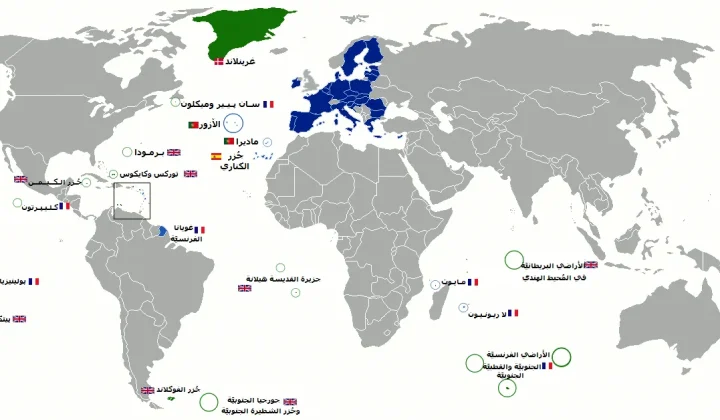
Mayotte fiber dispute does not meet ReviewArticle’s AI news brief
Le Monde reports that France’s competition authority has ordered Orange to suspend part of its fiber-optic rollout in Mayotte. The dispute is…
Read article
DiffEEG Model Uses Diffusion Pre-Training to Improve Seizure Detection from Minimal Labeled Data
Researchers have introduced DiffEEG, a 9.6-million-parameter foundation model that combines denoising diffusion pre-training with reinforcement learning fine-tuning to detect seizure events from…
Read article
The Technology Trap: Why AI Cannot Escape the Unchanging Fundamentals of War
A new Foreign Affairs essay by former Pentagon official Mara Karlin warns that over-reliance on AI and advanced tech in military planning…
Read articleWiki relacionada

AI Model API Pricing and Context Window Comparison: Current Rates and Limits
Compare the latest API pricing, context windows, and capabilities of leading AI model providers including OpenAI, Anthropic, Google, and Mistral. Practical guidance…
Read article
AI Agent Evaluation Frameworks: How to Benchmark Agentic Systems
A practical guide to evaluating AI agents — from task completion metrics to safety, cost, and robustness. Covers major frameworks, primary sources,…
Read article
LLM Benchmarks Decoded: What MMLU, HumanEval, and GSM8K Actually Measure for Developers
A developer-focused breakdown of the most-cited LLM benchmarks — MMLU, HumanEval, GSM8K, MATH, Chatbot Arena — including what they test, their hidden…
Read article
What Is RAG? A Practical Guide to Retrieval-Augmented Generation in 2025
Retrieval-Augmented Generation (RAG) grounds LLM outputs in external data, reducing hallucinations and enabling enterprise use cases. This guide covers how RAG works,…
Read article