
The Sweet History of Ice Cream: A Renaissance Innovation
From ancient chilled treats to the sophisticated desserts of the Renaissance, discover how ice cream evolved into a global delight, shaped by Italian ingenuity and courtly patronage.
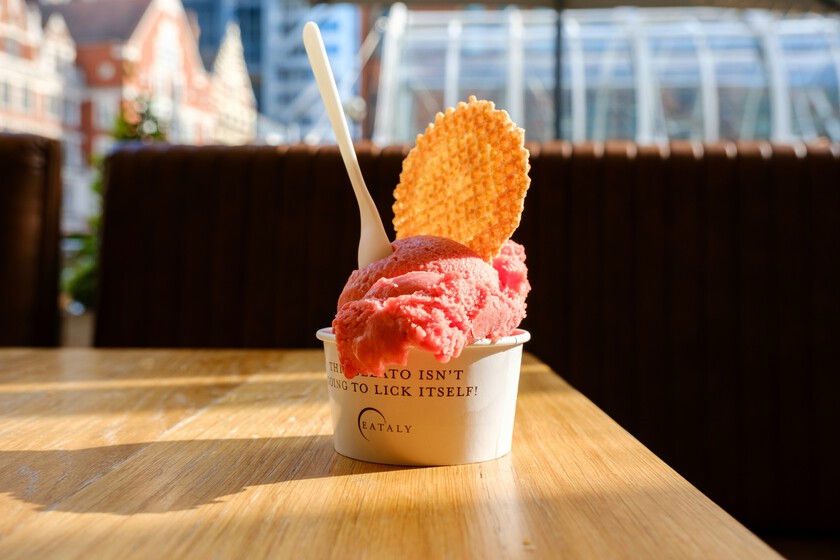
The next time you enjoy a scoop of ice cream, consider its surprising origins. While frozen desserts have a history stretching back to ancient civilizations, the ice cream as we know it—a creamy, rich confection— owes much of its popularization to the Italian Renaissance. This era, celebrated for its artistic and scientific advancements, also laid the groundwork for one of the world’s most beloved treats.
Historical Roots of Frozen Desserts
Long before the Renaissance, various cultures experimented with chilling and flavoring ice. Ancient Greeks and Persians are known to have consumed mixtures of snow or ice with fruit juices and honey. Similarly, the Chinese developed early forms of iced desserts using milk and rice. These early concoctions, however, were essentially sorbets, lacking the creamy texture that defines modern ice cream. The exact route by which these ideas reached Italy remains unclear, with theories suggesting influences from the Silk Road or Arab presence in Sicily.
Cosme I de’ Medici and the Florentine Court
The popularization of ice cream in Europe is significantly linked to Cosme I de’ Medici, a powerful figure in 16th-century Florence. Upon assuming power in 1537 at the age of 17, Cosme I not only consolidated political and economic power but also fostered a vibrant environment for arts and sciences. He was a notable patron, supporting artists, architects, and inventors. Among them was Bernardo Buontalenti, a versatile figure in the Florentine court, known for his work as an inventor, architect, and designer.
A Royal Visit and a Culinary Surprise
The story of ice cream’s Renaissance breakthrough often involves a surprise visit from Spanish guests to the Florentine court. Cosme I tasked Buontalenti with creating a special dessert to impress their visitors. Buontalenti, who had already developed methods for preserving snow from the mountains in insulated underground chambers, devised a dessert by mixing snow with milk, eggs, lemon, orange, bergamot, and sweetening it with honey or sugar. This innovative creation was a resounding success, sparking significant interest among the court. Today, Florence hosts a major European festival dedicated to ice cream, honoring figures like Buontalenti and Ruggeri, an earlier cook who won a competition with a snow and fruit dessert.
Catherine de’ Medici and the French Court
While the recipe did not immediately spread from Italy to Spain, it found its way to France through Catherine de’ Medici. A relative of Cosme I, Catherine married Henry II of France in 1533. Beyond her political acumen and patronage of the arts, she is credited with introducing various Italian influences to the French court, including ballet and commedia dell’arte. More pragmatically, Catherine also brought Italian chefs to France and introduced ingredients like olive oil and pasta. Crucially, she is also credited with popularizing ice cream in France, reportedly bringing the chef Ruggeri with her to the French court.
Expansion and Global Popularity
Following its introduction to France, the expansion of ice cream was rapid. In 1686, Francesco Procopio dei Coltelli opened Café Procope in Paris, which became a renowned establishment serving coffee and ice cream to intellectuals and artists like Rousseau and Voltaire. Throughout the 17th century, culinary books began featuring ice cream recipes. Italian immigrants later introduced ice cream to New York in the late 19th century, where Americans would go on to invent the Sundae. In Spain, ice cream consumption grew in the 17th century, with the first horchaterías (shops selling horchata and ice cream) appearing in the 19th century.
Key facts
| Feature | Detail |
|---|---|
| Ancient Precursors | Ice mixed with fruit, honey, or juice (sorbet-like) |
| Renaissance Development | Creamy ice cream formulation in 16th-century Florence |
| Key Figures | Cosme I de’ Medici, Bernardo Buontalenti, Catherine de’ Medici |
| Introduction to France | Via Catherine de’ Medici and chef Ruggeri |
| Early Popularization | Café Procope in Paris (1686) |
| Spread to US | Late 19th century via Italian immigrants |
The evolution of ice cream from a simple frozen treat to a sophisticated dessert is a testament to culinary innovation and cultural exchange. The Renaissance, often celebrated for its art and science, also gifted the world a sweet legacy that continues to be enjoyed globally, proving that some of history’s most impactful innovations can be found on a plate.
Source: The sweet history of ice cream: A Renaissance innovation, Xataka IA, https://www.xataka.com/magnet/importante-que-nos-dejo-renacimiento-no-fue-david-miguel-angel-primavera-botticelli-fue-helado
Source
Xataka IA Publicacion original: 2026-07-18T07:00:07+00:00
Related articles

IBM CEO Puts a Number on the Open-Weight AI Value Proposition: 90% of the Performance at 10% of the Token Cost
IBM CEO Arvind Krishna told analysts that open-weight models now deliver about 90% of frontier-model effectiveness while costing between 10% and 25%…
Read article
OCU Finds Spanish Homeowner Communities Overpaying Up to €1,500 on Electricity and €3,515 on Gas—Can AI Tools Optimize Shared Energy Bills?
A new OCU analysis of Spanish homeowner community bills reveals widespread overpayment due to non-competitive tariffs and excess contracted power. Could AI-driven…
Read article
Mayotte fiber dispute does not meet ReviewArticle’s AI news brief
Le Monde reports that France’s competition authority has ordered Orange to suspend part of its fiber-optic rollout in Mayotte. The dispute is…
Read article
DiffEEG Model Uses Diffusion Pre-Training to Improve Seizure Detection from Minimal Labeled Data
Researchers have introduced DiffEEG, a 9.6-million-parameter foundation model that combines denoising diffusion pre-training with reinforcement learning fine-tuning to detect seizure events from…
Read articleWiki relacionada

AI Model API Pricing and Context Window Comparison: Current Rates and Limits
Compare the latest API pricing, context windows, and capabilities of leading AI model providers including OpenAI, Anthropic, Google, and Mistral. Practical guidance…
Read article
AI Agent Evaluation Frameworks: How to Benchmark Agentic Systems
A practical guide to evaluating AI agents — from task completion metrics to safety, cost, and robustness. Covers major frameworks, primary sources,…
Read article
LLM Benchmarks Decoded: What MMLU, HumanEval, and GSM8K Actually Measure for Developers
A developer-focused breakdown of the most-cited LLM benchmarks — MMLU, HumanEval, GSM8K, MATH, Chatbot Arena — including what they test, their hidden…
Read article
What Is RAG? A Practical Guide to Retrieval-Augmented Generation in 2025
Retrieval-Augmented Generation (RAG) grounds LLM outputs in external data, reducing hallucinations and enabling enterprise use cases. This guide covers how RAG works,…
Read article