
Iran Ceasefire Deal Sparks Skepticism Amid Unresolved Geopolitical Tensions
A recently finalized ceasefire between the United States and Iran, brokered by President Donald Trump, is facing widespread doubt over its ability to secure lasting peace in the Middle East due to unresolved core issues and the potential for renewed conflict.
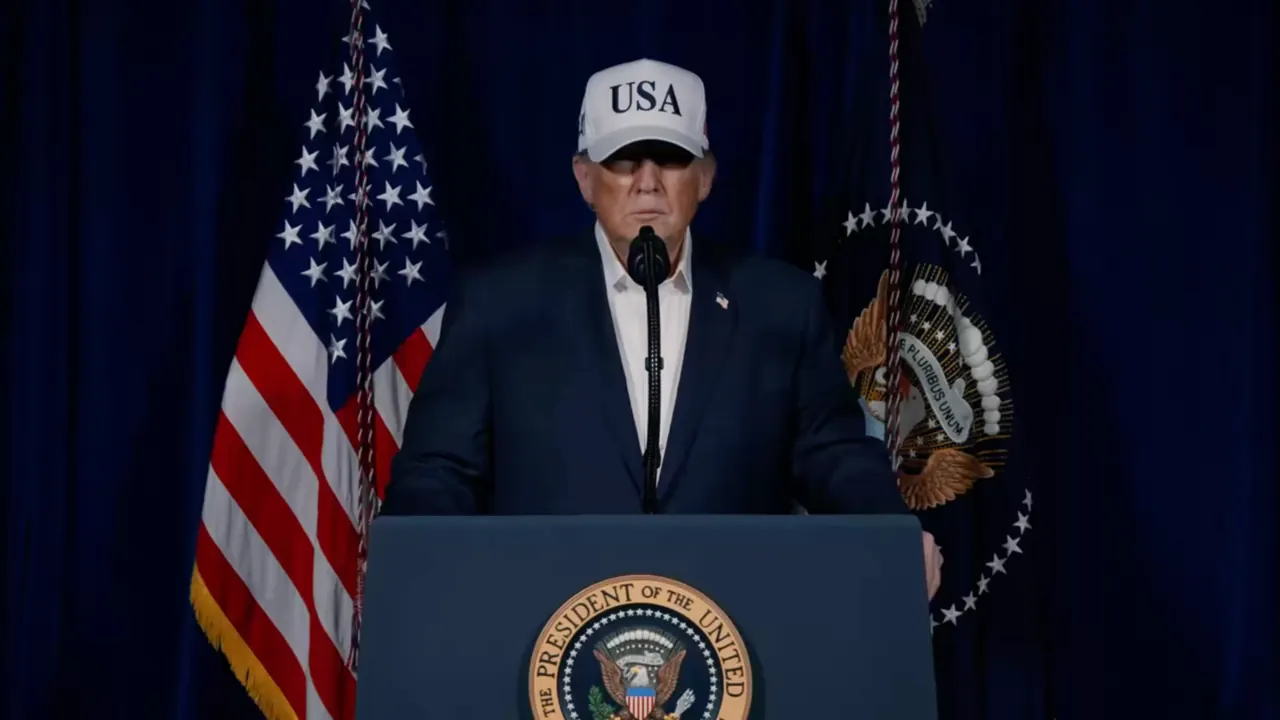
A ceasefire agreement intended to end the recent conflict between the United States and Iran has been finalized, yet it is already drawing significant skepticism from international observers and regional actors. Despite efforts by the US to present itself as a broker of peace, the terms of the deal are seen by many as failing to address the fundamental geopolitical issues that ignited the confrontation, raising concerns that the agreement may only represent a temporary pause before renewed hostilities.
The conflict, which lasted for three months, resulted in substantial human and economic costs. Estimates suggest that the war led to thousands of casualties and incurred at least $35 billion in direct US military expenditures. The broader economic impact was even more severe, with disruptions to global supply chains, trade, and energy flows potentially costing the global economy as much as $22 trillion in lost growth.
Key facts
| Aspect | Details |
|—|—|
| Conflict Duration | Three months |
| Estimated US Military Expenditure | At least $35 billion |
| Estimated Global Economic Loss | Up to $22 trillion |
| Post-War Reconstruction Cost Estimate | Up to $300 billion |
Unresolved Issues Plague Ceasefire
The core of the skepticism surrounding the ceasefire lies in its apparent inability to resolve the underlying issues that led to the conflict. While the deal may have reopened vital maritime routes like the Strait of Hormuz and secured renewed Iranian commitments not to pursue nuclear weapons, these were seen as commitments Tehran had previously made. The strategic leverage Iran possesses through its ability to threaten the Strait of Hormuz remains a point of contention, with experts suggesting that Iran is unlikely to relinquish this capability. This persistent instability raises questions about whether the US is pursuing a strategy of sustainable peace or one of periodic military interventions that maintain a state of attrition without a long-term resolution.
Regional Dynamics and Financial Burdens
Arab states, including Qatar, Saudi Arabia, Egypt, Turkey, and Pakistan, invested considerable diplomatic effort to halt the war. However, the current climate is characterized by persistent mutual distrust and contradictory statements, which threaten to undermine these efforts. The agreement’s announcement was followed by estimates that post-war reconstruction could cost as much as $300 billion, a figure referenced by Vice President JD Vance. This has led to speculation that wealthy Gulf states may be called upon to fund a significant portion of the recovery, echoing past regional crises. This raises broader concerns about a model where regional security costs are borne by allies for wars planned and executed outside their direct control, potentially normalizing a pattern of Washington shifting military venture costs onto its partners.
Internal Iranian Changes and Future Stability
The conflict also coincided with significant internal changes within Iran, including the death or departure of top leadership and the rise of younger hardliners. This internal shift prompts questions about whether the war has contributed to long-term stability or inadvertently fueled greater radicalization. The potential for internal power struggles or increased hardliner influence could destabilize the region further, regardless of the ceasefire’s terms.
The agreement’s success hinges on its implementation and the interpretation of its clauses. Should disputes arise, the United States and its allies could find themselves facing a new cycle of military confrontations. The unresolved issues, particularly concerning maritime security and Iran’s nuclear program, mean that the current ceasefire might be a prelude to further escalation rather than a definitive end to hostilities, jeopardizing regional stability efforts.
Source: https://nationalinterest.org/blog/middle-east-watch/why-no-one-trusts-the-iran-ceasefire
Datos clave
| Punto | Detalle |
|---|---|
| Fuente | nationalinterest.org |
| Fecha | 2026-06-18T04:01:20+00:00 |
| Tema | Why No One Trusts the Iran Ceasefire |
Source
nationalinterest.org Publicacion original: 2026-06-18T04:01:20+00:00
Related articles
IBM CEO Puts a Number on the Open-Weight AI Value Proposition: 90% of the Performance at 10% of the Token Cost
IBM CEO Arvind Krishna told analysts that open-weight models now deliver about 90% of frontier-model effectiveness while costing between 10% and 25%…
Read article
OCU Finds Spanish Homeowner Communities Overpaying Up to €1,500 on Electricity and €3,515 on Gas—Can AI Tools Optimize Shared Energy Bills?
A new OCU analysis of Spanish homeowner community bills reveals widespread overpayment due to non-competitive tariffs and excess contracted power. Could AI-driven…
Read article
Mayotte fiber dispute does not meet ReviewArticle’s AI news brief
Le Monde reports that France’s competition authority has ordered Orange to suspend part of its fiber-optic rollout in Mayotte. The dispute is…
Read article
DiffEEG Model Uses Diffusion Pre-Training to Improve Seizure Detection from Minimal Labeled Data
Researchers have introduced DiffEEG, a 9.6-million-parameter foundation model that combines denoising diffusion pre-training with reinforcement learning fine-tuning to detect seizure events from…
Read articleWiki relacionada

AI Model API Pricing and Context Window Comparison: Current Rates and Limits
Compare the latest API pricing, context windows, and capabilities of leading AI model providers including OpenAI, Anthropic, Google, and Mistral. Practical guidance…
Read article
AI Agent Evaluation Frameworks: How to Benchmark Agentic Systems
A practical guide to evaluating AI agents — from task completion metrics to safety, cost, and robustness. Covers major frameworks, primary sources,…
Read article
LLM Benchmarks Decoded: What MMLU, HumanEval, and GSM8K Actually Measure for Developers
A developer-focused breakdown of the most-cited LLM benchmarks — MMLU, HumanEval, GSM8K, MATH, Chatbot Arena — including what they test, their hidden…
Read article
What Is RAG? A Practical Guide to Retrieval-Augmented Generation in 2025
Retrieval-Augmented Generation (RAG) grounds LLM outputs in external data, reducing hallucinations and enabling enterprise use cases. This guide covers how RAG works,…
Read article