
Japanese Scientists Develop Plasma-Based Fertilizer for Lunar Rice Cultivation
Researchers from Tohoku University and JAXA have created a novel method to produce fertilizer from atmospheric elements, potentially enabling food production on the Moon and improving terrestrial agriculture.
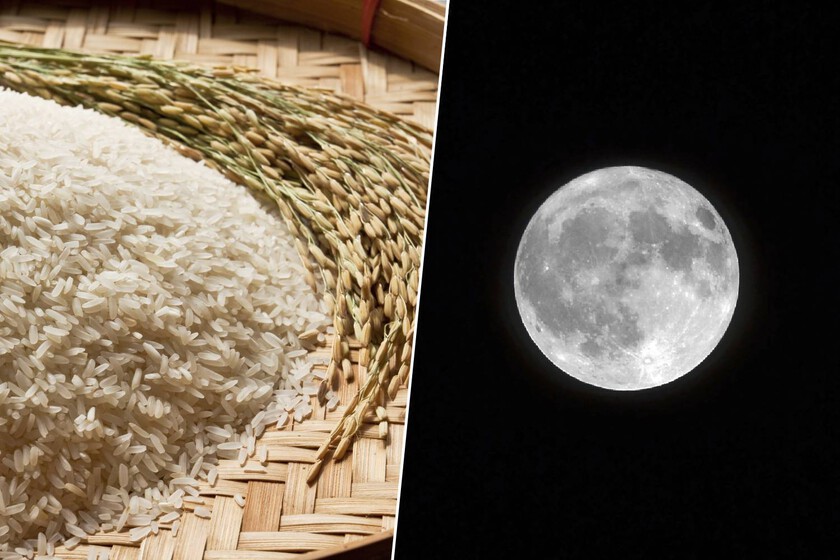
A team of Japanese scientists has developed an innovative method to produce fertilizer using atmospheric air, plasma, and water, a breakthrough that could pave the way for cultivating crops like rice on the Moon. The research, spearheaded by institutions including Tohoku University and the Japan Aerospace Exploration Agency (JAXA), addresses a critical challenge for future lunar colonization: sustainable food production.
The core of the innovation lies in a plasma-based process that transforms nitrogen and oxygen from the air into a nitrate compound, essential for plant growth. This method offers a more energy-efficient and viable alternative to existing industrial processes for fertilizer production, particularly in the resource-constrained environment of space.
Lunar Regolith as a Growing Medium
Future lunar settlers will likely need to rely on in-situ resource utilization for sustenance. The Moon’s surface is covered in regolith, a soil-like material that is currently inhospitable to most plant life due to its alkaline pH and lack of essential nutrients. Traditional methods of transporting heavy supplies from Earth are not sustainable for long-term habitation. This new fertilizer technology aims to amend lunar regolith, making it a viable medium for agriculture.
The process involves exposing atmospheric air to plasma, an ionized gas created by electricity. This interaction causes nitrogen and oxygen to react, forming dinitrogen pentoxide. This compound is then dissolved in water to create nitrate, a form of nitrogen readily absorbed by plants. This is a significant advancement, as lunar regolith is deficient in this crucial nutrient.
Efficient and Energy-Conscious Production
Current industrial methods for nitrogen fixation, such as the Haber-Bosch process, are energy-intensive and impractical for use on the Moon. The newly developed plasma method, however, operates with remarkable energy efficiency, consuming less than 100 watts. This low energy requirement makes it a feasible option for powering with lunar resources, such as solar energy.
Furthermore, the process effectively neutralizes some of the detrimental aspects of lunar regolith. Experiments showed that the fertilizer helped to lower the regolith simulant’s pH from an inhospitable 9.09 to a more manageable 6.76. It also facilitated the extraction of essential minerals like calcium, magnesium, and potassium, while simultaneously immobilizing toxic ions such as Al3+, preventing them from being absorbed by the plants.
Successful Rice Cultivation Trials
To validate the fertilizer’s effectiveness, scientists conducted trials using rice seedlings planted in a lunar regolith simulant. The results were highly promising, with rice plants exhibiting significantly better growth compared to those watered with pure water. The enhanced nutrient availability and improved soil conditions contributed to healthier plant development.
Beyond providing essential nutrients, the lunar fertilizer has demonstrated additional benefits. Studies indicate it can improve overall plant growth, bolster plant immune systems, and offer protection against some of the risks associated with microgravity environments.
Broader Applications for Earth’s Agriculture
While developed with lunar colonization in mind, the implications of this technology extend to Earth. A significant portion of our planet’s land suffers from infertile soil. The energy-efficient and effective nature of this plasma-based fertilizer could offer a sustainable solution for improving crop yields in arid or depleted regions on Earth. The researchers believe that the same principles that enable growth on the Moon can be adapted to address terrestrial agricultural challenges.
Key facts
| Aspect | Detail |
|---|---|
| Technology | Plasma-based fertilizer production |
| Input Materials | Atmospheric air, plasma (electricity), water |
| Primary Output | Nitrate (essential plant nutrient) |
| Tested Crop | Rice |
| Key Institutions | Tohoku University, JAXA |
| Potential Applications | Lunar agriculture, improving terrestrial infertile lands |
This development is a significant step towards enabling self-sufficient food production in extraterrestrial environments and offers a promising avenue for enhancing agricultural sustainability on Earth.
Source: Japón ha encontrado la forma de cultivar arroz en la Luna: solo necesita aire, agua y electricidad – Xataka: https://www.xataka.com/espacio/japon-ha-encontrado-forma-cultivar-arroz-luna-solo-necesita-aire-agua-electricidad
Source
Xataka IA Publicacion original: 2026-07-02T09:01:54+00:00
Related articles

IBM CEO Puts a Number on the Open-Weight AI Value Proposition: 90% of the Performance at 10% of the Token Cost
IBM CEO Arvind Krishna told analysts that open-weight models now deliver about 90% of frontier-model effectiveness while costing between 10% and 25%…
Read article
OCU Finds Spanish Homeowner Communities Overpaying Up to €1,500 on Electricity and €3,515 on Gas—Can AI Tools Optimize Shared Energy Bills?
A new OCU analysis of Spanish homeowner community bills reveals widespread overpayment due to non-competitive tariffs and excess contracted power. Could AI-driven…
Read article
Mayotte fiber dispute does not meet ReviewArticle’s AI news brief
Le Monde reports that France’s competition authority has ordered Orange to suspend part of its fiber-optic rollout in Mayotte. The dispute is…
Read article
DiffEEG Model Uses Diffusion Pre-Training to Improve Seizure Detection from Minimal Labeled Data
Researchers have introduced DiffEEG, a 9.6-million-parameter foundation model that combines denoising diffusion pre-training with reinforcement learning fine-tuning to detect seizure events from…
Read articleWiki relacionada

AI Model API Pricing and Context Window Comparison: Current Rates and Limits
Compare the latest API pricing, context windows, and capabilities of leading AI model providers including OpenAI, Anthropic, Google, and Mistral. Practical guidance…
Read article
AI Agent Evaluation Frameworks: How to Benchmark Agentic Systems
A practical guide to evaluating AI agents — from task completion metrics to safety, cost, and robustness. Covers major frameworks, primary sources,…
Read article
LLM Benchmarks Decoded: What MMLU, HumanEval, and GSM8K Actually Measure for Developers
A developer-focused breakdown of the most-cited LLM benchmarks — MMLU, HumanEval, GSM8K, MATH, Chatbot Arena — including what they test, their hidden…
Read article
What Is RAG? A Practical Guide to Retrieval-Augmented Generation in 2025
Retrieval-Augmented Generation (RAG) grounds LLM outputs in external data, reducing hallucinations and enabling enterprise use cases. This guide covers how RAG works,…
Read article