
Kentucky Aluminum Smelter to Become Anthropic AI Data Hub in $14 Billion Project
TeraWulf has received regulatory approval to convert a former Century Aluminum smelter in Hawesville, Kentucky, into a 482 MW AI data center campus. Anthropic has signed a 20-year lease for 401 MW of capacity, with total project costs estimated at $14 billion.
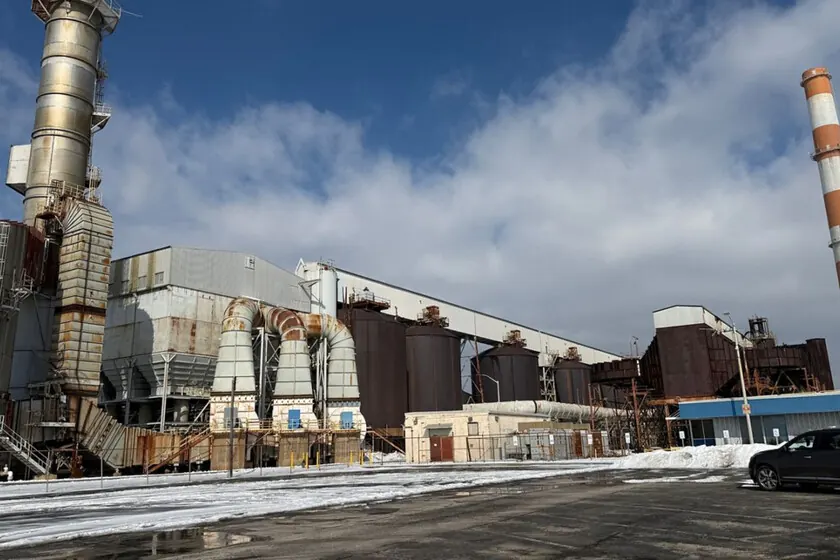
The Kentucky Public Service Commission (PSC) approved a 15-year retail electric service agreement on August 21, allowing TeraWulf to develop a 482-megawatt AI data center campus on the site of a former aluminum smelter in Hancock County, Kentucky. Anthropic is the anchor tenant, having signed a 20-year lease for 401 MW of capacity in July.
The project repurposes the Hawesville smelter of Century Aluminum, which closed in 2022, eliminating about 600 jobs. TeraWulf purchased the 300-hectare property in February for $302 million, inheriting an existing substation and transmission lines that will serve the data center’s massive power demand.
Key facts
| Detail | Value |
|---|---|
| Site location | Former Century Aluminum Hawesville smelter, Hancock County, Kentucky |
| Approved capacity | 482 MW (15-year retail electric service agreement) |
| Anthropic lease | 401 MW for 20 years, starting late 2027 |
| Total estimated investment | $14 billion to $14.5 billion (TeraWulf development + Anthropic compute equipment) |
Why the former smelter site was chosen
TeraWulf, a company that previously operated bitcoin mining infrastructure, pivoted to AI data center development. The Hawesville site offers ready-built electrical infrastructure from its industrial past, including a substation and high-capacity transmission lines that would be costly and time-consuming to build from scratch. The PSC determined the agreement provides “adequate protections” for existing ratepayers, with rates deemed “just, equitable and reasonable” in the legal order.
The power delivery chain involves two local utilities: Big Rivers Electric Corp. purchases electricity on the wholesale market, and Kenergy Corp. handles retail delivery to the facility.
Anthropic’s role and the financial scale
Anthropic signed a 20-year lease in July for 401 MW of capacity to power its AI compute clusters. TeraWulf stated that the lease is expected to generate approximately $19 billion in contracted revenue over its term, according to reporting from Business Insider. TeraWulf estimates it will invest $4 billion to $4.5 billion in site development, and expects Anthropic to invest an additional $10 billion in computing equipment, bringing the total project value above $14 billion.
The arrangement reflects the growing demand for dedicated, high-capacity data center space among frontier AI labs. Anthropic competes with OpenAI, Google DeepMind and others for access to clusters of thousands of GPUs and TPUs, which require sustained power at levels that strain local grids.
Regulatory and grid hurdles remain
While the PSC approval is a major milestone, it does not guarantee TeraWulf access to the full 482 MW. The Midcontinent Independent System Operator (MISO), the regional transmission organization, must still approve the interconnection, and additional transmission service agreements are required.
Construction at the site was already underway before the PSC ruling, including demolition, environmental remediation and site grading. TeraWulf told regulators it aims to begin progressive power ramp-up by September 2027. Anthropic’s capacity is expected to come online in phases, starting in late 2027 and reaching full capacity in early 2028.
Local context and precedent
Kentucky has seen local governments impose moratoriums on data center projects due to resident concerns about rising electricity costs and grid strain. The Hawesville project has been viewed as a test case for how much leeway AI companies will have to build large-scale infrastructure despite community opposition. The PSC’s approval, with its emphasis on ratepayer protections, may set a precedent for similar conversions of former industrial sites in the region.
For ReviewArticle readers, this story illustrates the physical infrastructure demands behind the AI models and tools covered on this site. The cost and complexity of building dedicated data centers for AI training and inference will influence which companies can scale, where models are deployed, and how much compute costs factor into AI product pricing.
Source: Xataka IA – https://www.xataka.com/ingenieria-y-megaconstrucciones/enorme-fabrica-aluminio-a-centro-datos-para-ia-kentucky-va-a-convertirse-proximo-gran-nodo-datos-para-anthropic
Source
Xataka IA Publicacion original: 2026-08-28T19:01:04+00:00
Related articles
OCU Finds Spanish Homeowner Communities Overpaying Up to €1,500 on Electricity and €3,515 on Gas—Can AI Tools Optimize Shared Energy Bills?
A new OCU analysis of Spanish homeowner community bills reveals widespread overpayment due to non-competitive tariffs and excess contracted power. Could AI-driven…
Read article
Mayotte fiber dispute does not meet ReviewArticle’s AI news brief
Le Monde reports that France’s competition authority has ordered Orange to suspend part of its fiber-optic rollout in Mayotte. The dispute is…
Read article
DiffEEG Model Uses Diffusion Pre-Training to Improve Seizure Detection from Minimal Labeled Data
Researchers have introduced DiffEEG, a 9.6-million-parameter foundation model that combines denoising diffusion pre-training with reinforcement learning fine-tuning to detect seizure events from…
Read article
The Technology Trap: Why AI Cannot Escape the Unchanging Fundamentals of War
A new Foreign Affairs essay by former Pentagon official Mara Karlin warns that over-reliance on AI and advanced tech in military planning…
Read articleWiki relacionada

AI Model API Pricing and Context Window Comparison: Current Rates and Limits
Compare the latest API pricing, context windows, and capabilities of leading AI model providers including OpenAI, Anthropic, Google, and Mistral. Practical guidance…
Read article
AI Agent Evaluation Frameworks: How to Benchmark Agentic Systems
A practical guide to evaluating AI agents — from task completion metrics to safety, cost, and robustness. Covers major frameworks, primary sources,…
Read article
LLM Benchmarks Decoded: What MMLU, HumanEval, and GSM8K Actually Measure for Developers
A developer-focused breakdown of the most-cited LLM benchmarks — MMLU, HumanEval, GSM8K, MATH, Chatbot Arena — including what they test, their hidden…
Read article
What Is RAG? A Practical Guide to Retrieval-Augmented Generation in 2025
Retrieval-Augmented Generation (RAG) grounds LLM outputs in external data, reducing hallucinations and enabling enterprise use cases. This guide covers how RAG works,…
Read article