
Llama 3: Meta’s Powerful Open-Source AI Model for Developers
Meta has unveiled Llama 3, its next-generation open-source large language model family. This release brings significant performance enhancements and expanded capabilities, aiming to empower developers and researchers with advanced AI tools.

Llama 3: Meta’s Powerful Open-Source AI Model for Developers
Meta has officially launched Llama 3, the latest iteration of its foundational large language models, marking a significant stride in Meta’s commitment to open-source AI development. This release aims to provide developers, researchers, and businesses with highly capable AI tools, fostering a new wave of innovation.
Understanding Llama 3’s Architecture
Llama 3 is engineered as a family of models, with initial releases including 8-billion and 70-billion parameter versions. A more substantial 400-billion parameter model is currently undergoing training. The models are built upon a foundation of over 15 trillion tokens, a dataset approximately seven times larger than that used for Llama 2. This extensive training regimen enhances their proficiency in reasoning, coding, and following complex instructions.
The open-source ethos behind Llama 3 is central to its release. By making these advanced models freely available, Meta intends to:
Democratize AI Access: Lowering the barrier for smaller teams and individual developers to build sophisticated AI applications.
Stimulate Community Innovation: Encouraging collaborative improvements and the development of novel applications that might not emerge in proprietary ecosystems.
Promote Transparency and Safety: Facilitating broader examination of model behaviors, potential biases, and safety features, thereby encouraging more responsible AI practices.
Foster Market Competition: Offering a robust, open-source alternative to closed-source models, potentially leading to more advanced and accessible AI tools for all.
Meta has underscored its dedication to responsible AI development, investing heavily in safety research and implementing guardrails for Llama 3.
Enhanced Capabilities and Benchmark Performance
Early evaluations suggest that Llama 3 models demonstrate exceptional performance across a wide array of tasks. The 70B model, for instance, is reported to rival or surpass several leading proprietary models in key industry benchmarks, including MMLU (Massive Multitask Language Understanding) and GSM8K (Grade School Math 8K).
Key advancements in Llama 3 include:
Improved Reasoning: Enhanced ability to understand intricate instructions and perform logical deductions.
Advanced Coding Skills: Greater accuracy in generating and interpreting code across various programming languages.
Multilingual Support: While primarily trained on English data, Llama 3 shows improved performance in non-English languages compared to its predecessor.
Expanded Context Window: Designed to process longer prompts and generate more coherent, extended outputs.
Practical Applications for Developers
Developers can harness Llama 3 for a diverse range of applications:
Intelligent Chatbots and Virtual Assistants: Creating more engaging and context-aware conversational AI agents.
Content Creation Tools: Generating articles, marketing materials, scripts, and other textual content.
Code Generation and Assistance: Assisting developers with writing, debugging, and refactoring code.
Data Analysis and Summarization: Extracting key insights and summarizing extensive text documents.
Foundation for Research: Serving as a powerful base model for advanced AI research and experimentation.
Deployment and Accessibility
Llama 3 is accessible for download through Meta’s AI website, Hugging Face, and various major cloud platforms. As an open-source model, there are no direct licensing fees. Users will incur infrastructure costs associated with cloud providers. Meta’s license generally permits commercial use, with specific provisions for very large-scale deployments.
Privacy, Data, and Security Considerations
Meta has stated that Llama 3 was trained on publicly available data and licensed third-party datasets. The company has implemented measures to filter personally identifiable information (PII) and harmful content from the training data. Nevertheless, as with all large language models, users should be vigilant regarding potential biases or inaccuracies in the output and exercise caution with sensitive applications. Meta provides comprehensive guidelines for safe and responsible use.
Comparison with Other Leading Models
Llama 3 enters a competitive arena populated by other strong open-source models like Mistral AI’s offerings and Falcon. Proprietary models such as OpenAI’s GPT series and Google’s Gemini also present advanced capabilities. Llama 3’s distinct advantages lie in its performance-to-size ratio and Meta’s commitment to open development.
| Model | Parameters | Primary Use Case | Open-Source | Key Advantage |
|---|---|---|---|---|
| Llama 3 8B | 8 Billion | General Purpose, Edge | Yes | Efficiency, accessibility |
| Llama 3 70B | 70 Billion | Advanced Tasks, Research | Yes | Strong performance, broad applicability |
| GPT-4 | Proprietary | State-of-the-art Tasks | No | Broad knowledge, advanced reasoning |
| Mistral Large | Proprietary | High-performance tasks | No | Strong performance, multilingual |
| Llama 2 70B | 70 Billion | General Purpose | Yes | Established predecessor, widely adopted |
Developer’s Practical Checklist
[ ] Review Meta’s Llama 3 License: Thoroughly understand permitted uses and any restrictions.
[ ] Assess Hardware Requirements: Determine if your current infrastructure can adequately support the chosen model size.
[ ] Obtain Model Weights: Download the model from official Meta channels or your preferred cloud provider.
[ ] Experiment with Prompts: Test the model’s capabilities with a variety of diverse inputs to understand its responses.
[ ] Integrate into Applications: Begin building chatbots, code assistants, or other AI-powered features.
[ ] Implement Safety Checks: Add custom guardrails for user-facing applications to ensure responsible deployment.
[ ] Monitor Performance and Costs: Continuously track usage, resource consumption, and associated expenses.
Further Reading for AI Enthusiasts
Explore the nuances of fine-tuning large language models in our comprehensive guide.
Understand the foundational Transformer architectures that power modern AI.
Discover the top AI development tools shaping the landscape in 2024.
Sources and Further Information
Meta AI Official Blog: For the latest announcements and technical details regarding Llama 3.
Hugging Face: A primary platform for accessing and distributing open-source AI models, including Llama 3.
Third-party Benchmarks: Useful for comparative analysis, but should be evaluated alongside real-world performance and specific application needs.
License Terms: Adherence to Meta’s specific Llama 3 license agreement is crucial for all users.
The ongoing advancement and release of models like Llama 3 by Meta highlight the dynamic nature of AI innovation and the critical role of open-source contributions in shaping the future of artificial intelligence.
Update Log
April 2024: Initial release of Llama 3 8B and 70B models. Announcement of a larger 400B+ model in training.
Related articles
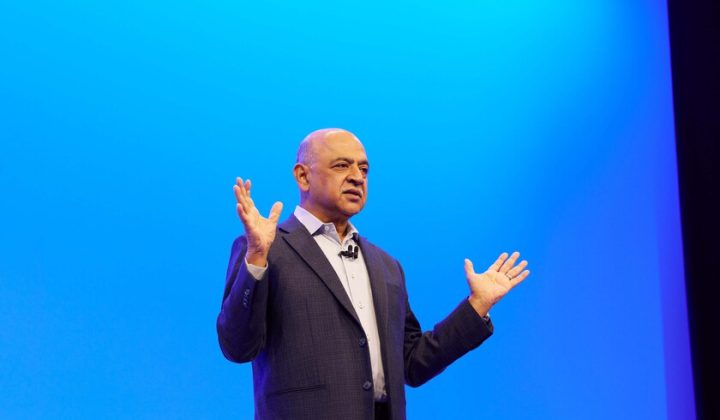
IBM CEO Puts a Number on the Open-Weight AI Value Proposition: 90% of the Performance at 10% of the Token Cost
IBM CEO Arvind Krishna told analysts that open-weight models now deliver about 90% of frontier-model effectiveness while costing between 10% and 25%…
Read article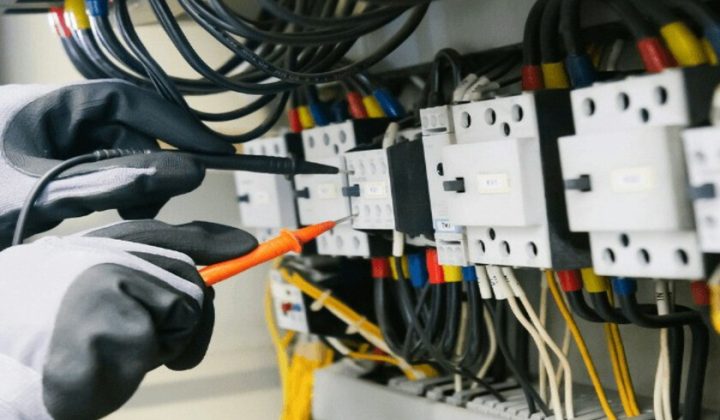
OCU Finds Spanish Homeowner Communities Overpaying Up to €1,500 on Electricity and €3,515 on Gas—Can AI Tools Optimize Shared Energy Bills?
A new OCU analysis of Spanish homeowner community bills reveals widespread overpayment due to non-competitive tariffs and excess contracted power. Could AI-driven…
Read article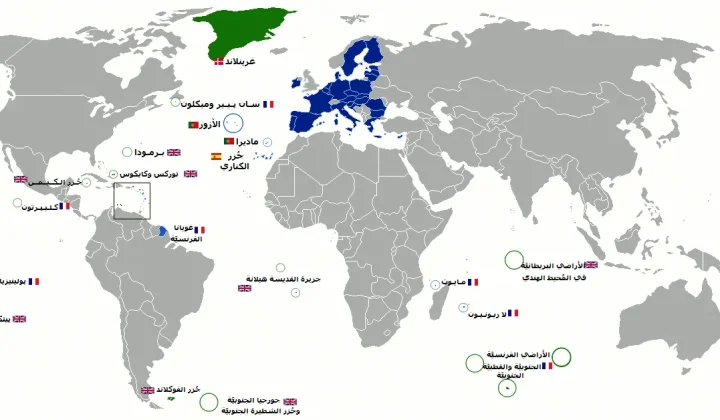
Mayotte fiber dispute does not meet ReviewArticle’s AI news brief
Le Monde reports that France’s competition authority has ordered Orange to suspend part of its fiber-optic rollout in Mayotte. The dispute is…
Read article
DiffEEG Model Uses Diffusion Pre-Training to Improve Seizure Detection from Minimal Labeled Data
Researchers have introduced DiffEEG, a 9.6-million-parameter foundation model that combines denoising diffusion pre-training with reinforcement learning fine-tuning to detect seizure events from…
Read articleWiki relacionada

AI Model API Pricing and Context Window Comparison: Current Rates and Limits
Compare the latest API pricing, context windows, and capabilities of leading AI model providers including OpenAI, Anthropic, Google, and Mistral. Practical guidance…
Read article
AI Agent Evaluation Frameworks: How to Benchmark Agentic Systems
A practical guide to evaluating AI agents — from task completion metrics to safety, cost, and robustness. Covers major frameworks, primary sources,…
Read article
LLM Benchmarks Decoded: What MMLU, HumanEval, and GSM8K Actually Measure for Developers
A developer-focused breakdown of the most-cited LLM benchmarks — MMLU, HumanEval, GSM8K, MATH, Chatbot Arena — including what they test, their hidden…
Read article
What Is RAG? A Practical Guide to Retrieval-Augmented Generation in 2025
Retrieval-Augmented Generation (RAG) grounds LLM outputs in external data, reducing hallucinations and enabling enterprise use cases. This guide covers how RAG works,…
Read article