
Vehicle as a Firetrap: Lessons from the Deadly Los Gallardos Blaze
A devastating wildfire in Los Gallardos, Spain, resulting in multiple fatalities, highlights the critical danger of using vehicles as shelters during forest fires, underscoring the need for updated emergency protocols.
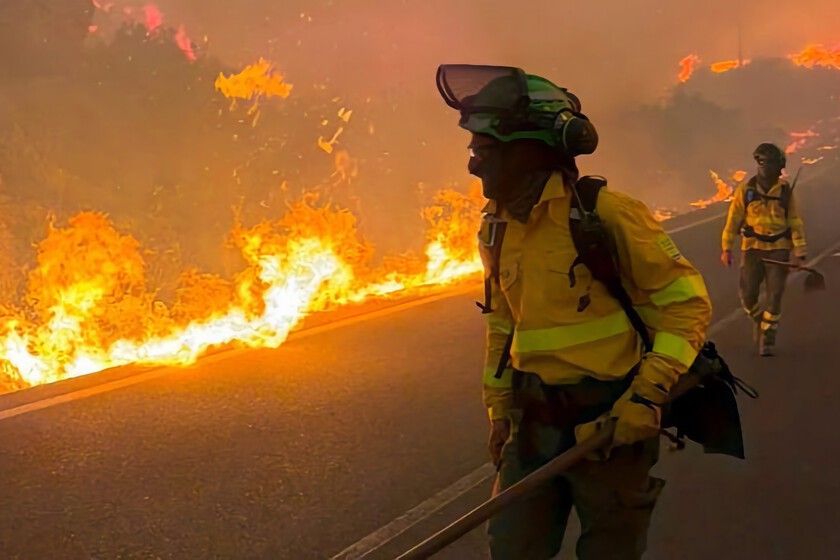
A devastating wildfire in Los Gallardos, Almería, Spain, claimed at least eleven lives, serving as a grim reminder that vehicles can transform from a means of escape into a lethal trap during extreme fire events. The incident, which saw individuals perish within or near their cars while attempting to flee, underscores the critical need for revised emergency protocols and public awareness regarding fire safety.
The scale of the tragedy, the deadliest in Spain this century, has prompted a re-evaluation of emergency response strategies and public behavior during such crises. The victims, potentially foreign tourists unfamiliar with the local terrain, were reportedly disoriented and trapped by the rapid advance of the flames.
Systemic Challenges
The emergency response in Andalusia faced significant challenges on July 9, 2026, due to a confluence of factors:
- Simultaneous Incidents: The Los Gallardos fire occurred concurrently with a separate urban-forest fire in Benahavís (Málaga), forcing a division of critical aerial and ground resources.
- Rapid Ignition: The fire’s origin is attributed to a fallen power line igniting dry forest under high temperatures and wind, leading to a swift and ferocious spread.
- Treacherous Topography: The irregular terrain of Bédar, characterized by ravines and scattered dwellings, accelerated the fire’s movement, blocking escape routes and trapping those attempting to flee by road.
The professional firefighting community has long warned that cars are not a refuge during wildfires. Specialists from the European Automobile Commissioner (CEA) emphasize that attempting to drive through flames is extremely dangerous and should be avoided.
Historical Precedents and Research
The majority of fatalities in forest fires stem from delayed evacuations or attempts to protect property. Australia’s “Stay and Defend or Leave Early” policy was re-evaluated after the devastating Black Saturday fires in 2009, which resulted in 173 deaths. Subsequent analysis by the National Center for Biotechnology Information (PMC) led to revised protocols.
A 2019 study by Molina-Terrén detailed that civilian casualties in such events often occur during late evacuations, when smoke and radiant heat impede escape, or when individuals prioritize protecting property. More recent research continues to affirm these findings.
Understanding the Vehicle’s Vulnerability
The internal combustion engine’s reliance on oxygen means that as a fire consumes available air, a vehicle can stall. ISK Fire Survival, a company specializing in fire-resistant systems for fire trucks, highlights the extreme vulnerability of standard vehicles to radiant heat. Windshields can shatter at temperatures above 300°C, exposing the cabin to the inferno.
Modern “sixth-generation” fires deplete oxygen and release toxic gases like carbon monoxide and hydrogen cyanide. Melted tires lead to loss of traction, and thick smoke can reduce visibility to zero within seconds. Because car ventilation systems are not sealed, toxic fumes can quickly incapacitate occupants.
Expert Survival Advice
When trapped by fire, expert advice suggests the following actions:
- Find a Clear Area: Park away from dense vegetation, ideally behind a stone wall or in a large clearing, plowed field, or open ground.
- Shut Down and Seal: Turn off the engine, close all windows, turn off the air conditioning, and engage air recirculation to delay smoke ingress. Use hazard lights and flashers to remain visible.
- Use Natural Materials: Cover yourself with natural fibers like wool or cotton, which are less likely to melt or ignite compared to synthetics.
- Seek Low Ground: Lie down below the window line, tucked under seats, to shield yourself from direct radiant heat and accumulating smoke.
- Remain Inside: The passage of a fire front typically lasts only 2-5 minutes. The interior of a car offers more protection than open air. Only abandon the vehicle if the fire breaches the cabin, at which point it becomes a deathtrap.
This incident serves as a critical case study for AI-driven emergency response systems and public safety advisories, emphasizing the need for real-time, accurate threat assessment and clear, actionable guidance for individuals caught in extreme environmental events. The integration of AI in predicting fire spread, optimizing evacuation routes, and disseminating timely safety information could be crucial in mitigating future tragedies.
Key facts
| Fact | Detail |
|---|---|
| Incident Location | Los Gallardos, Almería, Spain |
| Fatalities | At least 11 |
| Primary Cause of Death | Trapped in or near vehicles during wildfire evacuation |
| Contributing Factors | Rapid fire spread, treacherous terrain, simultaneous emergencies |
| Expert Recommendation | Vehicles are not safe shelters; follow specific survival protocols. |
Source: El incendio en Los Gallardos nos recuerda la trampa del coche. Rodeado por llamas a 800 grados, no es un refugio sino un horno (Xataka) – https://www.xataka.com/magnet/incendio-gallardos-nos-recuerda-trampa-coche-rodeado-llamas-a-800-grados-no-refugio-sino-horno
Source
Xataka IA Publicacion original: 2026-07-10T09:11:58+00:00
Related articles

IBM CEO Puts a Number on the Open-Weight AI Value Proposition: 90% of the Performance at 10% of the Token Cost
IBM CEO Arvind Krishna told analysts that open-weight models now deliver about 90% of frontier-model effectiveness while costing between 10% and 25%…
Read article
OCU Finds Spanish Homeowner Communities Overpaying Up to €1,500 on Electricity and €3,515 on Gas—Can AI Tools Optimize Shared Energy Bills?
A new OCU analysis of Spanish homeowner community bills reveals widespread overpayment due to non-competitive tariffs and excess contracted power. Could AI-driven…
Read article
Mayotte fiber dispute does not meet ReviewArticle’s AI news brief
Le Monde reports that France’s competition authority has ordered Orange to suspend part of its fiber-optic rollout in Mayotte. The dispute is…
Read article
DiffEEG Model Uses Diffusion Pre-Training to Improve Seizure Detection from Minimal Labeled Data
Researchers have introduced DiffEEG, a 9.6-million-parameter foundation model that combines denoising diffusion pre-training with reinforcement learning fine-tuning to detect seizure events from…
Read articleWiki relacionada

AI Model API Pricing and Context Window Comparison: Current Rates and Limits
Compare the latest API pricing, context windows, and capabilities of leading AI model providers including OpenAI, Anthropic, Google, and Mistral. Practical guidance…
Read article
AI Agent Evaluation Frameworks: How to Benchmark Agentic Systems
A practical guide to evaluating AI agents — from task completion metrics to safety, cost, and robustness. Covers major frameworks, primary sources,…
Read article
LLM Benchmarks Decoded: What MMLU, HumanEval, and GSM8K Actually Measure for Developers
A developer-focused breakdown of the most-cited LLM benchmarks — MMLU, HumanEval, GSM8K, MATH, Chatbot Arena — including what they test, their hidden…
Read article
What Is RAG? A Practical Guide to Retrieval-Augmented Generation in 2025
Retrieval-Augmented Generation (RAG) grounds LLM outputs in external data, reducing hallucinations and enabling enterprise use cases. This guide covers how RAG works,…
Read article