
Microsoft Partners with Overture Maps Foundation to Enhance Spatial Data for AI
Microsoft is collaborating with the Overture Maps Foundation, a consortium of 50 organizations, to build open, interoperable spatial data sets, aiming to power the next generation of AI tools and applications.

Microsoft is deepening its commitment to advancing AI capabilities through a significant partnership with the Overture Maps Foundation. This collaboration focuses on developing open, standardized, and interoperable global spatial data sets, which are crucial for the next generation of AI-driven tools and applications.
Jeffrey Hightower, VP of Places Data at Microsoft, and Amy Rose, CTO of the Overture Maps Foundation, discussed the initiative on the Stack Overflow Blog. Their conversation highlighted how this partnership aims to address the inherent complexities of digitally mapping the world and to make this data more accessible and useful for a wide range of developers and AI systems.
Por que importa
Overture Maps Foundation, a collaborative effort involving 50 organizations, is dedicated to creating a foundational map of the world that is freely accessible and built on open standards. Microsoft, as a founding member and a participant on Overture’s Steering Committee, plays a key role in guiding the development and implementation of this ambitious project.
The core of this initiative lies in the creation of robust spatial data infrastructure. Spatial data, which includes information about geographic locations and relationships, is fundamental for many AI applications, from autonomous vehicles and logistics to urban planning and environmental monitoring. By fostering an open and collaborative approach, Overture Maps aims to overcome the limitations of proprietary data sets and fragmented geospatial information.
Key facts
| Aspect | Details |
|---|---|
| Partnership | Microsoft and Overture Maps Foundation |
| Goal | Create open, interoperable global spatial data sets |
| Overture Members | 50 organizations |
| Impact | Powering next-generation AI tools and applications |
| Data Focus | Open, standardized, and interoperable spatial data |
Challenges in Mapping the World
Digitally mapping the planet presents significant challenges. These include the sheer scale of data required, the need for constant updates to reflect real-world changes, ensuring data accuracy and consistency across different regions, and the technical hurdles of standardizing diverse data formats. The Overture Maps Foundation is working to establish common schemas and data models that can accommodate this complexity.
The partnership aims to leverage Microsoft’s extensive experience in data infrastructure and AI development with Overture’s collaborative model. This synergy is expected to accelerate the creation of a more comprehensive and reliable global map, which can then be utilized by developers to build more intelligent and context-aware AI systems.
For the readers of ReviewArticle, this development is significant because open and high-quality spatial data is a critical enabler for many AI advancements. Improved geospatial data will directly benefit the development of AI agents that need to understand and interact with the physical world, more sophisticated AI tools for data analysis and visualization, and advancements in areas like cloud AI and automation that rely on accurate location-based information. The open nature of the Overture Maps data also suggests a future where AI development is less constrained by data access limitations.
The collaboration between Microsoft and Overture Maps Foundation signifies a move towards democratizing access to essential geospatial data. This open approach is vital for fostering innovation and ensuring that the benefits of AI can be more widely distributed. As AI systems become increasingly integrated into various aspects of our lives, the quality and accessibility of their foundational data, like spatial information, become paramount.
Source: Stack Overflow Blog – Oh the places you’ll go with spatial data – https://stackoverflow.blog/2026/06/23/oh-the-places-you-ll-go-with-spatial-data/
Source
Stack Overflow Blog Publicacion original: 2026-06-23T07:40:00+00:00
Related articles
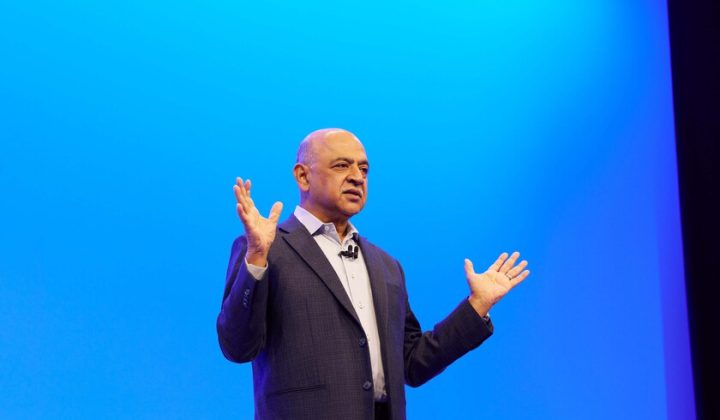
IBM CEO Puts a Number on the Open-Weight AI Value Proposition: 90% of the Performance at 10% of the Token Cost
IBM CEO Arvind Krishna told analysts that open-weight models now deliver about 90% of frontier-model effectiveness while costing between 10% and 25%…
Read article
OCU Finds Spanish Homeowner Communities Overpaying Up to €1,500 on Electricity and €3,515 on Gas—Can AI Tools Optimize Shared Energy Bills?
A new OCU analysis of Spanish homeowner community bills reveals widespread overpayment due to non-competitive tariffs and excess contracted power. Could AI-driven…
Read article
Mayotte fiber dispute does not meet ReviewArticle’s AI news brief
Le Monde reports that France’s competition authority has ordered Orange to suspend part of its fiber-optic rollout in Mayotte. The dispute is…
Read article
DiffEEG Model Uses Diffusion Pre-Training to Improve Seizure Detection from Minimal Labeled Data
Researchers have introduced DiffEEG, a 9.6-million-parameter foundation model that combines denoising diffusion pre-training with reinforcement learning fine-tuning to detect seizure events from…
Read articleWiki relacionada

AI Model API Pricing and Context Window Comparison: Current Rates and Limits
Compare the latest API pricing, context windows, and capabilities of leading AI model providers including OpenAI, Anthropic, Google, and Mistral. Practical guidance…
Read article
AI Agent Evaluation Frameworks: How to Benchmark Agentic Systems
A practical guide to evaluating AI agents — from task completion metrics to safety, cost, and robustness. Covers major frameworks, primary sources,…
Read article
LLM Benchmarks Decoded: What MMLU, HumanEval, and GSM8K Actually Measure for Developers
A developer-focused breakdown of the most-cited LLM benchmarks — MMLU, HumanEval, GSM8K, MATH, Chatbot Arena — including what they test, their hidden…
Read article
What Is RAG? A Practical Guide to Retrieval-Augmented Generation in 2025
Retrieval-Augmented Generation (RAG) grounds LLM outputs in external data, reducing hallucinations and enabling enterprise use cases. This guide covers how RAG works,…
Read article