
Mistral CEO warns Europe has two years to build independent AI infrastructure
Arthur Mensch, CEO of Mistral AI, has issued a stark warning to Europe, stating the continent has just two years to develop its own AI infrastructure or risk becoming structurally subordinate to US tech giants.

Arthur Mensch, CEO of Mistral AI, has issued a critical warning, asserting that Europe has a mere two-year window to establish its own artificial intelligence infrastructure. Failure to do so, he contends, will result in the continent becoming structurally subordinate to dominant US technology companies.
The urgency of Mensch’s message was highlighted during his appearance before the French National Assembly in May 2026. He emphasized that if Europe wishes to move beyond being a passive observer in the AI race and actively participate, immediate action is imperative. The deadline he set – a scant two years – underscores the critical juncture at which Europe finds itself.
A Stark Warning
Mensch presented a stark macroeconomic outlook, backed by specific figures, suggesting Europe has approximately two years to construct its indigenous AI infrastructure. Beyond this timeframe, he predicts Europe will be “structurally subordinated” to American tech firms. If this deadline is missed, he warned, Europe could become akin to a “vassal state.”
The potential future, should Europe fail to act, is bleak. Mensch articulated this grim scenario: “Once the supply is monopolized by American companies, we will suddenly run out of supply and will no longer be able to transform electrons into tokens.” This argument, while technical, carries significant political weight, asserting that control over computing power equates to control over the economy. AI, he posits, is not just another digital service but the foundational infrastructure upon which all other systems will operate, comparable to electricity or roads, but potentially privatized and controlled by foreign entities.
Strategic Importance and Economic Impact
The implications of relying on third-party AI extend beyond mere technical considerations, particularly given AI’s increasing deployment in critical sectors like defense and banking. Mensch frames this dependence as a profound issue of productive sovereignty and a significant concern for the balance of payments. He likens AI to strategic assets such as natural gas, drawing a parallel to Europe’s past struggles with energy dependency on Russia.
In further remarks to CNBC, Mensch elaborated on the macroeconomic consequences. He stated, “You cannot afford a trillion-dollar trade deficit if you really want to remain competitive in the race.” Every euro spent by European entities on AI services from US companies directly funds the competitor’s research and development, with that capital not returning to Europe. The increasing cost of AI services, evidenced by companies like Uber and Microsoft reportedly cutting licenses, further exacerbates this issue, with potentially critical implications for security if AI becomes indispensable.
The Current Landscape
The global AI computing landscape reveals Europe’s disadvantage. Data from Epoch AI, cited by both the US Federal Reserve and RAND Europe, indicates that the United States commands 74% of high-level global AI compute, China holds 14%, and the European Union accounts for a mere 4.8%. A September 2024 report by Mario Draghi had already identified a significant portion of Europe’s productivity gap with the US as stemming from a deficit in the technological sector. A year later, Draghi expressed pessimism, noting that only 11.2% of nearly 400 recommendations had been implemented.
In response, Europe has initiated the “AI Continent” action plan, aiming to triple data center capacity and deploy up to five “gigafactories.” However, questions remain about the sufficiency and timeliness of these measures. The planned 500,000 chips for these gigafactories fall far short of US capacity, with OpenAI reportedly planning to exceed one million chips by the end of 2025.
Mensch’s Proposals
Beyond warnings, Mensch has put forth concrete proposals. He advocates for leveraging public procurement as a strategic tool, given that public spending accounts for 50% of the European GDP. This, he believes, can be a powerful mechanism to catalyze AI development. Mistral AI is also reportedly exploring the development of its own chips and has announced plans for a new data center in France.
Potential Counterarguments
A primary counterargument to Mensch’s assertions is his vested interest. Mistral AI, with 1,000 employees, a valuation of €12 billion, and a revenue target of €1 billion by the end of 2026, has significant interests in the policies he advocates. Approximately 75% of its sales are within Europe. Furthermore, the current inability to utilize AI without proprietary servers does not equate to complete inaccessibility, though it does mean relying on third parties who dictate terms, pricing, and limitations.
Key facts
| Aspect | Detail |
|---|---|
| Warning | Europe has two years to build independent AI infrastructure. |
| Current Compute Share | US: 74%, China: 14%, EU: 4.8% (Epoch AI data). |
| Mistral AI Position | CEO Arthur Mensch advocates for European AI infrastructure development; company has significant European sales. |
| Proposed Solutions | Leverage public procurement, develop indigenous chips, build data centers. |
This development is crucial for ReviewArticle readers as it highlights the geopolitical and economic race for AI dominance. The potential for Europe to become technologically dependent on the US has significant implications for innovation, economic competitiveness, and strategic autonomy in the rapidly evolving field of artificial intelligence. Understanding these dynamics is key for professionals and enthusiasts alike who are tracking the future of AI development and its impact on global markets.
Source: “Solo dos años”: el CEO de Mistral advierte a Europa de que se le acaba el tiempo para construir una infraestructura de IA propia – Xataka (https://www.xataka.com/servicios/solo-dos-anos-ceo-mistral-advierte-a-europa-que-se-le-acaba-tiempo-para-construir-infraestructura-ia-propia)
Source
Xataka IA Publicacion original: 2026-06-28T09:16:12+00:00
Related articles
IBM CEO Puts a Number on the Open-Weight AI Value Proposition: 90% of the Performance at 10% of the Token Cost
IBM CEO Arvind Krishna told analysts that open-weight models now deliver about 90% of frontier-model effectiveness while costing between 10% and 25%…
Read article
OCU Finds Spanish Homeowner Communities Overpaying Up to €1,500 on Electricity and €3,515 on Gas—Can AI Tools Optimize Shared Energy Bills?
A new OCU analysis of Spanish homeowner community bills reveals widespread overpayment due to non-competitive tariffs and excess contracted power. Could AI-driven…
Read article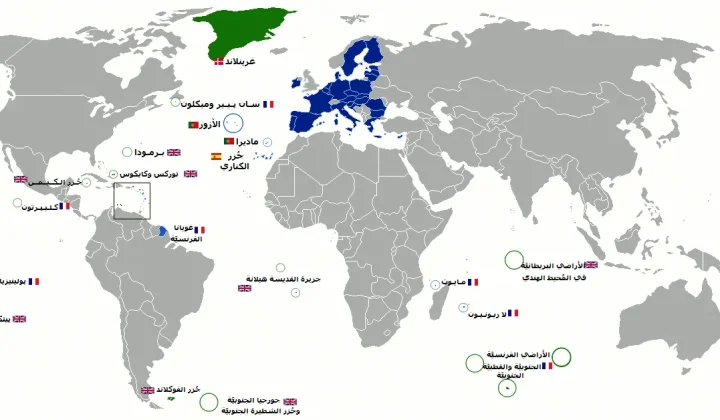
Mayotte fiber dispute does not meet ReviewArticle’s AI news brief
Le Monde reports that France’s competition authority has ordered Orange to suspend part of its fiber-optic rollout in Mayotte. The dispute is…
Read article
DiffEEG Model Uses Diffusion Pre-Training to Improve Seizure Detection from Minimal Labeled Data
Researchers have introduced DiffEEG, a 9.6-million-parameter foundation model that combines denoising diffusion pre-training with reinforcement learning fine-tuning to detect seizure events from…
Read articleWiki relacionada

AI Model API Pricing and Context Window Comparison: Current Rates and Limits
Compare the latest API pricing, context windows, and capabilities of leading AI model providers including OpenAI, Anthropic, Google, and Mistral. Practical guidance…
Read article
AI Agent Evaluation Frameworks: How to Benchmark Agentic Systems
A practical guide to evaluating AI agents — from task completion metrics to safety, cost, and robustness. Covers major frameworks, primary sources,…
Read article
LLM Benchmarks Decoded: What MMLU, HumanEval, and GSM8K Actually Measure for Developers
A developer-focused breakdown of the most-cited LLM benchmarks — MMLU, HumanEval, GSM8K, MATH, Chatbot Arena — including what they test, their hidden…
Read article
What Is RAG? A Practical Guide to Retrieval-Augmented Generation in 2025
Retrieval-Augmented Generation (RAG) grounds LLM outputs in external data, reducing hallucinations and enabling enterprise use cases. This guide covers how RAG works,…
Read article