
Mont Cenis Tunnel Nears Completion, Promising Faster Alpine Crossing and Freight Revolution
A monumental tunnel project under the Alps, connecting France and Italy, is set to dramatically cut travel times and transform freight logistics, though facing cost overruns and environmental concerns.
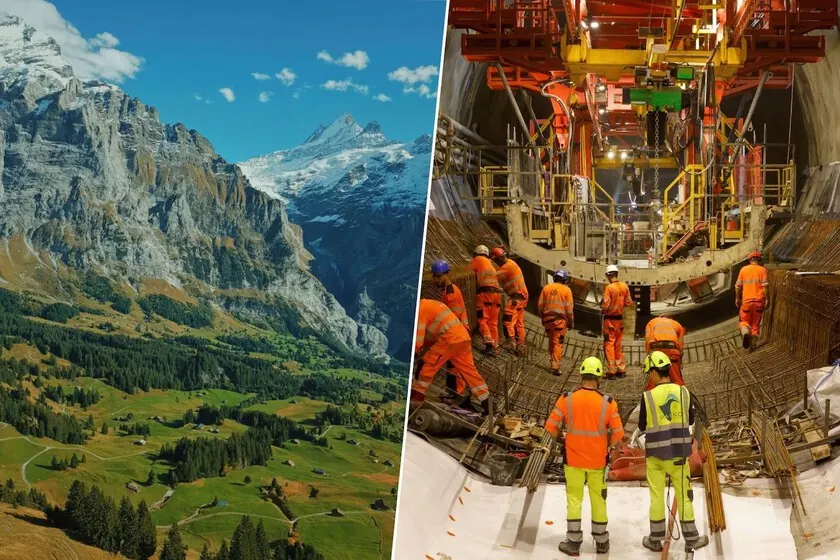
France and Italy are on the cusp of completing a significant engineering feat—the Mont Cenis Base Tunnel—a project poised to revolutionize rail travel and freight logistics between the two nations and across Europe. This ambitious endeavor, buried deep beneath the Alps, aims to drastically reduce journey times and shift a substantial volume of goods from road to rail, contributing to environmental sustainability.
The Tunnel Project
The Mont Cenis Base Tunnel is the centerpiece of the Mediterranean Corridor, a key component of the Trans-European Transport Network. Stretching 115 kilometers, it will consist of two parallel single-track railway tunnels, each 57.5 kilometers long. The design includes four access points, 204 safety cross-passages, and an integrated underground logistics network with ventilation shafts. Once operational, trains will traverse the Alps on a virtually flat gradient, eliminating the current speed and load limitations imposed by the mountainous terrain. The new tunnels will connect to existing rail infrastructure in Saint-Jean-de-Maurienne, France, and Susa, Italy. Currently, over 3,300 workers are engaged in the construction, with a projected peak of 4,000. As of February this year, 29% of the French section had been excavated.
Revolutionizing Travel and Trade
The impact of the Mont Cenis Base Tunnel on passenger and freight transport is expected to be profound. For passengers, the journey between Paris and Milan, currently taking around seven hours, will be reduced to approximately four and a half hours. This significant time saving is expected to make train travel more competitive against air travel on this busy route.
However, the most substantial benefits are anticipated for freight logistics. The Alps currently necessitate a large portion of trade between northern and southern Europe to be transported by road, leading to environmental costs and congestion. The new tunnel is projected to remove 700,000 truck journeys from the roads annually, translating to an estimated reduction of 3 million tons of carbon dioxide emissions each year.
A Long and Winding Road
The concept for this tunnel dates back to the 1990s, but the project has faced decades of delays due to political hurdles, particularly from Italy. A significant breakthrough occurred in 2021 with the finalization of contracts on the French side, unblocking the project. Despite this progress, the European Court of Auditors cautioned earlier this year that the initial goal of completion before 2030 is unlikely. The project’s promoter now points to 2033 as the target opening date for traffic.
Key Facts
| Feature | Detail |
|---|---|
| Tunnel Length | 115 kilometers (two parallel tubes) |
| Estimated Travel Time | Paris-Milan: 4.5 hours (down from 7 hours) |
| Projected Truck Reduction | 700,000 per year |
| Estimated CO2 Reduction | 3 million tons per year |
| Estimated Cost | €11.1 billion (30% over initial estimate) |
| Opening Target | 2033 |
Financials and Engineering
The estimated cost for this section of the corridor stands at €11.1 billion, a 30% increase from the initial 2015 estimate. Funding is shared among the European Union (40%), Italy (35%), and France (25%). The project is managed by TELT (Tunnel Euralpin Lyon Turin), a company jointly owned by the Italian and French states. The construction involves a consortium of major European companies, including Germany’s Herrenknecht, a leader in tunneling machinery.
Two primary excavation methods are being employed. For long stretches, massive Tunnel Boring Machines (TBMs) from Herrenknecht, measuring 180 meters in length and weighing 2,300 tons, are in use. For access tunnels and sections with complex geology, traditional drilling and blasting methods are utilized.
Challenges and Criticisms
The project is not without its challenges. The soaring costs, which have already exceeded initial projections and threaten further increases, are a significant concern, mirroring cost escalations in similar projects like the Brenner Base Tunnel.
Environmental impact is another critical issue. Environmental groups have voiced concerns for years about potential damage to the Alpine ecosystem, and some local springs have reportedly begun to dry up due to the ongoing works. Furthermore, the project has faced criticism regarding its future profitability, as both road and rail traffic volumes in the corridor were reportedly declining at the time of its approval.
Source: De Milán a París en cuatro horas: el megatúnel que Francia e Italia están construyendo bajo los Alpes, Xataka, https://www.xataka.com/movilidad/milan-a-paris-poco-cuatro-horas-megatunel-que-francia-e-italia-estan-construyendo-alpes
Source
Xataka IA Publicacion original: 2026-06-27T12:00:13+00:00
Related articles
IBM CEO Puts a Number on the Open-Weight AI Value Proposition: 90% of the Performance at 10% of the Token Cost
IBM CEO Arvind Krishna told analysts that open-weight models now deliver about 90% of frontier-model effectiveness while costing between 10% and 25%…
Read article
OCU Finds Spanish Homeowner Communities Overpaying Up to €1,500 on Electricity and €3,515 on Gas—Can AI Tools Optimize Shared Energy Bills?
A new OCU analysis of Spanish homeowner community bills reveals widespread overpayment due to non-competitive tariffs and excess contracted power. Could AI-driven…
Read article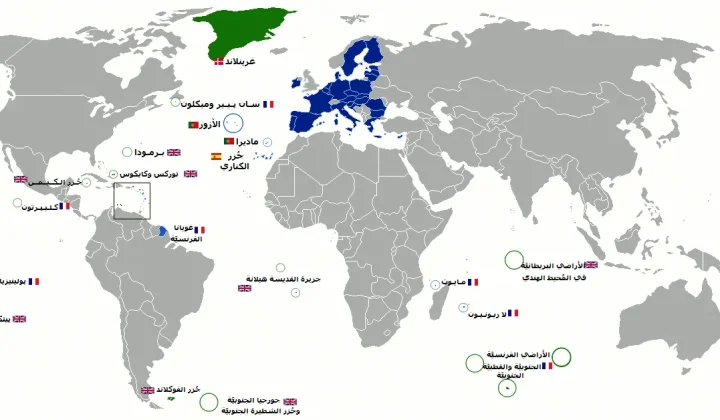
Mayotte fiber dispute does not meet ReviewArticle’s AI news brief
Le Monde reports that France’s competition authority has ordered Orange to suspend part of its fiber-optic rollout in Mayotte. The dispute is…
Read article
DiffEEG Model Uses Diffusion Pre-Training to Improve Seizure Detection from Minimal Labeled Data
Researchers have introduced DiffEEG, a 9.6-million-parameter foundation model that combines denoising diffusion pre-training with reinforcement learning fine-tuning to detect seizure events from…
Read articleWiki relacionada

AI Model API Pricing and Context Window Comparison: Current Rates and Limits
Compare the latest API pricing, context windows, and capabilities of leading AI model providers including OpenAI, Anthropic, Google, and Mistral. Practical guidance…
Read article
AI Agent Evaluation Frameworks: How to Benchmark Agentic Systems
A practical guide to evaluating AI agents — from task completion metrics to safety, cost, and robustness. Covers major frameworks, primary sources,…
Read article
LLM Benchmarks Decoded: What MMLU, HumanEval, and GSM8K Actually Measure for Developers
A developer-focused breakdown of the most-cited LLM benchmarks — MMLU, HumanEval, GSM8K, MATH, Chatbot Arena — including what they test, their hidden…
Read article
What Is RAG? A Practical Guide to Retrieval-Augmented Generation in 2025
Retrieval-Augmented Generation (RAG) grounds LLM outputs in external data, reducing hallucinations and enabling enterprise use cases. This guide covers how RAG works,…
Read article