
Mosquito Repellents May Be Losing Their Edge as Insects Learn to Associate Them with Food
A new study suggests that the common mosquito repellent DEET may be inadvertently conditioning mosquitoes to associate the scent with a food source, potentially reducing its effectiveness and raising concerns about disease transmission.
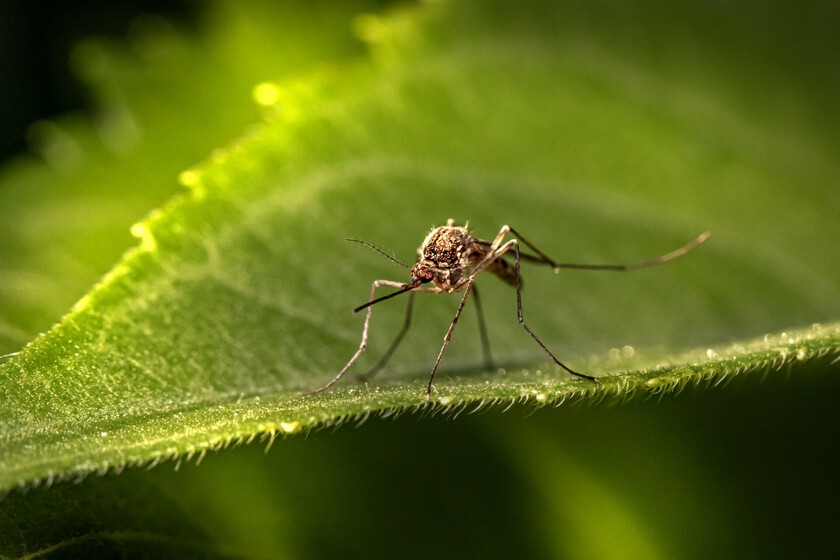
Mosquito repellents, long considered a reliable defense against insect bites, may be facing a new challenge as mosquitoes appear to be learning to associate them with a food source, according to recent research. This development could have significant implications for public health, given that mosquitoes are vectors for serious diseases like dengue, Zika, and malaria.
A study published in the Journal of Experimental Biology focused on the Aedes aegypti mosquito, a known carrier of several significant diseases. Researchers observed that after repeated exposure to controlled laboratory environments where the scent of N,N-Diethyl-meta-toluamide (DEET), the active ingredient in many classic repellents, was paired with a reward, the mosquitoes began to associate the repellent with a feeding opportunity.
The Learning Process
In the experimental setup, mosquitoes were exposed to conditions that simulated a food source, such as heat mimicking warm blood and sugar rewards. Crucially, these conditions were consistently presented alongside the smell of DEET. Over several cycles of exposure, the study found that the mosquitoes developed a learned association. Instead of being repelled, the scent of DEET became a signal indicating the presence of food.
The findings indicated that more than 60% of the conditioned mosquitoes actively sought out the smell of the repellent, overriding its intended deterrent effect. This suggests a neurobiological rewiring where the repellent transforms from a danger signal to an attractant.
Historical Context and Evolving Resistance
While the shift from repulsion to attraction is a novel finding, entomologists have long suspected that mosquitoes are developing ways to overcome repellents. A 2013 study, for instance, demonstrated that mosquitoes could develop tolerance to DEET, with insects becoming less responsive to the repellent after several hours of exposure. The current research provides a deeper insight into the underlying mechanisms of this adaptation.
Practical Implications and Usage
The researchers emphasized that these results were obtained under highly controlled laboratory conditions, designed to force a specific learning outcome. In real-world scenarios, a mosquito encountering a repellent might not always receive the “reward” of a successful blood meal, especially if the repellent concentration is high. This lack of consistent reinforcement could mean that the learned association is less likely to consolidate in natural environments.
However, the study’s authors stress the importance of proper repellent application, advising users to adhere to recommended application times and concentrations. They also call for a re-evaluation of public health strategies to account for the demonstrated plasticity of mosquito behavior. The potential for mosquitoes to adapt to repellents poses a significant concern, not just for nuisance bites but for the continued transmission of vector-borne diseases.
Datos clave
| Aspect | Detail |
|—|—|
| Repellent Molecule | N,N-Diethyl-meta-toluamida (DEET) |
| Mosquito Species Studied | Aedes aegypti |
| Key Finding | Mosquitoes learned to associate DEET with food rewards |
| Previous Research | Studies indicated developing tolerance to DEET over time |
| Implication | Potential reduced effectiveness of repellents, increased disease risk |
This research is particularly relevant to ReviewArticle’s readership by highlighting a critical, evolving challenge in pest control and public health. As artificial intelligence and advanced biological understanding continue to shape our world, it’s vital to stay informed about how even nature’s smallest creatures adapt to human interventions. The potential diminishing efficacy of widely used repellents underscores the ongoing need for innovation in disease prevention and vector control strategies.
Fuente: Los repelentes anti-mosquito han sido eficientes durante 40 años. Ahora los mosquitos están aprendiendo a apreciarlos – Xataka (https://www.xataka.com/ecologia-y-naturaleza/repelentes-anti-mosquito-han-sido-eficientes-durante-40-anos-ahora-mosquitos-estan-aprendiendo-a-apreciarlos)
Datos clave
| Punto | Detalle |
|---|---|
| Fuente | Xataka IA |
| Fecha | 2026-06-02T07:31:40+00:00 |
| Tema | Los repelentes anti-mosquito han sido eficientes durante 40 años. Ahora los mosquitos están aprendiendo a apreciarlos |
Source
Xataka IA Publicacion original: 2026-06-02T07:31:40+00:00
Related articles

IBM CEO Puts a Number on the Open-Weight AI Value Proposition: 90% of the Performance at 10% of the Token Cost
IBM CEO Arvind Krishna told analysts that open-weight models now deliver about 90% of frontier-model effectiveness while costing between 10% and 25%…
Read article
OCU Finds Spanish Homeowner Communities Overpaying Up to €1,500 on Electricity and €3,515 on Gas—Can AI Tools Optimize Shared Energy Bills?
A new OCU analysis of Spanish homeowner community bills reveals widespread overpayment due to non-competitive tariffs and excess contracted power. Could AI-driven…
Read article
Mayotte fiber dispute does not meet ReviewArticle’s AI news brief
Le Monde reports that France’s competition authority has ordered Orange to suspend part of its fiber-optic rollout in Mayotte. The dispute is…
Read article
DiffEEG Model Uses Diffusion Pre-Training to Improve Seizure Detection from Minimal Labeled Data
Researchers have introduced DiffEEG, a 9.6-million-parameter foundation model that combines denoising diffusion pre-training with reinforcement learning fine-tuning to detect seizure events from…
Read articleWiki relacionada

AI Model API Pricing and Context Window Comparison: Current Rates and Limits
Compare the latest API pricing, context windows, and capabilities of leading AI model providers including OpenAI, Anthropic, Google, and Mistral. Practical guidance…
Read article
AI Agent Evaluation Frameworks: How to Benchmark Agentic Systems
A practical guide to evaluating AI agents — from task completion metrics to safety, cost, and robustness. Covers major frameworks, primary sources,…
Read article
LLM Benchmarks Decoded: What MMLU, HumanEval, and GSM8K Actually Measure for Developers
A developer-focused breakdown of the most-cited LLM benchmarks — MMLU, HumanEval, GSM8K, MATH, Chatbot Arena — including what they test, their hidden…
Read article
What Is RAG? A Practical Guide to Retrieval-Augmented Generation in 2025
Retrieval-Augmented Generation (RAG) grounds LLM outputs in external data, reducing hallucinations and enabling enterprise use cases. This guide covers how RAG works,…
Read article