
Mount Fuji Tourist Rescues Spark Debate Over Costs and Responsibility
Japanese officials are debating how to address the rising frequency and cost of rescuing unprepared tourists on Mount Fuji, with proposals including charging for rescue operations and mandatory reservations. The issue highlights concerns about personal responsibility and the safety of rescue teams.
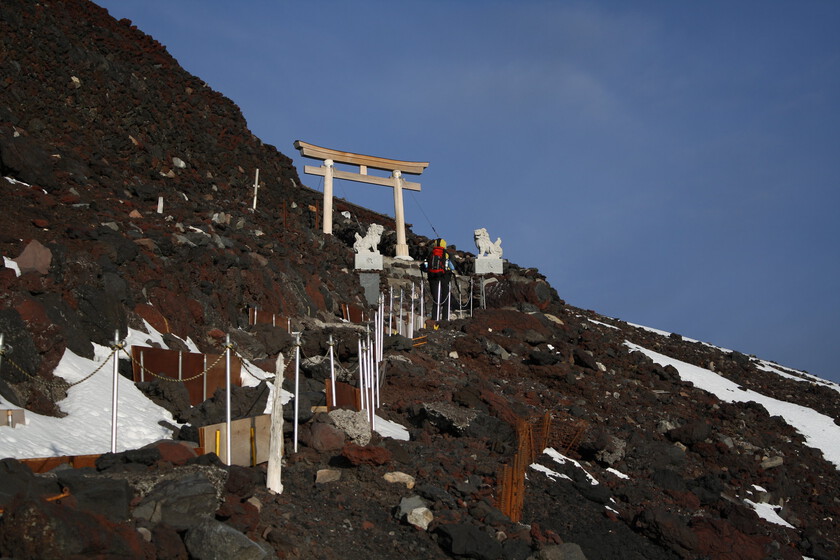
Mount Fuji, a UNESCO World Heritage site and an iconic symbol of Japan, is grappling with a growing challenge: the increasing number of ill-prepared tourists requiring rescue. This surge in incidents, particularly outside the designated climbing season, has ignited a serious debate among Japanese officials regarding the allocation of rescue costs and personal accountability. The discussion underscores broader issues of tourism management, visitor safety, and the strain on emergency services.
Key facts:
- Annual Visitors: Over 200,000 (some estimates exceed 300,000)
- 2024 Rescues: Approximately 70 search and rescue operations
- 2024 Fatalities: 10 (some outside official season)
- Rescue Helicopter: 400,000-500,000 JPY per hour (approx. $2,700-$3,400 USD)
The Problem of Unprepared Climbers
While Mount Fuji attracts hundreds of thousands of climbers annually, many undertake the ascent without adequate preparation, equipment, or understanding of the mountain’s inherent dangers. The official climbing season typically runs from July to September. Outside these months, conditions become significantly more hazardous, with many mountain huts closed, unpredictable weather, and treacherous terrain due to volcanic ash deposits, altitude sickness risks, and extreme temperature changes. Despite warnings from authorities, including the US Embassy in Japan, which explicitly states that climbing out of season is “considered dangerous” and has led to fatalities, many tourists still attempt the ascent.
Recent incidents highlight the severity of the situation. In March, a Swedish woman and a New Zealander suffered serious injuries and required rescue. In May, a Chinese hiker slipped and fell, necessitating evacuation to a hospital. A particularly high-profile case in 2025 involved a Chinese climber who required rescue twice within a single week. In 2024 alone, there were approximately 70 search and rescue operations on Mount Fuji, resulting in ten fatalities, some of which occurred during the off-season. These numbers, while not alarming given the overall visitor count, are concerning due to the concentrated nature of incidents during limited periods and the avoidable risks taken by some climbers.
Local Officials Voice Concerns
The mounting frequency of rescues, especially outside the official climbing season, has prompted strong reactions from local officials. Hidetada Sudo, the mayor of Fujinomiya, a town located at the foot of Mount Fuji, recently expressed his outrage at the situation. He emphasized the lack of personal responsibility displayed by some climbers, stating, “It’s outrageous to think that if you have an accident, you’ll simply receive help.” Mayor Sudo also highlighted the significant danger posed to rescue teams, who often risk their own lives to assist imprudent hikers. He warned of potential anger from the families and superiors of rescue team members if a second accident were to occur during an operation, underscoring the seriousness of the situation for those on the front lines. These sentiments echo discussions from the previous year, when the mayor of Fujiyoshida also raised concerns about rescue operations during the off-season.
The costs associated with these rescues are substantial. For instance, the use of a rescue helicopter can cost between 400,000 and 500,000 Japanese Yen (approximately $2,700 to $3,400 USD) per hour. This financial burden, coupled with the inherent risks to rescue personnel, is driving the urgent search for viable solutions.
Proposed Solutions and Policy Changes
Japanese authorities are actively exploring various measures to address the problem. One existing initiative is the introduction of a climbing fee for Mount Fuji, primarily aimed at combating overcrowding and the associated environmental impact. Last year, the prefectures of Shizuoka and Yamanashi discussed requiring advance reservations for climbers to better manage visitor flow and prevent congestion.
More stringent proposals are now on the table, particularly concerning the financial implications of rescues. In 2025, the mayor of Fujiyoshida proposed that rescued individuals should bear the cost of their evacuations. This idea has gained traction, with the mayor of Fujinomiya lamenting the “simplistic and unfair” notion that rescued individuals should not incur any costs. The Shizuoka prefectural government has also supported this concept. The rationale is to deter reckless behavior by attaching a direct financial consequence, moving away from a system where rescue services are perceived as readily available “like ordering a taxi.”
Technological solutions are also being considered. One region has already implemented an app that allows for pre-registration, provides information on climbing regulations, and facilitates the payment of access fees. The app’s future development aims to include location tracking and estimated arrival times at mountain huts, enhancing both safety and management. These technological interventions seek to better inform climbers, enforce regulations, and streamline emergency responses.
Impact on Tourism and Safety Policy
The ongoing debate surrounding Mount Fuji’s rescue operations has significant implications for Japan’s broader tourism strategy and safety policy. As international tourism to Japan continues to grow, managing high-profile natural attractions like Mount Fuji becomes increasingly complex. The proposals under consideration reflect a shift towards greater visitor accountability and a more proactive approach to safety management. For developers and policymakers, this situation highlights the need for integrated solutions that combine technological tools, clear regulatory frameworks, and effective communication strategies to ensure both visitor enjoyment and environmental protection. The outcome of these discussions could set a precedent for how other popular natural sites manage the challenges of mass tourism and emergency response.
Source: Xataka IA – https://www.xataka.com/magnet/masificacion-fuji-ha-abierto-debate-debates-japon-que-hacer-turistas-imprudentes-que-necesitan-rescates
Source
Xataka IA Publicacion original: 2026-05-20T16:00:14+00:00
Related articles

How AI Editing Tools and Reddit IP Discovery Are Reshaping Content Creation
The superhero era is fading. YouTube‑born creators are producing hit content using AI‑powered editing tools, audience analytics, and Reddit as a real‑time…
Read article
Samsung Galaxy Watch Ultra2 and Apple Watch Ultra 3 Bring AI Assistants and Health Sensors to Premium Wearables
Samsung’s Galaxy Watch Ultra2 and Apple’s Watch Ultra 3 both pack AI-powered health sensors and voice assistants, but the Samsung model adds…
Read article
Microsoft AI Diffusion Report Reveals 70% Adoption in UAE, 31% in US, and a Deepening Digital Divide
The Microsoft AI Diffusion Report for Q1 2026 shows 17.8% of global working-age adults use AI, with UAE at 70% and Singapore…
Read article
A Simple Traffic-Light Protocol: How a 1966 Incident Shaped Modern AI Communication Design
A communication breakdown between a referee and a player during the 1966 World Cup led to the invention of yellow and red…
Read articleWiki relacionada

What Is a Context Window in AI Models? A Practical Guide
Understand how context windows define the memory and reasoning scope of large language models, with real limits, comparisons, and practical implications for…
Read article
AI Model Evaluation Benchmarks: A Practical Guide for Developers
Compare AI models with confidence. This guide explains the most common benchmarks—MMLU, HumanEval, GPQA, and others—what they measure, their limits, and how…
Read article
AI Agent Evaluation Benchmarks: What They Measure and How to Use Them
A practical guide to the major benchmarks for evaluating AI agent performance, including GAIA, AgentBench, and WebArena, with source-backed comparisons and limitations.
Read articleUnderstanding Retrieval-Augmented Generation (RAG) in AI
Retrieval-Augmented Generation (RAG) combines large language models with external knowledge bases, allowing AI systems to generate more informed and accurate responses by…
Read article