
NASA’s Deep Space Network Suffers Costly Failure Due to “Heroic” Work Culture
An internal investigation into a costly incident at NASA's Goldstone Deep Space Network antenna reveals a culture of "personal heroism" led to insufficient training and bypassed procedures, resulting in significant damage and downtime.
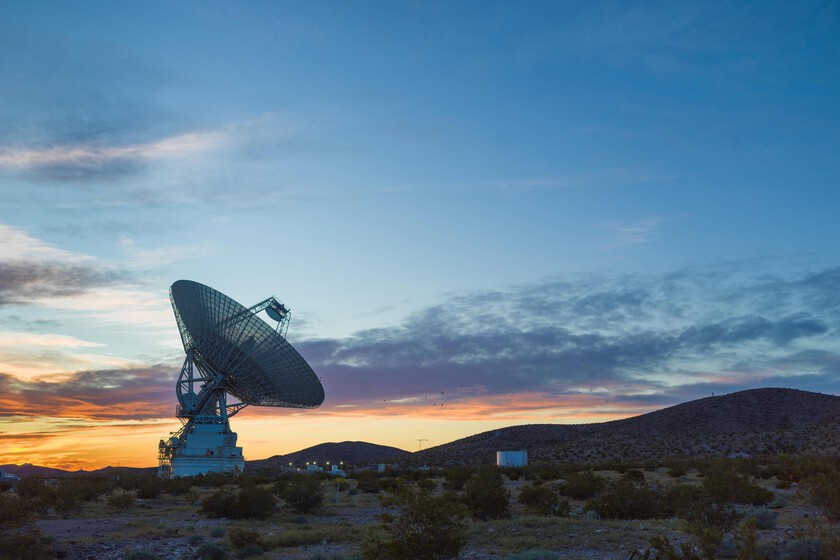
A recent investigation into a significant incident at NASA’s Goldstone Deep Space Network (DSN) antenna has revealed that a problematic workplace culture, characterized by “personal heroism,” contributed to the failure. The incident, which occurred on September 16, 2025, at the DSS-14 antenna in California, resulted in over 750,000 liters of glycol-infused water flooding the facility, causing an estimated $4.1 to $4.6 million in damages and leaving the antenna out of service.
The investigation, a redacted version of which was released by NASA, points to a confluence of factors that led to the antenna rotating beyond its operational limits. While the full details are obscured in the public report, the investigation identified six critical events. These included a failure of a hydraulic limit system, an anomaly during communication with the Juno mission, and subsequent maintenance and diagnostic tasks. The antenna was repeatedly pushed to its rotation limits, eroding safety margins until the failure occurred.
Por que importa
Key facts
| Fact | Detail |
|---|---|
| Incident Date | September 16, 2025 |
| Location | Goldstone Deep Space Network (DSN) complex, California |
| Damaged Asset | DSS-14 antenna (70-meter) |
| Estimated Damage | $4.1 – $4.6 million |
| Contributing Factor | “Personal heroism” work culture, insufficient training, bypassed procedures |
The investigation highlights a stark contrast between the precise, meticulously planned environment often associated with space exploration and the reality on the ground. The report describes insufficient training, inadequate procedures, and an over-reliance on undocumented routines within the facility. For a network like the DSN, designed for long-distance communications with deep space missions, this informality at a critical juncture proved detrimental.
The report specifically calls out a culture of “personal heroism,” a term used to describe teams willing to do whatever it takes to keep an antenna operational. While seemingly indicative of dedication, the investigation frames this impulse as a core part of the problem. This drive led individuals to take on tasks beyond their qualifications, work extended hours leading to fatigue, and bypass testing procedures that could have delayed the antenna’s return to service. The conclusion suggests that accepting the antenna’s failed state might have prevented the cascade of events leading to the costly damage.
Contexto
In response to the findings, the report includes 20 recommendations. A central theme is the need for NASA to prioritize technical rigor over “personal heroism.” Proposed corrective measures include reinforcing training programs and revising operational procedures. The agency is also looking to identify and address similar systemic risks beyond the DSN.
The DSS-14 antenna is a significant component of the Deep Space Network, one of three 70-meter antennas within a system comprising 14 antennas across California, Australia, and Spain. Before this incident, the antenna was slated to return to service in May 2026 after a planned upgrade, with operations expected to resume fully by October 2028. NASA has stated that the DSN will remain operational through its other antennas, but the DSS-14 will remain offline.
This incident underscores how even advanced technological infrastructure relies heavily on human factors, training, and established protocols. The reliance on informal solutions and a culture that rewards individuals for overcoming obstacles through personal effort, rather than adhering to robust procedures, can lead to unforeseen and expensive consequences. For the AI and automation fields, this serves as a cautionary tale about the importance of standardized procedures, comprehensive training, and oversight, especially in critical operational environments.
Source: La NASA quería mantener activa una antena clave. Una cultura de “heroísmo personal” acabó consiguiendo todo lo contrario – Xataka, https://www.xataka.com/espacio/nasa-queria-mantener-activa-antena-clave-cultura-heroismo-personal-acabo-consiguiendo-todo-contrario
Source
Xataka IA Publicacion original: 2026-06-25T06:31:31+00:00
Related articles
IBM CEO Puts a Number on the Open-Weight AI Value Proposition: 90% of the Performance at 10% of the Token Cost
IBM CEO Arvind Krishna told analysts that open-weight models now deliver about 90% of frontier-model effectiveness while costing between 10% and 25%…
Read article
OCU Finds Spanish Homeowner Communities Overpaying Up to €1,500 on Electricity and €3,515 on Gas—Can AI Tools Optimize Shared Energy Bills?
A new OCU analysis of Spanish homeowner community bills reveals widespread overpayment due to non-competitive tariffs and excess contracted power. Could AI-driven…
Read article
Mayotte fiber dispute does not meet ReviewArticle’s AI news brief
Le Monde reports that France’s competition authority has ordered Orange to suspend part of its fiber-optic rollout in Mayotte. The dispute is…
Read article
DiffEEG Model Uses Diffusion Pre-Training to Improve Seizure Detection from Minimal Labeled Data
Researchers have introduced DiffEEG, a 9.6-million-parameter foundation model that combines denoising diffusion pre-training with reinforcement learning fine-tuning to detect seizure events from…
Read articleWiki relacionada

AI Model API Pricing and Context Window Comparison: Current Rates and Limits
Compare the latest API pricing, context windows, and capabilities of leading AI model providers including OpenAI, Anthropic, Google, and Mistral. Practical guidance…
Read article
AI Agent Evaluation Frameworks: How to Benchmark Agentic Systems
A practical guide to evaluating AI agents — from task completion metrics to safety, cost, and robustness. Covers major frameworks, primary sources,…
Read article
LLM Benchmarks Decoded: What MMLU, HumanEval, and GSM8K Actually Measure for Developers
A developer-focused breakdown of the most-cited LLM benchmarks — MMLU, HumanEval, GSM8K, MATH, Chatbot Arena — including what they test, their hidden…
Read article
What Is RAG? A Practical Guide to Retrieval-Augmented Generation in 2025
Retrieval-Augmented Generation (RAG) grounds LLM outputs in external data, reducing hallucinations and enabling enterprise use cases. This guide covers how RAG works,…
Read article