
NASA’s Mission to Understand Exoplanet ‘Forbidden Radius’ Awaits Funding
NASA has designed a mission, the Early eVolution Explorer (EVE), to resolve a persistent mystery in exoplanet science: the "forbidden radius" gap. The mission, however, is currently unfunded.
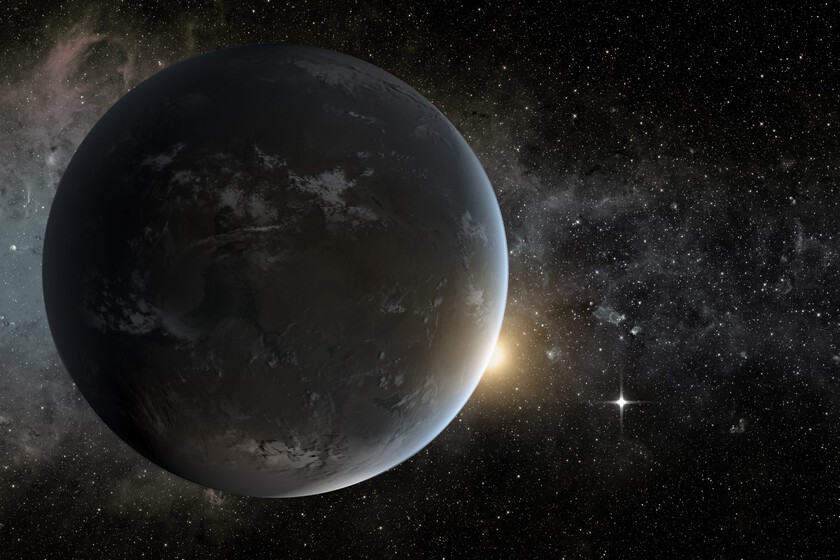
NASA has developed a plan to tackle one of the most confounding questions in exoplanetary science, but the ambitious mission is currently stalled due to a lack of funding. The Early eVolution Explorer (EVE) mission is designed to investigate the so-called “forbidden radius” gap, a peculiar absence of exoplanets within a specific size range.
Since the confirmed discovery of the first exoplanet in 1992, over 6,000 planets beyond our solar system have been identified. Among these, a notable observation is the lack of planets with radii between approximately 1.8 times that of Earth and the size of Neptune. Planets smaller than this threshold are classified as “super-Earths,” while those larger are termed “sub-Neptunes.” The reason for this gap remains a significant mystery, with two leading hypotheses attempting to explain its existence.
The EVE mission aims to gather crucial data by observing young exoplanets, as their formation stages are believed to hold the key to understanding this cosmic anomaly. Studying planets in their infancy is challenging; out of the thousands of exoplanets discovered, only a small fraction are less than 50 million years old. The EVE spacecraft would be equipped with specialized probes designed to detect exoplanets orbiting young stars. The principle behind this approach is that planets form after their host stars, so a young star is likely to host young planets.
Understanding Super-Earths and Sub-Neptunes
Super-Earths are rocky planets with radii less than 1.8 times that of Earth. They are typically found closer to their host stars than sub-Neptunes. Sub-Neptunes, on the other hand, are larger and possess a less dense, more “spongy” appearance.
Two primary hypotheses attempt to explain the “forbidden radius” gap:
The First Hypothesis: A Unified Origin
This theory suggests that all exoplanets initially form with a rocky core, accumulating hydrogen and helium gas over millions of years. The difference between super-Earths and sub-Neptunes, according to this hypothesis, lies in their proximity to their star. Super-Earths, being closer, are subjected to intense stellar radiation that strips away their gaseous envelopes. Sub-Neptunes, further away, can retain their atmospheres, contributing to their larger size and seemingly “spongy” composition.
The Second Hypothesis: The Role of Water
This alternative theory focuses on the presence and state of water during planet formation. Super-Earths are thought to form within the “snow line” of their star systems – a region where water can exist as ice. However, planets within this zone, if too close to the star, experience intense heat causing water to evaporate into vapor. This vapor is less likely to coalesce into the planet’s structure, resulting in a predominantly dry, rocky planet. Sub-Neptunes, forming beyond the snow line, can incorporate frozen water into their composition. This additional water content contributes to their larger size and distinct appearance.
Challenges in Studying Young Stars
Observing young planets around young stars presents unique difficulties. Young stars exhibit high levels of activity, including flares that can cause fluctuations in their brightness. These fluctuations can be mistaken for the transit of an exoplanet, leading to numerous false positives.
The EVE mission is designed to overcome these challenges with a sophisticated three-sensor system:
Ultraviolet (UV) Sensor: This sensor will detect stellar flares, which emit significant radiation in the UV spectrum. Identifying UV spikes will help distinguish stellar activity from potential planetary transits.
Visible Light Sensor: This sensor operates in the visible light spectrum, the range typically used for detecting exoplanets via the transit method.
Near-Infrared (NIR) Sensor: Young stars are strong emitters in the near-infrared. This sensor will provide crucial comparative data.
By cross-referencing data from these sensors, scientists can differentiate between genuine exoplanet transits and stellar activity. A detected dip in visible light, for instance, could indicate a planet. However, if accompanied by a UV spike, it would be attributed to a stellar flare. Comparing visible light data with the star’s consistent NIR emissions further aids in confirmation.
The EVE Mission’s Potential Impact
By studying young exoplanets, the EVE mission could provide definitive answers about the formation processes that lead to the “forbidden radius” gap. This understanding would not only resolve a long-standing astronomical puzzle but also refine our models of planet formation across the galaxy.
The mission proposal outlines a plan to analyze 30 fields of young star clusters, dedicating 30 days to each. This approach could lead to the analysis of over 20,000 young stars and the identification of recently formed exoplanets. Despite the detailed planning, the EVE mission cannot proceed without secured funding and a defined launch date.
Key facts
| Aspect | Detail |
|---|---|
| Mission Name | Early eVolution Explorer (EVE) |
| Objective | Investigate the “forbidden radius” gap in exoplanet sizes |
| Target | Young exoplanets orbiting young stars |
| Key Challenge | Distinguishing exoplanet transits from young star activity |
| Current Status | Designed but unfunded |
This research directly impacts the field of AI by potentially providing new datasets and phenomena for AI models to analyze in the future, advancing our understanding of astronomical pattern recognition and data interpretation in space science.
Source: La NASA tiene un plan para resolver uno de los mayores misterios del cosmos y solo le falta una cosa: dinero – Xataka: https://www.xataka.com/espacio/nasa-tiene-plan-para-resolver-uno-mayores-misterios-cosmos-solo-le-falta-cosa-dinero
Source
Xataka IA Publicacion original: 2026-06-15T07:00:17+00:00
Related articles

OCU Finds Spanish Homeowner Communities Overpaying Up to €1,500 on Electricity and €3,515 on Gas—Can AI Tools Optimize Shared Energy Bills?
A new OCU analysis of Spanish homeowner community bills reveals widespread overpayment due to non-competitive tariffs and excess contracted power. Could AI-driven…
Read article
Mayotte fiber dispute does not meet ReviewArticle’s AI news brief
Le Monde reports that France’s competition authority has ordered Orange to suspend part of its fiber-optic rollout in Mayotte. The dispute is…
Read article
DiffEEG Model Uses Diffusion Pre-Training to Improve Seizure Detection from Minimal Labeled Data
Researchers have introduced DiffEEG, a 9.6-million-parameter foundation model that combines denoising diffusion pre-training with reinforcement learning fine-tuning to detect seizure events from…
Read article
The Technology Trap: Why AI Cannot Escape the Unchanging Fundamentals of War
A new Foreign Affairs essay by former Pentagon official Mara Karlin warns that over-reliance on AI and advanced tech in military planning…
Read articleWiki relacionada

AI Model API Pricing and Context Window Comparison: Current Rates and Limits
Compare the latest API pricing, context windows, and capabilities of leading AI model providers including OpenAI, Anthropic, Google, and Mistral. Practical guidance…
Read article
AI Agent Evaluation Frameworks: How to Benchmark Agentic Systems
A practical guide to evaluating AI agents — from task completion metrics to safety, cost, and robustness. Covers major frameworks, primary sources,…
Read article
LLM Benchmarks Decoded: What MMLU, HumanEval, and GSM8K Actually Measure for Developers
A developer-focused breakdown of the most-cited LLM benchmarks — MMLU, HumanEval, GSM8K, MATH, Chatbot Arena — including what they test, their hidden…
Read article
What Is RAG? A Practical Guide to Retrieval-Augmented Generation in 2025
Retrieval-Augmented Generation (RAG) grounds LLM outputs in external data, reducing hallucinations and enabling enterprise use cases. This guide covers how RAG works,…
Read article