
NASA Debates Rescuing Aging Hubble Telescope Amidst Declining Orbit
The aging Hubble Space Telescope faces a potential end-of-life scenario as its orbit decays, prompting NASA to weigh the costly decision of a rescue mission against the astronomical expense of its continued operation.
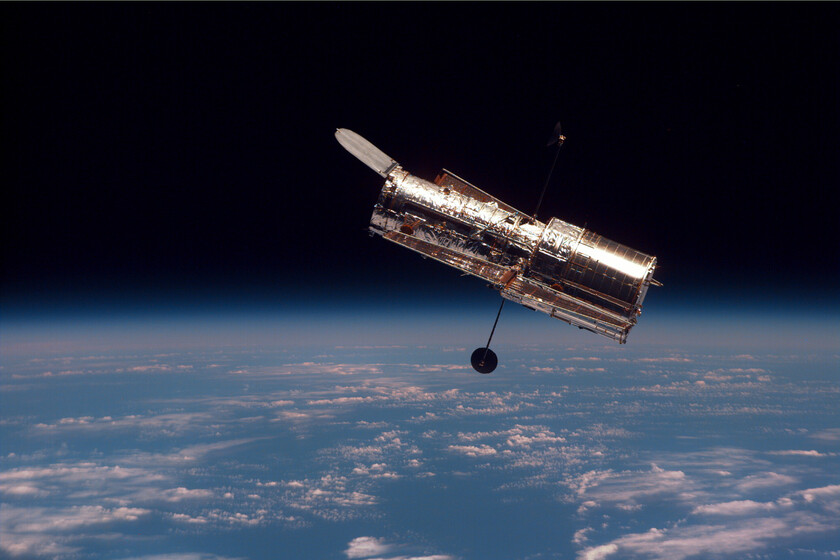
The future of the venerable Hubble Space Telescope is uncertain as its orbit gradually decays, presenting NASA with a complex decision regarding a potential rescue mission. While the telescope continues to yield significant scientific discoveries, its aging infrastructure and substantial operational costs are forcing a reevaluation of its longevity.
Swift Rescue Mission Precedent
A forthcoming mission to rescue the Neil Gehrels Swift Observatory, developed by Katalyst Space, offers a precedent for such endeavors. The Link spacecraft is scheduled to launch later this month to address Swift’s declining orbit, a consequence of atmospheric resistance. Despite the considerable development costs, NASA views the Swift rescue as a minimal investment relative to the potential scientific returns of extending its operational life. This successful project raises the question of whether a similar approach could be viable for the Hubble.
The High Cost of an Aging Giant
The Hubble Space Telescope, launched in 1990, represents a significant investment in space science. In 2025 alone, NASA allocated $98.8 million for its operation. While this figure is less than the investment in the newer James Webb Space Telescope, it underscores the substantial ongoing expenses associated with maintaining an instrument of Hubble’s age. The cost of upkeep and operation has become increasingly burdensome, prompting NASA to analyze whether developing a dedicated rescue mission would be more cost-effective than allowing the telescope to naturally deorbit.
Hubble’s Continued Scientific Value
Despite its age and the considerable operational expenditure, the Hubble Space Telescope remains in excellent condition and is scientifically productive. The advent of the James Webb Space Telescope (JWST) led some to believe Hubble’s retirement was imminent. However, the two telescopes are not mutually exclusive but rather complementary. Hubble excels at capturing visible and ultraviolet light, while JWST specializes in near and mid-infrared wavelengths. This distinction is crucial, as certain celestial objects and phenomena are only observable within Hubble’s specific spectral range. JWST’s ability to penetrate dust and gas and achieve higher resolution does not negate Hubble’s unique observational capabilities. The potential loss of Hubble would leave a significant void in ongoing astronomical research.
Looking Towards the Future
Astronomers anticipate the launch of the Habitable Worlds Observatory in the 2040s, a significantly more advanced telescope designed to operate in visible and ultraviolet light. This future observatory could, in effect, succeed Hubble. Until then, Hubble’s continued contributions are deemed essential for many research objectives.
Calculating the Return on Investment
The decision to rescue Swift was relatively straightforward due to a clear cost-benefit analysis. For Hubble, the calculations are more intricate. A rescue mission would likely require a spacecraft larger and more complex than the Link mission. However, given Hubble’s historical significance and its ongoing scientific output, the justification for a rescue may still prove compelling. If no rescue is undertaken, Hubble’s re-entry into Earth’s atmosphere is projected between 2029 and 2033. This timeframe leaves little room for developing and deploying a successor instrument, making the rescue decision a critical one with implications for the near future of space observation.
Datos clave
| Aspecto | Detalle |
|—|—|
| Telescopio | Hubble Space Telescope |
| Costo operativo (2025) | $98.8 millones |
| Lanzamiento | 1990 |
| Decaimiento orbital previsto | 2029-2033 |
| Misión de rescate potencial | Requiere nave más grande que Link |
The ongoing debate over Hubble’s fate highlights the complex interplay between technological advancement, scientific necessity, and financial considerations in space exploration. The potential loss of such an iconic and scientifically valuable instrument raises important questions about how we prioritize and preserve our most important scientific assets.
Fuente: El Hubble se está cayendo poco a poco, pero la NASA no sabe si vale la pena rescatarlo – Xataka (https://www.xataka.com/espacio/hubble-se-esta-cayendo-poco-a-poco-nasa-no-sabe-vale-pena-rescatarlo)
Datos clave
| Punto | Detalle |
|---|---|
| Fuente | Xataka IA |
| Fecha | 2026-06-09T08:00:17+00:00 |
| Tema | El Hubble se está cayendo poco a poco, pero la NASA no sabe si vale la pena rescatarlo |
Source
Xataka IA Publicacion original: 2026-06-09T08:00:17+00:00
Related articles
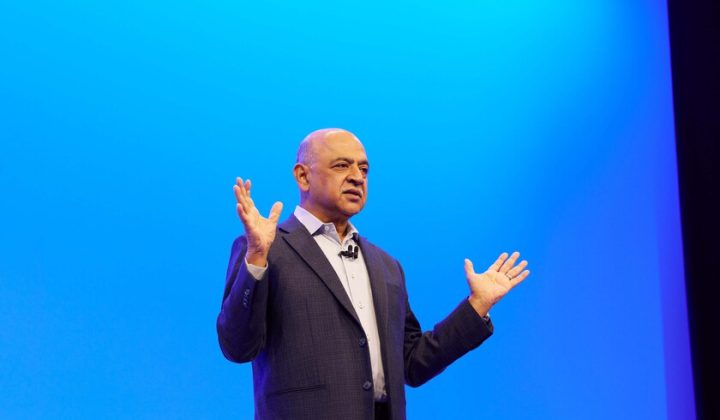
IBM CEO Puts a Number on the Open-Weight AI Value Proposition: 90% of the Performance at 10% of the Token Cost
IBM CEO Arvind Krishna told analysts that open-weight models now deliver about 90% of frontier-model effectiveness while costing between 10% and 25%…
Read article
OCU Finds Spanish Homeowner Communities Overpaying Up to €1,500 on Electricity and €3,515 on Gas—Can AI Tools Optimize Shared Energy Bills?
A new OCU analysis of Spanish homeowner community bills reveals widespread overpayment due to non-competitive tariffs and excess contracted power. Could AI-driven…
Read article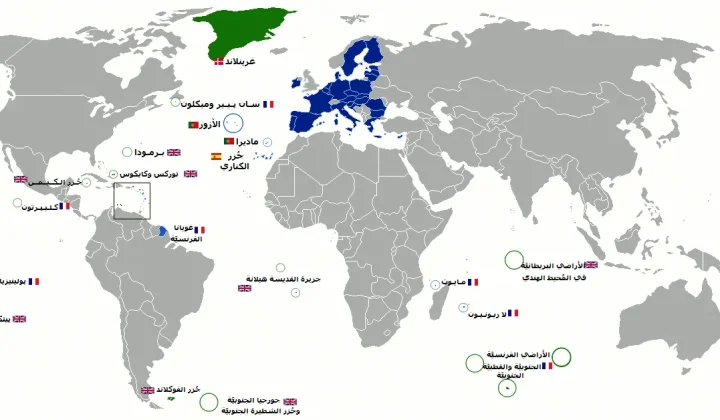
Mayotte fiber dispute does not meet ReviewArticle’s AI news brief
Le Monde reports that France’s competition authority has ordered Orange to suspend part of its fiber-optic rollout in Mayotte. The dispute is…
Read article
DiffEEG Model Uses Diffusion Pre-Training to Improve Seizure Detection from Minimal Labeled Data
Researchers have introduced DiffEEG, a 9.6-million-parameter foundation model that combines denoising diffusion pre-training with reinforcement learning fine-tuning to detect seizure events from…
Read articleWiki relacionada

AI Model API Pricing and Context Window Comparison: Current Rates and Limits
Compare the latest API pricing, context windows, and capabilities of leading AI model providers including OpenAI, Anthropic, Google, and Mistral. Practical guidance…
Read article
AI Agent Evaluation Frameworks: How to Benchmark Agentic Systems
A practical guide to evaluating AI agents — from task completion metrics to safety, cost, and robustness. Covers major frameworks, primary sources,…
Read article
LLM Benchmarks Decoded: What MMLU, HumanEval, and GSM8K Actually Measure for Developers
A developer-focused breakdown of the most-cited LLM benchmarks — MMLU, HumanEval, GSM8K, MATH, Chatbot Arena — including what they test, their hidden…
Read article
What Is RAG? A Practical Guide to Retrieval-Augmented Generation in 2025
Retrieval-Augmented Generation (RAG) grounds LLM outputs in external data, reducing hallucinations and enabling enterprise use cases. This guide covers how RAG works,…
Read article