
Opendoor India Exit Sparks AI Outsourcing Debate
Opendoor's decision to close its India operations fuels a broader discussion on how AI is reshaping the economics of offshore labor and the future of Global Capability Centers.


Opendoor, the San Francisco-based online home-buying platform, has announced the closure of its India operations, less than two years after expanding its presence in the country. This decision has ignited a significant debate within Silicon Valley and the broader tech industry regarding the potential impact of artificial intelligence (AI) on offshore work.
CEO Kaz Nejatian cited a strategic push to bring operational work back to the U.S., closer to Opendoor’s customer base, and a concurrent shift toward smaller, AI-native teams as the primary drivers for the shutdown. While the company has not disclosed the exact number of employees affected or the precise extent to which AI efficiency influenced the decision, the announcement has quickly resonated with founders, investors, and outsourcing experts. They view it as an early indicator of how AI is fundamentally altering the economic landscape that established India as a global hub for back-office operations.
India’s Role in Global Business
The implications for India are substantial. The country has evolved considerably from its origins as a destination for outsourced back-office services. It currently stands as the world’s largest market for Global Capability Centers (GCCs) – dedicated offshore units established by multinational corporations to handle a wide array of functions, including IT, finance, and research and development. With over 2,100 such centers employing approximately 2.36 million people, these GCCs generate nearly $100 billion in annual revenue, underscoring their critical importance to the global economy.
Opendoor’s own India presence, established with nearly 250 employees across offices in Chennai and Bengaluru in 2024, was built to manage manual workflows across fragmented systems. However, the broader context reveals that Opendoor has been scaling back its global workforce in recent years. Securities filings indicate a reduction from 1,470 employees at the end of 2024 to 1,042 globally by the close of last year. Similarly, its non-U.S. workforce decreased from 342 employees at the end of 2024 to 184 by the end of the most recent reporting period. These company-wide reductions complicate a singular interpretation of the India closure solely through the lens of outsourcing.
AI’s Influence on Operational Costs
The difficult period experienced by the U.S. housing market, which has disproportionately affected online home-buying companies, has also led Opendoor to implement cost-cutting measures across its business. Nevertheless, the specific language used by CEO Nejatian regarding AI and leaner teams has struck a chord with industry observers who believe AI is actively reshaping how companies organize their operational tasks.
Investors and outsourcing analysts have interpreted Opendoor’s move as a potential harbinger of AI’s impact on India’s extensive outsourcing workforce. Sheel Mohnot, co-founder of Better Tomorrow Ventures, commented, “As manual work gets replaced by AI, a lot of jobs will be lost in India.” This sentiment is echoed by others who see Opendoor’s decision as evidence of a larger paradigm shift in corporate organization.
Venture capitalist Keshav Lohia of Emergent Ventures described the situation as a “watershed moment” for AI-driven operations, suggesting that advancements in AI are beginning to challenge the cost-arbitrage model that historically made India an attractive offshoring destination.
A Broader Industry Shift
Phil Fersht, CEO of HFS Research, a firm specializing in the global outsourcing and business services industry, emphasized that the Opendoor development should not be solely viewed as jobs moving from India to the U.S. Instead, he highlighted a more significant trend: AI is reducing the overall demand for operational labor. This allows companies to operate with leaner organizational structures, irrespective of geographical location.
“This is not an isolated restructuring,” Fersht stated. “It is part of a much broader pattern we are starting to see as companies redesign operations around AI, automation, and much leaner workflows.” He posits that the future winners will be companies that effectively integrate AI, software, and human expertise to achieve outcomes without continuous headcount expansion, a model he terms “Services-as-Software.”
While Opendoor may represent one of the first high-profile examples of this trend, Fersht anticipates it will not be the last. Venture capitalists are already projecting broader implications. Varun Rekhi of Speedinvest noted that if AI significantly diminishes the demand for labor-intensive services, it could exert considerable pressure on India’s vital export industry, which is fundamentally built on supplying talent and expertise to global corporations.
For now, Opendoor remains a complex case study. The company’s ongoing workforce reductions and its India exit could reflect both its specific business challenges and the nascent, yet powerful, influence of AI on the future of offshore work.
Key facts
| Aspect | Detail |
| :————————— | :——————————————————————— |
| Company | Opendoor |
| Action | Closure of India operations |
| Stated Reason | Return operational work to U.S., shift to AI-native teams |
| Broader Implication | Debate on AI’s impact on outsourcing economics and Global Capability Centers |
Source: TechCrunch AI, https://techcrunch.com/2026/06/10/opendoors-india-exit-is-fueling-a-bigger-conversation-about-ai-and-outsourcing/
Datos clave
| Punto | Detalle |
|---|---|
| Fuente | TechCrunch AI |
| Fecha | 2026-06-11T04:02:19+00:00 |
| Tema | Opendoor’s India exit is fueling a bigger conversation about AI and outsourcing |
Source
TechCrunch AI Publicacion original: 2026-06-11T04:02:19+00:00
Related articles
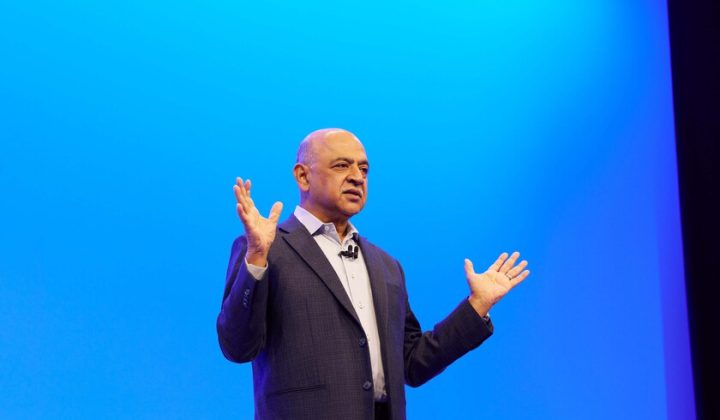
IBM CEO Puts a Number on the Open-Weight AI Value Proposition: 90% of the Performance at 10% of the Token Cost
IBM CEO Arvind Krishna told analysts that open-weight models now deliver about 90% of frontier-model effectiveness while costing between 10% and 25%…
Read article
OCU Finds Spanish Homeowner Communities Overpaying Up to €1,500 on Electricity and €3,515 on Gas—Can AI Tools Optimize Shared Energy Bills?
A new OCU analysis of Spanish homeowner community bills reveals widespread overpayment due to non-competitive tariffs and excess contracted power. Could AI-driven…
Read article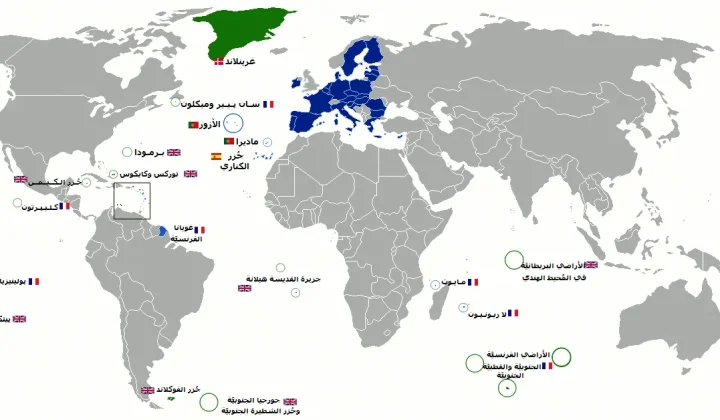
Mayotte fiber dispute does not meet ReviewArticle’s AI news brief
Le Monde reports that France’s competition authority has ordered Orange to suspend part of its fiber-optic rollout in Mayotte. The dispute is…
Read article
DiffEEG Model Uses Diffusion Pre-Training to Improve Seizure Detection from Minimal Labeled Data
Researchers have introduced DiffEEG, a 9.6-million-parameter foundation model that combines denoising diffusion pre-training with reinforcement learning fine-tuning to detect seizure events from…
Read articleWiki relacionada

AI Model API Pricing and Context Window Comparison: Current Rates and Limits
Compare the latest API pricing, context windows, and capabilities of leading AI model providers including OpenAI, Anthropic, Google, and Mistral. Practical guidance…
Read article
AI Agent Evaluation Frameworks: How to Benchmark Agentic Systems
A practical guide to evaluating AI agents — from task completion metrics to safety, cost, and robustness. Covers major frameworks, primary sources,…
Read article
LLM Benchmarks Decoded: What MMLU, HumanEval, and GSM8K Actually Measure for Developers
A developer-focused breakdown of the most-cited LLM benchmarks — MMLU, HumanEval, GSM8K, MATH, Chatbot Arena — including what they test, their hidden…
Read article
What Is RAG? A Practical Guide to Retrieval-Augmented Generation in 2025
Retrieval-Augmented Generation (RAG) grounds LLM outputs in external data, reducing hallucinations and enabling enterprise use cases. This guide covers how RAG works,…
Read article