
Plastic Recycling Industry Accused of Deception, Facing Growing Scrutiny
A new report alleges the plastic industry promoted recycling despite knowing its technical and economic limitations, sparking debate and legal action.
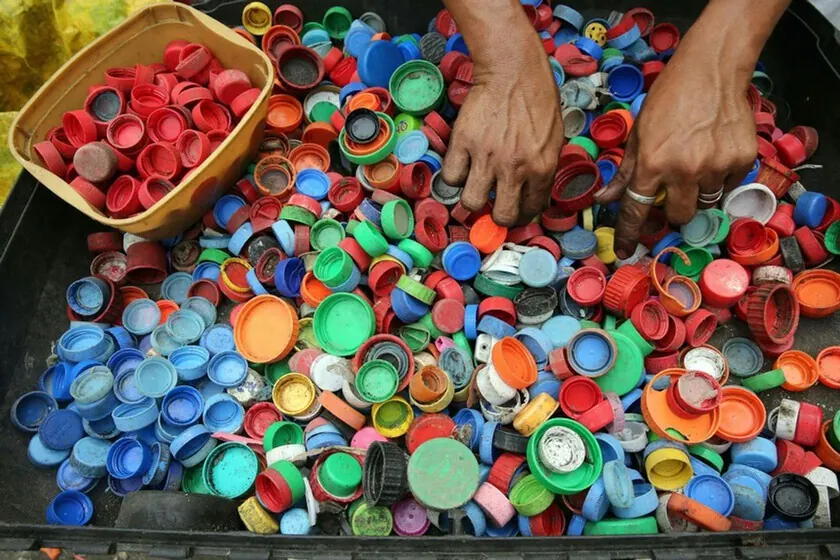
For decades, the public has been led to believe that plastic recycling is a viable solution to waste management. However, a recent report from the US-based Center for Climate Integrity (CCI) alleges that the plastic industry has been promoting recycling despite knowing its significant technical and economic limitations. This revelation is adding pressure to an already scrutinized sector, prompting calls for greater transparency and accountability.
The Difficult Task of Recycling
Recycling plastics is inherently complex due to the vast array of plastic types, each with unique chemical and functional properties. While consumers often place various plastic items into a single recycling bin, effective recycling requires meticulous separation of these materials. This process is not always feasible, leading to contamination and reduced efficiency.
Disparate Data and Doubts
Official figures on plastic recycling rates often come under fire. In Spain, for instance, Ecoembes reported recycling 589,885 tons of plastic packaging in 2024. However, environmental groups like Greenpeace have publicly questioned these numbers. Greenpeace has previously highlighted significant discrepancies, with reported recycling rates sometimes differing drastically from their own estimates, such as a 2024 instance where Ecoembes claimed an 89.2% rate compared to Greenpeace’s estimated 34.8%. While these figures may still exceed the global average of 9% estimated by the OECD, the vast differences raise concerns about the accuracy and effectiveness of current recycling systems.
The CCI report suggests that these statistics are merely a reflection of an underlying reality: effective plastic recycling remains largely out of reach, both technologically and economically.
The “Single-Use” Accusation
A key accusation in the CCI report centers on the industry’s alleged promotion of single-use plastics. The report posits that even with knowledge of recycling’s ineffectiveness, the industry actively encouraged the widespread adoption of single-use plastics, such as those found in packaging. “They knew that if they focused on [single-use plastics] people would buy and buy,” Davis Allen, a CCI researcher and co-author of the report, stated to The Guardian. This suggests a deliberate strategy to foster continued consumption by creating a false sense of environmental responsibility.
Industry Rebuttal and Legal Action
The plastic industry has responded to these accusations. The American Chemistry Council, in a statement, highlighted billions of dollars in investment towards innovative technologies aimed at improving the separation, capture, and recycling of more types and quantities of plastics. They contend that the CCI report relies on outdated technologies and mischaracterizes the industry’s current capabilities. Matt Seaholm, president and CEO of the Plastics Industry Association, criticized groups like CCI for engaging in “political-level attacks” rather than constructive solutions. Despite these defenses, the issue has gained traction, with California reportedly taking legal action.
The Road Ahead: Challenges and Promises
The prospect of a truly efficient, everyday plastic recycling system remains uncertain. International efforts, such as the UN Global Plastics Treaty, have faced repeated setbacks. However, ongoing research offers potential future solutions. The discovery of enzymes capable of breaking down plastic polymers into harmless molecules presents a promising avenue, though still far from mass implementation.
Meanwhile, the pervasive issue of microplastic pollution continues to escalate. These microscopic particles have been detected in the most remote corners of the globe, underscoring the vast reach of plastic contamination. The long-term health and environmental impacts of microplastics remain an area of significant concern and limited understanding.
Key facts
| Aspect | Details |
|---|---|
| Report Origin | Center for Climate Integrity (CCI), US-based association |
| Core Allegation | Plastic industry promoted recycling despite knowing technical and economic limitations, particularly for single-use plastics. |
| Industry Response | American Chemistry Council and Plastics Industry Association cite investments in new technologies and criticize CCI’s approach. |
| Global Context | Worldwide plastic recycling rates are low (e.g., OECD estimates 9%), and international efforts like the UN Global Plastics Treaty have faced challenges. |
This development is significant for ReviewArticle readers as it directly addresses the integrity of technologies and claims within a major industrial sector, highlighting issues of corporate accountability and the veracity of sustainability promises—themes often intertwined with AI and technological advancements. The debate over plastic recycling intersects with discussions around material science, industrial automation, and the development of novel waste management solutions, making it relevant to the site’s focus on AI and technology news.
Source: Llevamos décadas pensando que el reciclado de plásticos valía para algo. Quizá nos equivocáramos – Xataka, https://www.xataka.com/ecologia-y-naturaleza/llevamos-decadas-pensando-que-reciclado-plasticos-valia-para-algo-quiza-nos-equivocaramos
Source
Xataka IA Publicacion original: 2026-06-15T09:00:17+00:00
Related articles

IBM CEO Puts a Number on the Open-Weight AI Value Proposition: 90% of the Performance at 10% of the Token Cost
IBM CEO Arvind Krishna told analysts that open-weight models now deliver about 90% of frontier-model effectiveness while costing between 10% and 25%…
Read article
OCU Finds Spanish Homeowner Communities Overpaying Up to €1,500 on Electricity and €3,515 on Gas—Can AI Tools Optimize Shared Energy Bills?
A new OCU analysis of Spanish homeowner community bills reveals widespread overpayment due to non-competitive tariffs and excess contracted power. Could AI-driven…
Read article
Mayotte fiber dispute does not meet ReviewArticle’s AI news brief
Le Monde reports that France’s competition authority has ordered Orange to suspend part of its fiber-optic rollout in Mayotte. The dispute is…
Read article
DiffEEG Model Uses Diffusion Pre-Training to Improve Seizure Detection from Minimal Labeled Data
Researchers have introduced DiffEEG, a 9.6-million-parameter foundation model that combines denoising diffusion pre-training with reinforcement learning fine-tuning to detect seizure events from…
Read articleWiki relacionada

AI Model API Pricing and Context Window Comparison: Current Rates and Limits
Compare the latest API pricing, context windows, and capabilities of leading AI model providers including OpenAI, Anthropic, Google, and Mistral. Practical guidance…
Read article
AI Agent Evaluation Frameworks: How to Benchmark Agentic Systems
A practical guide to evaluating AI agents — from task completion metrics to safety, cost, and robustness. Covers major frameworks, primary sources,…
Read article
LLM Benchmarks Decoded: What MMLU, HumanEval, and GSM8K Actually Measure for Developers
A developer-focused breakdown of the most-cited LLM benchmarks — MMLU, HumanEval, GSM8K, MATH, Chatbot Arena — including what they test, their hidden…
Read article
What Is RAG? A Practical Guide to Retrieval-Augmented Generation in 2025
Retrieval-Augmented Generation (RAG) grounds LLM outputs in external data, reducing hallucinations and enabling enterprise use cases. This guide covers how RAG works,…
Read article