
Polestar Faces US Customer Backlash Over Planned 2027 Sales Ban
American Polestar owners express anxiety and frustration as the company prepares to cease sales of new models in the US market by 2027, raising questions about future support and vehicle resale value.
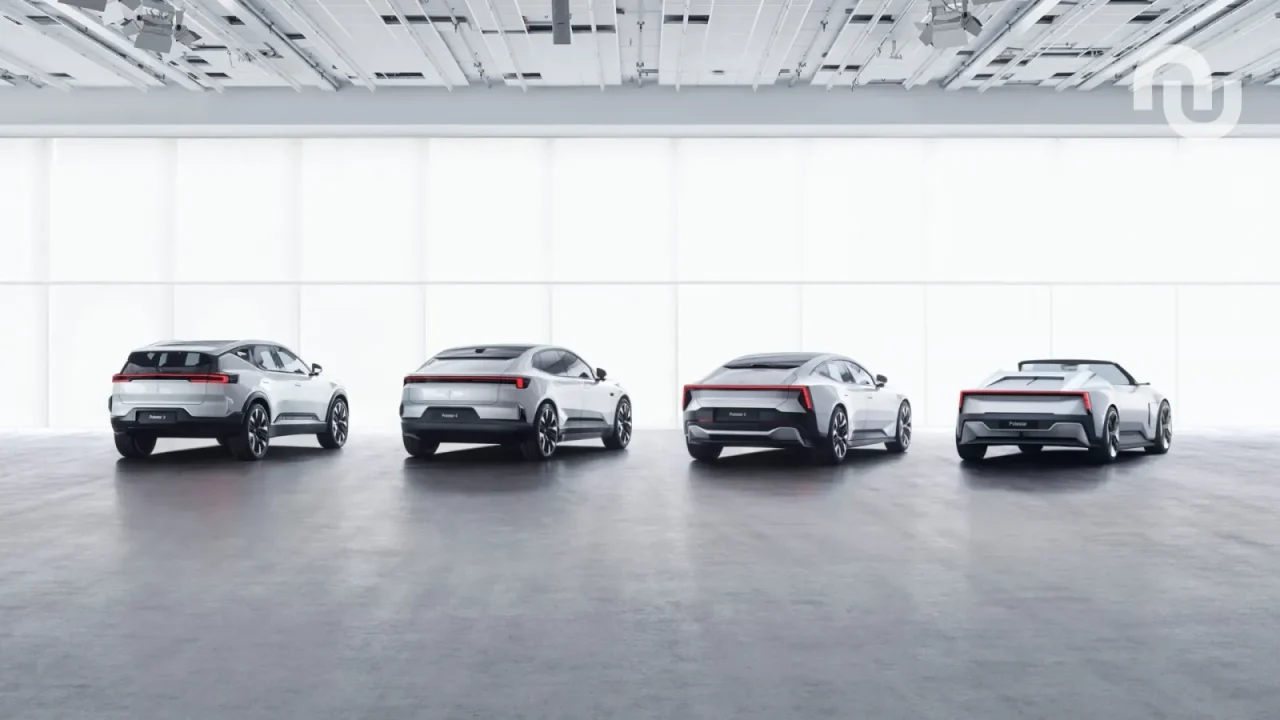

The future of Polestar ownership in the United States has become a significant source of anxiety for current and prospective customers following the announcement that the electric vehicle brand will no longer be able to sell new models in the US market starting in 2027. This impending ban has ignited a wave of concern among American owners regarding vehicle maintenance, software updates, and resale value, with many expressing a sense of betrayal and uncertainty.
Customer Concerns Mount
Across social media platforms like Reddit and in direct reports to news outlets, Polestar owners are articulating their worries. One customer, who was expecting delivery of a new Polestar vehicle that week, admitted to Reuters that they would have reconsidered their purchase had they known about the impending sales prohibition. “In five years, what will be the plan?” they questioned, reflecting a common sentiment of apprehension about the long-term support for their vehicles.
The company has stated that it will continue to provide repairs and maintenance through its 32 service centers in the US. However, the duration of this support remains a key unknown. This ambiguity is particularly worrying for owners who rely on the cloud-based services crucial for the functionality of modern connected cars. The precedent of other automakers facing financial difficulties, like Fisker, has amplified these fears, as customers worry about the availability of parts and continued operational support.
Impact on Resale Value
A significant concern for many Polestar owners is the potential depreciation of their vehicles’ resale value. “This pushes me to consider buying a new vehicle sooner than planned because the trade-in/resale value is probably going to drop,” commented one user on Reddit. Another echoed this sentiment, stating, “Same for me. I can sell my Polestar at break-even, and it makes me want to do it.” The prospect of owning a vehicle with a diminished market value, coupled with potential future support uncertainties, is prompting some to consider selling their Polestars sooner than anticipated.
Some owners are weighing the decision of whether to sell their current Polestar and pivot to more established brands like BMW, Hyundai, or Kia, especially if their lease agreements are nearing an end. This uncertainty extends to the availability of future Polestar models in the US, with reports indicating that models like the Polestar 7, Polestar 6, and the refreshed Polestar 2 will not be offered.
Disappointment with US Policy
The decision has also drawn criticism and a sense of injustice from some customers who view it as protectionist policy. “This is pure protectionism,” one disgruntled customer stated, questioning the rationale behind banning Polestar sales with the hope of magically incentivizing American manufacturers to produce better cars. While the “hunt” for Chinese vehicles was reportedly initiated by the previous administration, some Polestar owners find the decision particularly inconsistent, especially given that Volvo, a brand also owned by Geely, has received authorization for its future models.
The perceived disparity in treatment between Volvo and Polestar has fueled confusion. Both brands are Swedish, share R&D proximity, and are backed by Chinese conglomerate Geely. Furthermore, both utilize Android Automotive for their software, and Polestar even produces the Polestar 3 in the United States. This lack of clear justification for the differing outcomes has led to speculation and frustration. One hypothesis suggested is that the administrative distinction is simplistic, perhaps categorizing Volvo as “Swedish = good” while questioning the identity of Polestar.
Potential Market Adjustments
Despite the widespread concern, some see a potential opportunity in the situation. The announcement could lead to more affordable used Polestar vehicles becoming available, attracting buyers looking for a deal, provided that maintenance and support remain viable. However, for most current owners, the focus remains on clarity and reassurance from the company regarding the long-term commitment to servicing and supporting their vehicles.
The exact reasons behind the US administration’s decision and Polestar’s response remain somewhat opaque. With the US market representing a relatively small portion of Polestar’s global sales in early 2026, the company may have opted not to pursue extensive compliance measures for the affected models. Future announcements are anticipated to shed more light on the situation and provide a clearer path forward for Polestar owners in the United States.
Key facts
| Detail | Information |
|---|---|
| Event | Polestar to cease new model sales in the US market. |
| Effective Date | Starting in 2027. |
| Customer Reaction | Anxiety over support, software, resale value; frustration with policy. |
| Company Stated Support | Continued repairs and maintenance through 32 US service centers. |
| Affected Models | Future models, including Polestar 7, 6, and refreshed Polestar 2. |
Source: Numerama IA – https://www.numerama.com/vroom/2287979-entre-inquietude-incomprehension-et-colere-les-clients-americains-de-polestar-redoutent-lavenir.html
Source
Numerama IA Publicacion original: 2026-06-30T08:30:00+00:00
Related articles
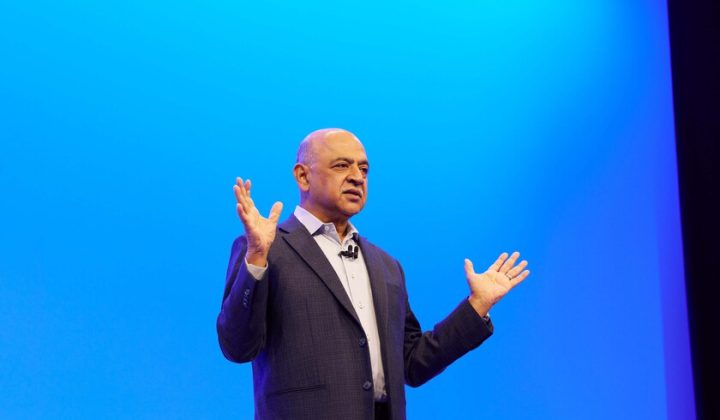
IBM CEO Puts a Number on the Open-Weight AI Value Proposition: 90% of the Performance at 10% of the Token Cost
IBM CEO Arvind Krishna told analysts that open-weight models now deliver about 90% of frontier-model effectiveness while costing between 10% and 25%…
Read article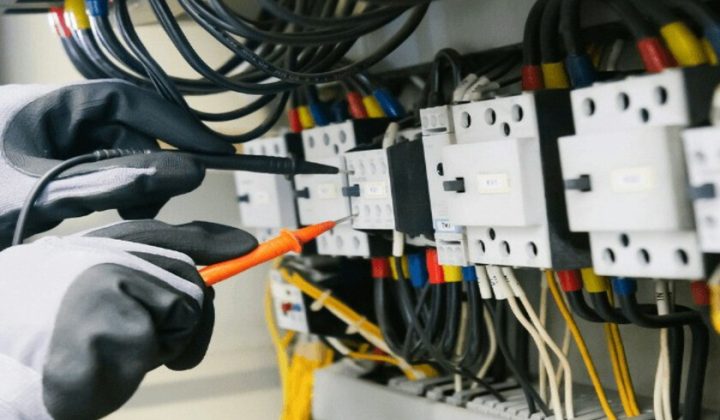
OCU Finds Spanish Homeowner Communities Overpaying Up to €1,500 on Electricity and €3,515 on Gas—Can AI Tools Optimize Shared Energy Bills?
A new OCU analysis of Spanish homeowner community bills reveals widespread overpayment due to non-competitive tariffs and excess contracted power. Could AI-driven…
Read article
Mayotte fiber dispute does not meet ReviewArticle’s AI news brief
Le Monde reports that France’s competition authority has ordered Orange to suspend part of its fiber-optic rollout in Mayotte. The dispute is…
Read article
DiffEEG Model Uses Diffusion Pre-Training to Improve Seizure Detection from Minimal Labeled Data
Researchers have introduced DiffEEG, a 9.6-million-parameter foundation model that combines denoising diffusion pre-training with reinforcement learning fine-tuning to detect seizure events from…
Read articleWiki relacionada

AI Model API Pricing and Context Window Comparison: Current Rates and Limits
Compare the latest API pricing, context windows, and capabilities of leading AI model providers including OpenAI, Anthropic, Google, and Mistral. Practical guidance…
Read article
AI Agent Evaluation Frameworks: How to Benchmark Agentic Systems
A practical guide to evaluating AI agents — from task completion metrics to safety, cost, and robustness. Covers major frameworks, primary sources,…
Read article
LLM Benchmarks Decoded: What MMLU, HumanEval, and GSM8K Actually Measure for Developers
A developer-focused breakdown of the most-cited LLM benchmarks — MMLU, HumanEval, GSM8K, MATH, Chatbot Arena — including what they test, their hidden…
Read article
What Is RAG? A Practical Guide to Retrieval-Augmented Generation in 2025
Retrieval-Augmented Generation (RAG) grounds LLM outputs in external data, reducing hallucinations and enabling enterprise use cases. This guide covers how RAG works,…
Read article