
Power Bank Landscape Evolves with New Top Picks for 2026
A comprehensive review highlights advancements in portable charging technology, focusing on battery capacity, charging speeds, and user-centric design for a range of devices, from smartphones to laptops.
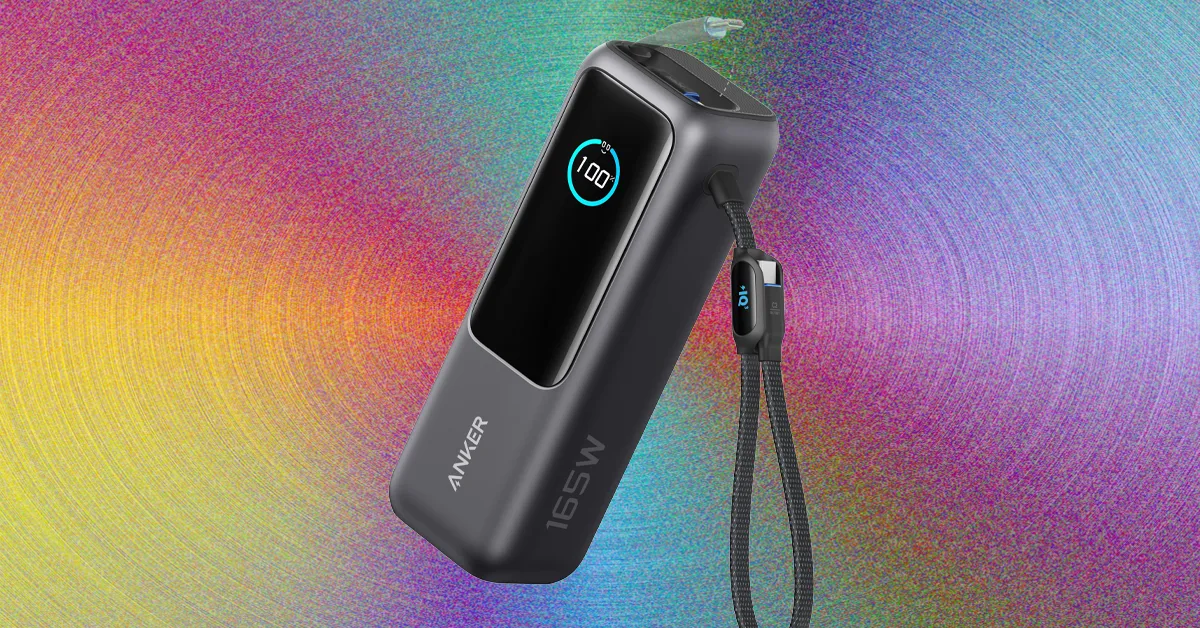
The portable power bank market continues to evolve, with manufacturers prioritizing higher capacities, faster charging, and more integrated user experiences. For 2026, a recent review by Wired AI, which tested over 100 portable chargers, identifies several standout models that cater to a broad spectrum of user needs, from keeping smartphones topped up on the go to providing essential power for laptops and gaming consoles. The selection emphasizes not only raw performance but also design, portability, and emerging charging standards.
Key advancements include the integration of higher wattage outputs, capable of fast-charging multiple devices, including power-hungry laptops. Battery capacities are also reaching new heights, with some models offering 25,000 mAh and above, providing multiple charges for most mobile devices. Furthermore, the adoption of newer wireless charging standards like Qi2, which builds upon Apple’s MagSafe technology, is offering more reliable and faster wireless charging experiences for compatible devices.
Why it matters
Anker’s Laptop Power Bank emerges as a strong contender for users needing robust mobile charging. This 25,000 mAh unit boasts an impressive 165-watt maximum output, capable of delivering 100 watts to a single USB-C device, making it suitable for charging laptops like the MacBook Air and Chromebooks. The power bank also features two USB-C ports for simultaneous charging of up to four devices. Its design includes thoughtful touches such as rounded edges, a retractable 2.3-foot USB-C cable, and a braided 1-foot USB-C cable that doubles as a carry loop. A built-in display provides real-time information on remaining battery, charging rates (input and output), battery temperature, and battery health, offering users precise control and reassurance. The unit supports pass-through charging and can be fully recharged in approximately two hours. Its capacity also falls within the typical limits for power banks allowed on flights, enhancing its travel utility.
For users prioritizing portability and a lighter carry, the Nimble Champ (Series 2) offers a compelling alternative. This model is notably compact and lightweight, weighing just 6.2 ounces and being smaller than a deck of cards. It provides 20 watts of power and can charge two devices concurrently via USB-C ports. The design is durable, available in speckled color finishes, and includes a bright lanyard loop for easy carrying. Nimble also emphasizes its environmental initiatives, utilizing bioplastics and plastic-free packaging, with this version incorporating 90 percent recycled plastic. A 3.3-foot USB-C to USB-C cable is included. A larger “Pro” version of the Champ doubles the capacity to 20,000 mAh with similar dual USB-C ports capable of up to 65 watts. A smaller 5,200 mAh version is also available, topping out at 15 watts.
Context
The Sharge Shargeek 170 Power Bank stands out for its unique aesthetic and powerful performance. With a 24,000 mAh capacity and a maximum output of 170 watts, it is designed to handle a wide array of portable gadgets. Its IP66 rating offers water resistance, making it suitable for use in various conditions. The smart display on this prism-shaped power bank shows battery life as a percentage, time remaining, and current power flow in watts. It supports multiple fast-charging standards, including Power Delivery 3.1, Quick Charge 4.0, and PPS, and has demonstrated fast charging capabilities for devices like the iPhone 15 Pro, Pixel 8, and MacBook Air. It can charge three devices simultaneously at high speeds. A notable feature is its rapid recharge time, taking about an hour via USB-C at up to 140 watts, provided the correct cable and charger are used. The design, while premium-priced, is noted for its durability and functional aesthetic, with the display optimally angled for viewing.
Emerging charging standards are also shaping the market. Anker’s MagGo Power Bank (10K) (Qi2) is highlighted as a top choice for those embracing the Qi2 wireless charging standard. This standard, which adapts elements of Apple’s MagSafe, uses magnets for precise device alignment and supports faster wireless charging up to 15 watts, while remaining backward compatible with older Qi devices. This compact charger includes a kickstand and a two-way USB-C port. The LED display shows remaining power as a percentage. It’s compatible with Qi2 or MagSafe phones, supporting portrait and landscape orientations, and works with Apple’s StandBy mode. While it offers a substantial capacity, it may not provide two full charges for an iPhone when using wireless charging, though using the provided USB-C cable might yield slightly more power.
Key facts
- Capacity: 25,000 mAh | 20,000 mAh | 24,000 mAh | 10,000 mAh
- Max Output: 165W (100W via single USB-C) | 65W | 170W | 15W (wireless), USB-C port
- Ports: 2x USB-C, integrated cables | 2x USB-C | 3x USB-C | 1x USB-C
- Special Features: Built-in cables, pass-through charging, display | Recycled materials, compact | IP66 water resistance, smart display, unique design | Qi2 wireless charging, kickstand
The advancements in power bank technology directly impact real-world workflows for AI professionals and creators. For developers and operators working with AI models, ensuring consistent power for laptops and mobile devices is crucial, especially when working remotely or at client sites. The ability to rapidly charge multiple devices, including powerful laptops that might be used for local model testing or data processing, minimizes downtime and maintains productivity. For creators, longer battery life for cameras, tablets, and other essential gear is paramount for extended shoots or fieldwork. The integration of Qi2 and MagSafe compatibility in power banks like Anker’s MagGo series simplifies the charging process for mobile devices, allowing for quick, on-the-fly power-ups without the need for cables, which is particularly useful for quick edits or communication. The emphasis on higher capacity and wattage also means that individuals can rely on a single power bank to support a wider range of their tech ecosystem, reducing the need to carry multiple specialized chargers.
The review also touches on charging speed and efficiency. While many power banks offer fast charging, the time it takes to recharge the power bank itself can be a significant factor. Models like the Sharge Shargeek 170, capable of recharging in about an hour at high wattage, demonstrate a move towards more efficient power management, ensuring the portable charger is ready for use again quickly. The inclusion of detailed displays showing battery health and temperature also contributes to better long-term performance and user confidence.
For those concerned about the environmental impact of battery technology, Nimble’s commitment to using recycled materials and sustainable packaging offers a more eco-conscious choice. As battery production involves resource-intensive mining and manufacturing processes, brands that actively seek to mitigate their environmental footprint through material sourcing and waste reduction are becoming increasingly important considerations for consumers and businesses.
The selection of power banks for 2026 indicates a market that is maturing, offering specialized solutions alongside versatile all-rounders. Whether the need is for extreme portability, high-wattage laptop charging, or seamless wireless power-ups, users have more refined options available. The ongoing development in battery chemistry and charging protocols suggests that power banks will continue to be an indispensable part of the modern tech user’s toolkit, supporting the ever-increasing demand for mobile power.
Source: Wired AI, https://www.wired.com/gallery/best-portable-chargers-power-banks/
Source
Wired AI Publicacion original: 2026-05-23T15:30:00+00:00
Related articles

Mayotte fiber dispute does not meet ReviewArticle’s AI news brief
Le Monde reports that France’s competition authority has ordered Orange to suspend part of its fiber-optic rollout in Mayotte. The dispute is…
Read article
DiffEEG Model Uses Diffusion Pre-Training to Improve Seizure Detection from Minimal Labeled Data
Researchers have introduced DiffEEG, a 9.6-million-parameter foundation model that combines denoising diffusion pre-training with reinforcement learning fine-tuning to detect seizure events from…
Read article
The Technology Trap: Why AI Cannot Escape the Unchanging Fundamentals of War
A new Foreign Affairs essay by former Pentagon official Mara Karlin warns that over-reliance on AI and advanced tech in military planning…
Read article
Supabase Releases .NET SDK for C# Developers Across ASP.NET, Unity, and Mobile
Supabase has launched a .NET SDK for C# developers, extending its backend-as-a-service platform to ASP.NET Core, console apps, desktop, Unity, and mobile…
Read articleWiki relacionada

AI Model API Pricing and Context Window Comparison: Current Rates and Limits
Compare the latest API pricing, context windows, and capabilities of leading AI model providers including OpenAI, Anthropic, Google, and Mistral. Practical guidance…
Read article
AI Agent Evaluation Frameworks: How to Benchmark Agentic Systems
A practical guide to evaluating AI agents — from task completion metrics to safety, cost, and robustness. Covers major frameworks, primary sources,…
Read article
LLM Benchmarks Decoded: What MMLU, HumanEval, and GSM8K Actually Measure for Developers
A developer-focused breakdown of the most-cited LLM benchmarks — MMLU, HumanEval, GSM8K, MATH, Chatbot Arena — including what they test, their hidden…
Read article
What Is RAG? A Practical Guide to Retrieval-Augmented Generation in 2025
Retrieval-Augmented Generation (RAG) grounds LLM outputs in external data, reducing hallucinations and enabling enterprise use cases. This guide covers how RAG works,…
Read article